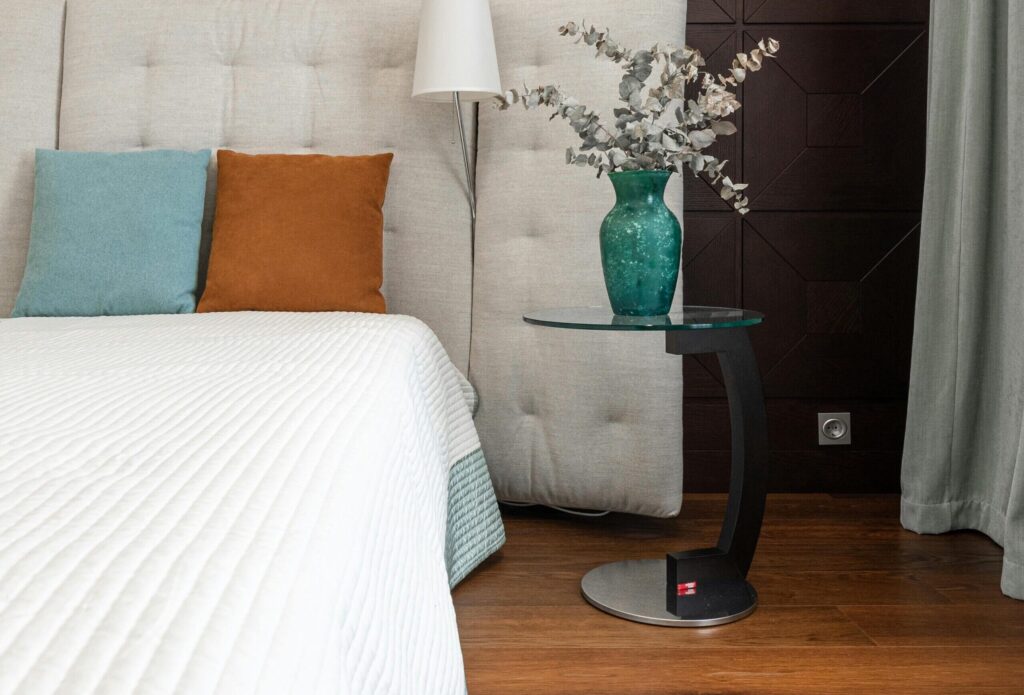
How to choose the perfect Nightstand for your Bedroom
A Practical Guide
Perhaps you’ve never thought deeply about nightstands and you just stumbled upon this article. Or maybe you are finally upgrading that cheap and temporary table that you call a nightstand. Regardless, you’re trying to do things right, but you need help. Well, you’ve come to the right place! Once you are finished here, you will know exactly what type of nightstand you should buy. So let’s get started.
We will follow four easy steps:

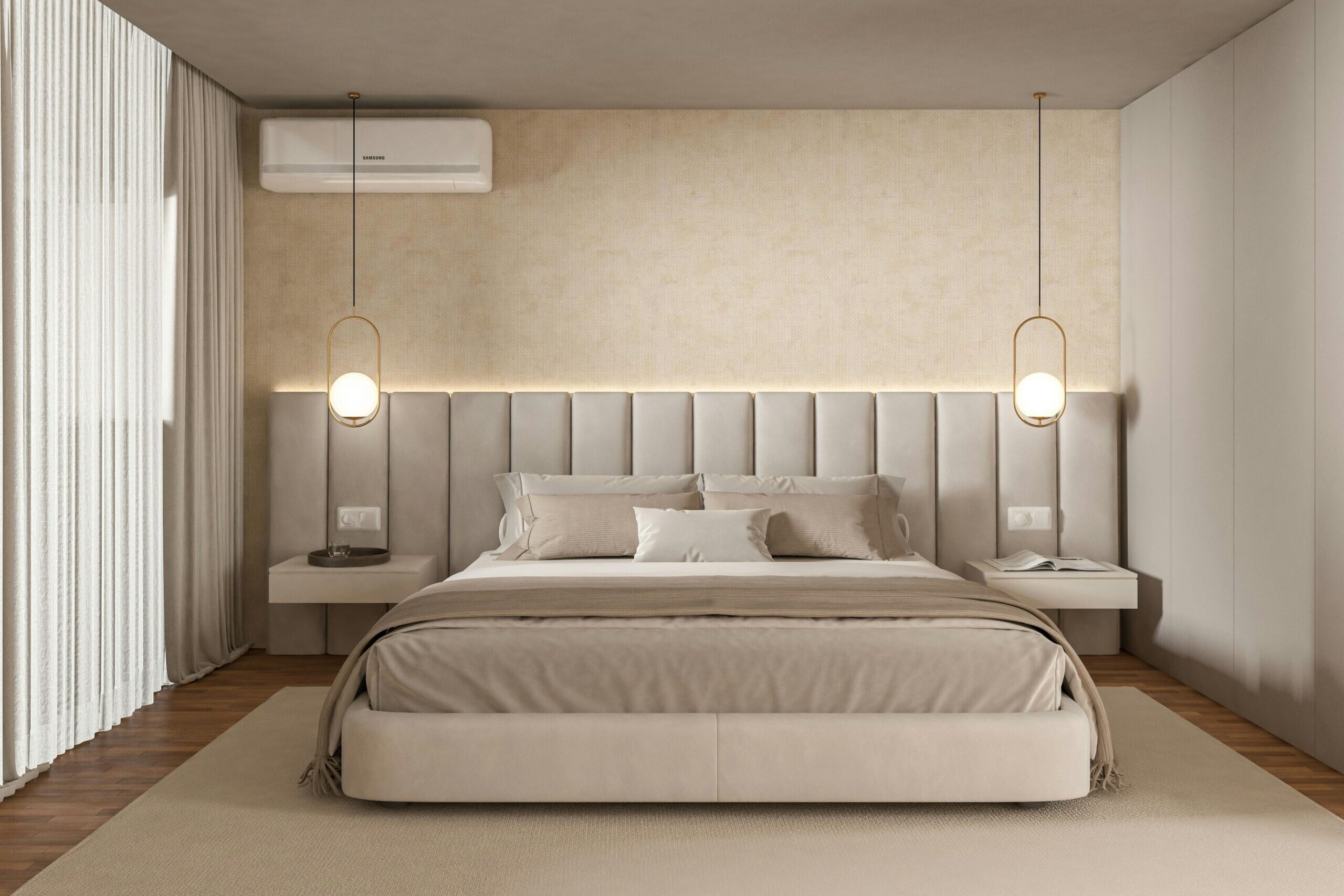

FUNCTION
Function is an incredibly important element to consider in order to get this right. We want to make sure that whichever nightstand(s) you purchase is in accordance with your needs. If you currently have no nightstand, think of the inconveniences you face without one. That will give you an idea of where to start.
How do you function in your space?
In other words:
What do you need in a bedside table that will blend well with your lifestyle?
Do You have Kids?
Think of what characteristics your child may hold that can affect your selection. Do they like to draw where they're not supposed to? Consider a nightstand that can be easily cleaned or restored if need be.
do you have pets?
Do you have a cat that loves to scratch up the furniture? Make sure to list out anything that could become an issue by getting the wrong nightstand.
Do you use your phone at night?
If you use your phone at night, it's always nice to have a designated spot for it. Perhaps you may also want your nightstand to have a charging station.
Do you like to read or journal at night?
If this is you, making sure your nightstand has ample storage for your books, journals, writing utensils, and glasses is a smart way to proceed.
The above are only a few examples of some questions you can ask yourself.
Go ahead and list out any other functionalities you want your couch to offer that will work with your lifestyle. These will be your non-negotiables. From now on, any couch you look at will need to have the functionalities you listed. This will narrow down your options which is good for those that tend to get decision paralysis.
SPACE
When it comes to space, you may have very little or more than you know what to do with. It is important to analyze how much space you actually have to come up with a plan for it. Take a look around your room and its layout. Does it feel crowded? Does it feel empty?
Small Bedrooms
Having symmetry by placing two nightstands on either side of the bed is undoubtedly, beautiful. However, asymmetry can also be beautiful and that is what we might have to accept for small bedrooms. If you try to stuff two nightstands into a small room, you will only make your space feel cramped in a place that is supposed to be relaxing. So for your small bedroom:
- If your space does not allow for two nightstands, use only one. Replace a symmetrical look for a balanced look.
- Consider wall mounted nightstands. They clear up floor space which helps the room feel more spacious.
Large Bedrooms
If you have a large bedroom, congratulations! You have the luxury of options. As I’ve stated previously, you can go for that gorgeous symmetry look with two bedside tables on either side of your bed. However, especially if you sleep alone, you may also choose to have just one nightstand. Ultimately, it will come down to personal preference and style. So for your large bedroom:
- Choose whatever works for you and your preferences while holding on to that balanced look and feel.
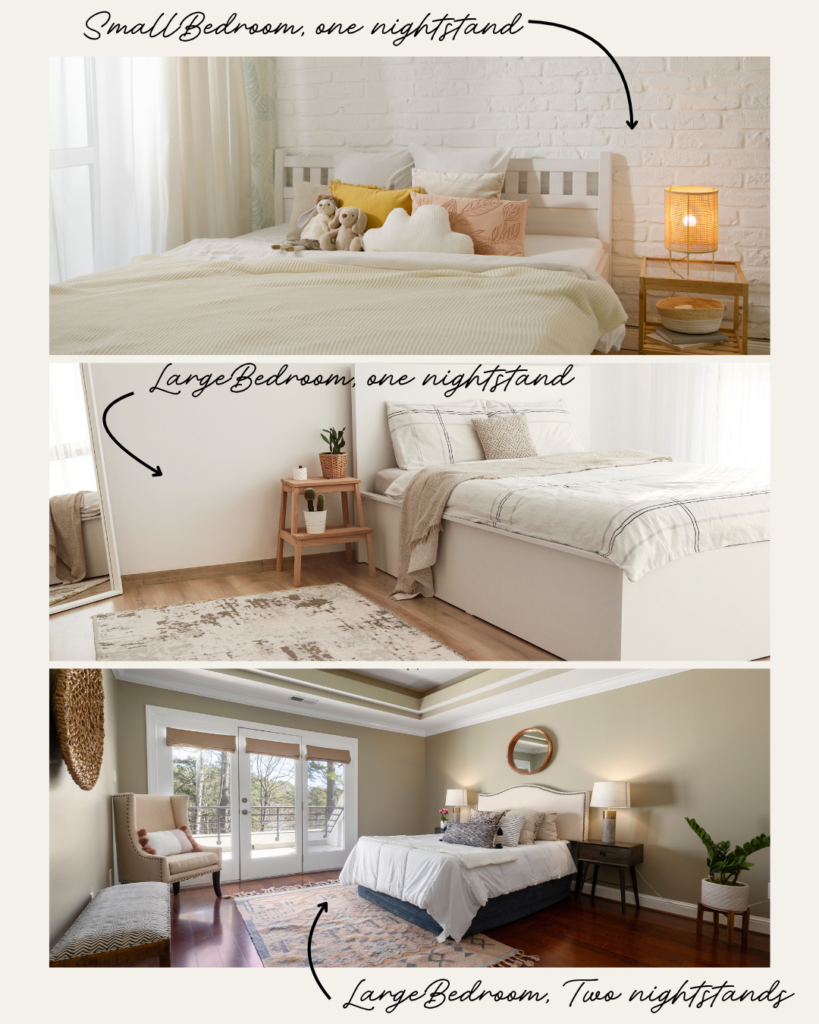
Although nice, this room is a good example of a space that is too cramped. Forcing two fixtures on either side of the bed is never a good idea.
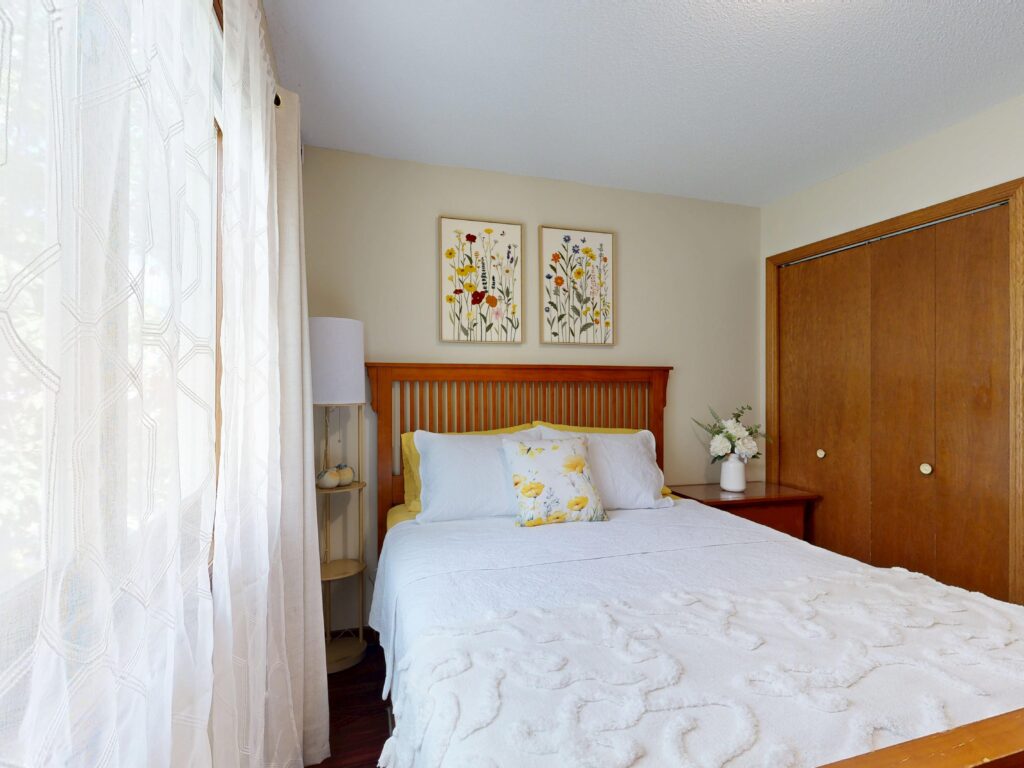
After evaluating your space, we can move on to our next step.
DIMENSIONS
Now, there are a lot of different opinions on the right height for a nightstand. I’ll tell you the three most common “rules” and let you decide which to follow.
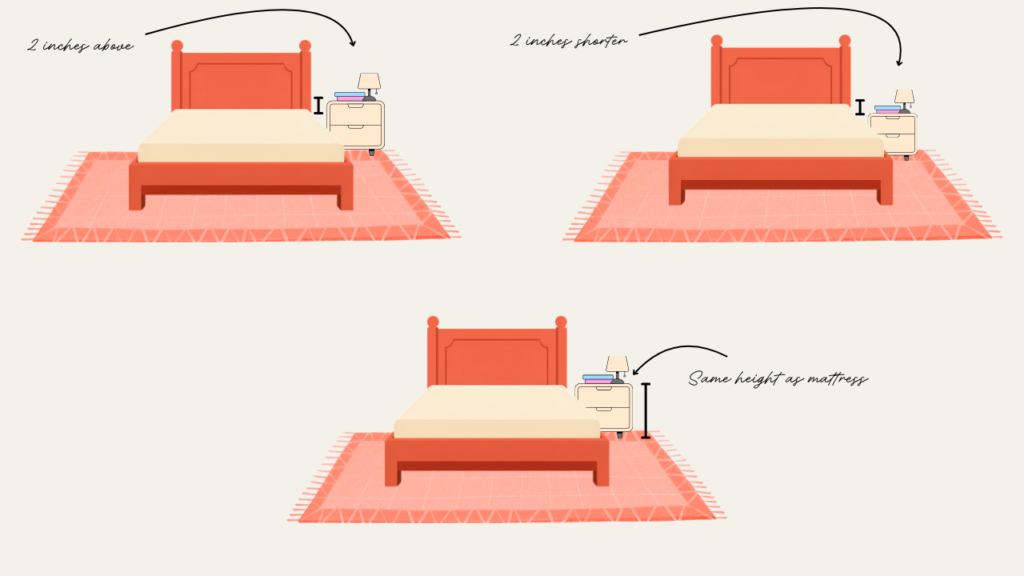
- Level with your mattress
- 2 inches below your mattress
- 2 inches above your mattress
Keep in mind that when nightstands are higher than your mattress, you may have to contort your arm in a weird way to reach your items. Keeping it level or just below makes everything easier to grab. Having the nightstand be two inches above the height of your mattress is the cutoff. Anything above that should be an automatic no.
At this time, I’d like you to take out a measuring tape and measure the height of your mattress. Don’t just google “standard mattress height.” Everyone’s bed is different and your bedframe may be lower or higher than the standard. That is if you even have a bedframe. You should not be looking for nightstands without a bed frame!
For those of you who need visual clarification, take a look at the graphic below.
As we move on to our most exciting and final step, keep the dimensions of your ideal nightstand in mind. They come in a variety of shapes and sizes so as you are shopping around, look at their dimensions. Maybe map it out on the floor with painters tape and see how the size and shape will interact with the space.
Style
Style is our most exciting step. Use this guide to help narrow down the silhouette and materials that fit your vibe.
Design styles are here to guide you but they are not hard rules. Most people have a mix of styles in their homes and when done right, it can look beautiful. Don’t be afraid to step out of your interior design style.
Most Popular Design Styles:
Modern
Characteristics
Common Nightstand Characteristics: Sleek, Functional, Simple, Clean, Sharp Geometric Lines, No Handles on Drawers, Integrated Technology (hidden wireless charging pads), Favors Solid Plinth Bases and Wall Mounted Designs Over Traditional Legs. |Common Materials & Finishes: Natural Woods, Polished Metals, Glass, Black or White Finishes
Bohemian
Couch Characteristics
Common Nightstand Characteristics: Textured, Organic, Relaxed, Global Influences, Soft Rounded Silhouettes, Arched Frames, Open Weave Textures, Mixed Hardware, Collected Feel |Common Materials & Finishes: Rattan, Cane, Wicker, Bamboo, Warm Woods, Matte Natural Finishes
Farmhouse
Couch Characateristics
Common Nightstand Characteristics: Cozy, Rustic, Practical, Heavy Proportions, Visible Craftsmanship, X-brace Side Panels, Shiplap Detailing, Barn Door Style Sliding Hardware, Turned Legs, Generous Storage, Sturdy |Common Materials & Finishes: Distressed/ Reclaimed Wood, Iron Pull Handles, Milk Painted Finishes (Muted whites, creams, sage greens)
Traditional
Couch Characteristics
Common Nightstand Characteristics: Formal, Symmetrical, Timeless, Detailed Architectural Molding, Beveling Along the Top Edge |Common Materials & Finishes: Rich Dark Hardwoods (Mahogany, Cherry, Walnut), Antique Brass, Pewter, or Glass Knob Hardware
Other Design Styles to consider:
Mid-Century
Couch Characteristics
Common Nightstand Characteristics: Retro, Clean Lines, Organic Curves, Functional, Round Tapered Legs, Wire Hairpin Legs, Rectangular Frame, Integrated Open Shelves |Common Materials & Finishes: Walnut, Teak, Acorn, Minimal Hardware, Finger Pulls, Slim Brushed Brass Bars
Scandinavian
Couch Characteristics
Common Nightstand Characteristics: Bright, Minimalist, Airy, Lightweight, Slender, Straight Legs, Soft Rounded Corners, Simple Silhouette, Single Shallow Drawer, Open Shelf |Common Materials & Finishes: Pale Woods (Blonde oak, ash, birch), White Painted Accents, Ultra Matte and Natural Finishes
Industrial
Couch Characteristics
Common Nightstand Characteristics: Raw, Structural, Utilitarian, Structural Framing, Exposed Hardware, Riveted Corners, Mesh Front Metal Doors, Exposed Locking Casters (wheels), Open Pipe Framing |Common Materials & Finishes: Matte Black Steel, Iron Frames, Rough Sawn, Distressed, or Reclaimed Wood
Investment Pieces
Solid Wood
Characteristics
Solid wood pieces are constructed from complete boards cut directly from trees, categorized into hardwoods (oak, walnut, maple, cherry) and softwoods (pine, fir). |Pros: Exceptionally Durable Structurally Stable Can be Sanded Down, Repaired, and Refinished |Cons: High Price Point Heavy to Move Can Expand or Contract Slightly with Extreme Changes in Room Humidity
Stone & Composite
Characteristics
(Marble, Concrete, Terrazzo) Typically used for the top surface of a nightstand rather than the entire piece, though solid composite plinths are trending in high end contemporary design. |Pros: Scratch Resistant Sturdy |Cons: Extremely Heavy Real Marble and Stone are Porous and Can Easily Stain
Mid-Range options
Glass and Acrylic
Characteristics
Often used as structural accents, table tops, or complete statement pieces in contemporary and glamorous spaces. |Pros: Waterproof Visually Opens Up Tight Floor Plans |Cons: Shows Fingerprints, Dust, and Smudges Instantly Requires Frequent Wiping Susceptible to Scratching (acrylic) or Shattering (glass)
Metal
Characteristics
Commonly used as the primary material in industrial, ultra-modern, or minimalist designs, metal nightstands are typically made of iron, steel, or aluminum. |Pros: Large Weight Capacity Indestructible Resists Spills or Water Rings |Cons: Can Feel Visually Cold Doors or Drawers Can Make a Metallic Clanging Noise When Opened or Closed.
Natural Woven Materials
Characateristics
(Ratten, Cane, Bamboo)Extremely popular in Boho, coastal, and transitional design, these materials are woven over solid wood or metal frames to create organic textures. |Pros: Adds Warmth and Texture Lightweight |Cons: Traps Dust Susceptible to Fraying or Drying Out if Placed in Direct Sunlight
Wood Veneer
Characteristics
A razor thin layer of real hardwood (like walnut or oak) is permanently bonded to a stable core of high-grade engineered wood or plywood. |Pros: Less Prone to Cracking than Solid Wood Sleek Geometric Designs |Cons: Very Difficult to Repair
Most Budget Friendly Options
Engineered Wood
Characteristics
Medium Density Fiberboard (MDF) is made from compressed wood fibers and resin, while particle board uses larger wood chips. Perfectly uniform surfaces with zero natural imperfections, knots, or grain. |Pros: Highly Affordable Lightweight Resistant to Warping or Splitting from Moisture or Temperature Changes |Cons: Cannot be Easily Repaired or Sanded if Damaged Edges can Chip Lower Weight Capacity than Solid Wood
Overview Comparison Guide
|
Material
|
Durability
|
Maintenance Level
|
Affordability
|
|---|---|---|---|
Patterns and colors may be limited with some materials but there are a plethora of options to choose from. The trick here is to narrow down those options. Now, there are many ways to do this. We can narrow it down by your specific design style or the color scheme you may have or want to integrate into your space. Don’t worry, I will walk you through each one.
By Your Design Style
Hover mouse here to see content.
First, establish whether or not you’ve chosen a design style for your bedroom. If you have a clear style set in mind, perfect! All you have to do now is take a look at the “Design Styles” tab to see what characteristics can be found in a couch with your aesthetic. If your chosen style is not represented there, Pinterest is a great resource to see what others have incorporated into their space with your specific style.
You may find that your vision may be a mix of styles and that is okay. Most spaces are. Look for the commonalities they share and utilize that as your jumping off point. Again, use Pinterest to find what others are doing.
If you aren’t sure how to categorize your style, let’s try a different way of narrowing down your options.
By Your Color Scheme
Hover mouse here to see content.
Chances are, if you're trying to figure out what color your bedside table should be, perhaps you don't have a set color scheme in your bedroom already. If this is you, you have two options.
- Take a look at what colors naturally exist in your space already. (ex. the color of your flooring, the walls, any furniture you may already have) Note those colors down. If they already work well together, use those colors as a guide. A nightstand in one of those colors may work nicely in your space.
- Start from scratch. What colors are you naturally drawn to? Jot them down and choose three that you think look good together.
Both options should incorporate the 60/30/10 rule. Your color scheme should consist of 3 different colors. One of them will be used in 60% of your space, one in 30% and one in 10%. The three colors you choose should be used in a variety of hues.
Most of the time, furniture pieces like nightstands, fall into the color used 30% of the time but this is not a hard rule.
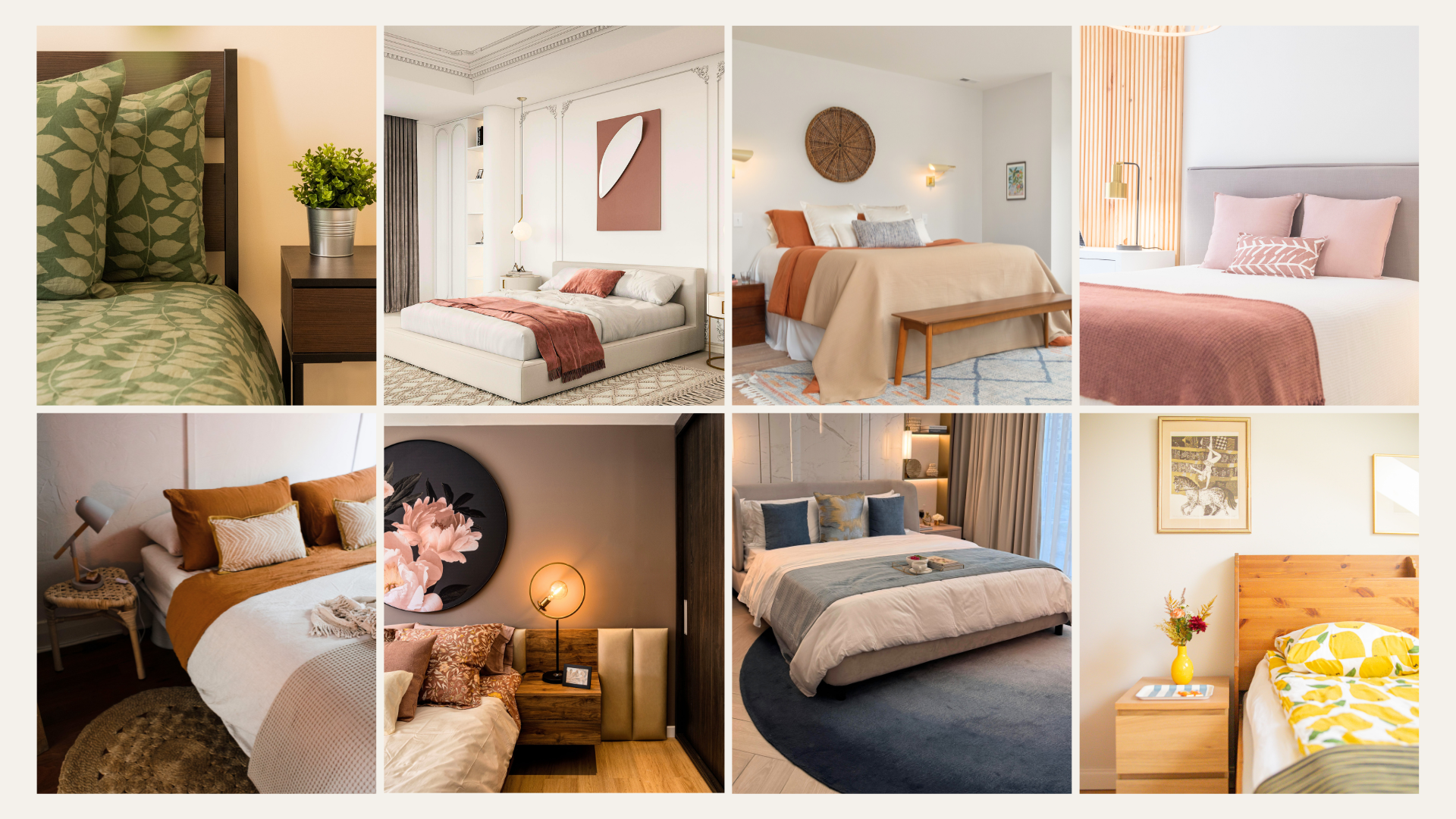
Here are some color pallet inspos:
This is the most common and typically has the most storage opportunities.
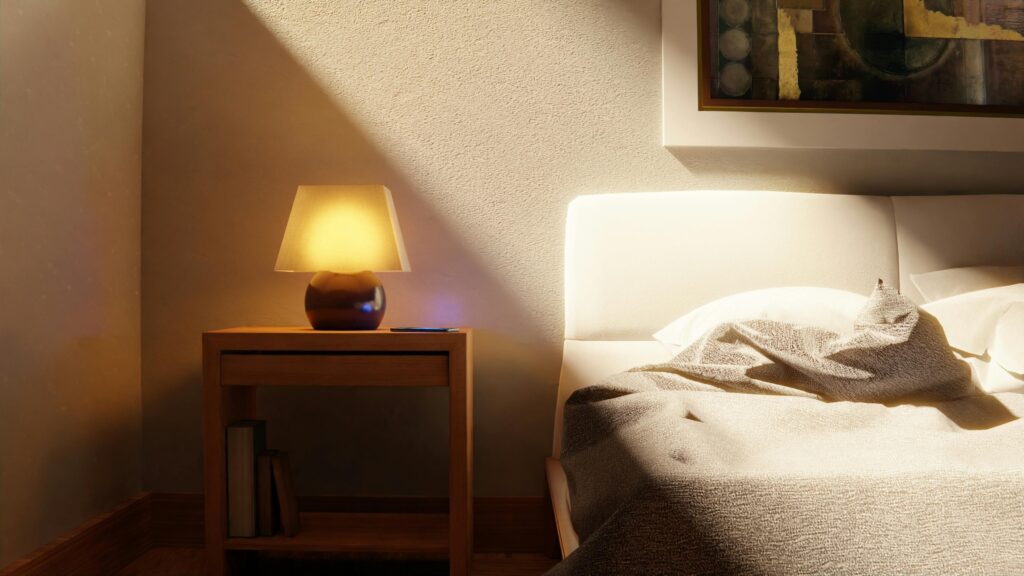
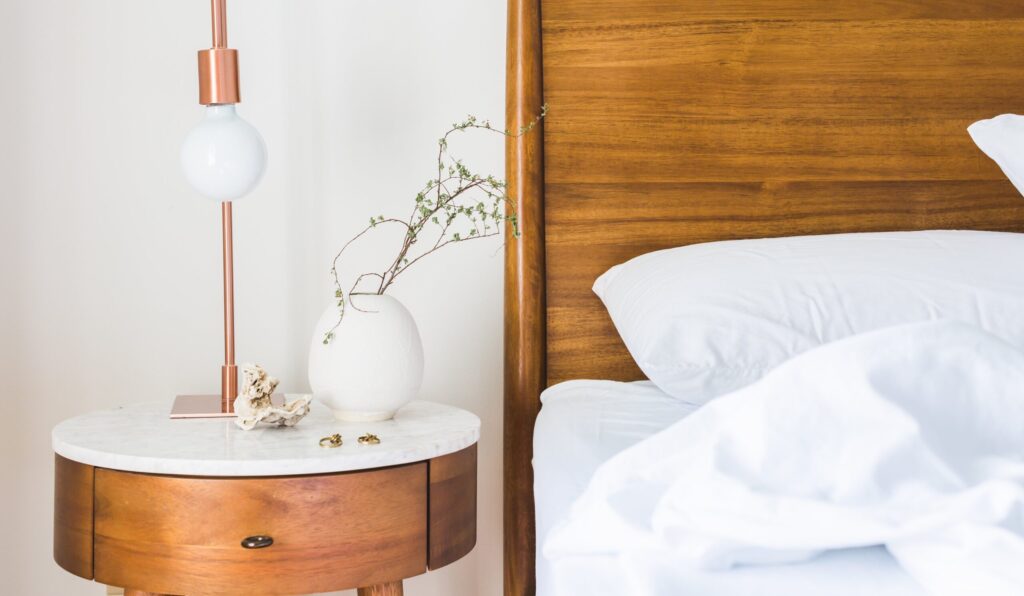
This is a beautiful shape that softens your bedroom. Especially if you have lots of harsh lines.
This is perfect for small room. It allows for a large surface space with minimal floor space.