How to choose the perfect rug for your bedRoom
A Practical Guide
Rugs have the power to ground a space but it’s, unfortunately, a design element that many people tend to overlook. If a bedroom feels incomplete, it’s most likely due to the lack of that anchor. Perhaps that is why you are here, or maybe you already have a rug but something still feels off.
Regardless, you’ve come to the right place. In this guide, we are breaking down the exact rules and tips you will need to choose the perfect area rug for your bedroom.
So let’s get started.
We will follow four easy steps:


FUNCTION
We want to be mindful of the fact that rugs can be quite the investment so it’s best to navigate this process with patience. Skip this step, and you will regret it.
How do you and your household function in your space?
In other words:
What do you need in a rug that will blend well with your lifestyle?
Do You have Kids?
Think of what characteristics your child may hold that can affect your selection. Are they messy? Do they have textile sensitivities?
do you have pets?
Do you have a cat that loves to claw up the carpet? Perhaps you have a dog that leaves fur everywhere. Make sure to list out anything that could become an issue by making the wrong selection.
Do you allow food or drink in your bedroom?
Spills can happen to anyone so if you're concerned about this, you may want to select a rug that can be easily cleaned.
Is your bedroom too narrow?
While there are a lot of solutions to a narrow bedroom, you may want to consider using a runner instead of an area rug.
Do you have a Busy schedule?
Consider something that will be low maintenance to accommodate your schedule.
is your room carpeted?
Consider something like a flat low pile rug. Note that placing a rug on high pile carpet is not recommended because it runs the risk of looking bulky and becoming a tripping hazard.
how comfortable do you want your rug to feel?
Think of what is comfortable to you. Do you want to feel like you're standing on something with a little cushion? Perhaps you just care about your rug feeling warm and soft.
would you allow shoes on your rug?
If your answer is yes to this question then I think it's safe to say to stay away from anything that is light in color. Consider something that can be easily washed as well.
The above are only a few examples of some questions you can ask yourself.
Go ahead and list out any other functionalities you want your rug to offer that will work with your lifestyle. These will be your non-negotiables. From now on, any rug you look at will need to have the functionalities you listed. This will narrow down your options which is good for those that tend to get decision paralysis.
SPACE
When it comes to space, you may have very little or more than you know what to do with. Both can be a blessing and a curse in their own way. To find the perfect rug for your bedroom, it is important to analyze how much space you actually have.
Guidelines
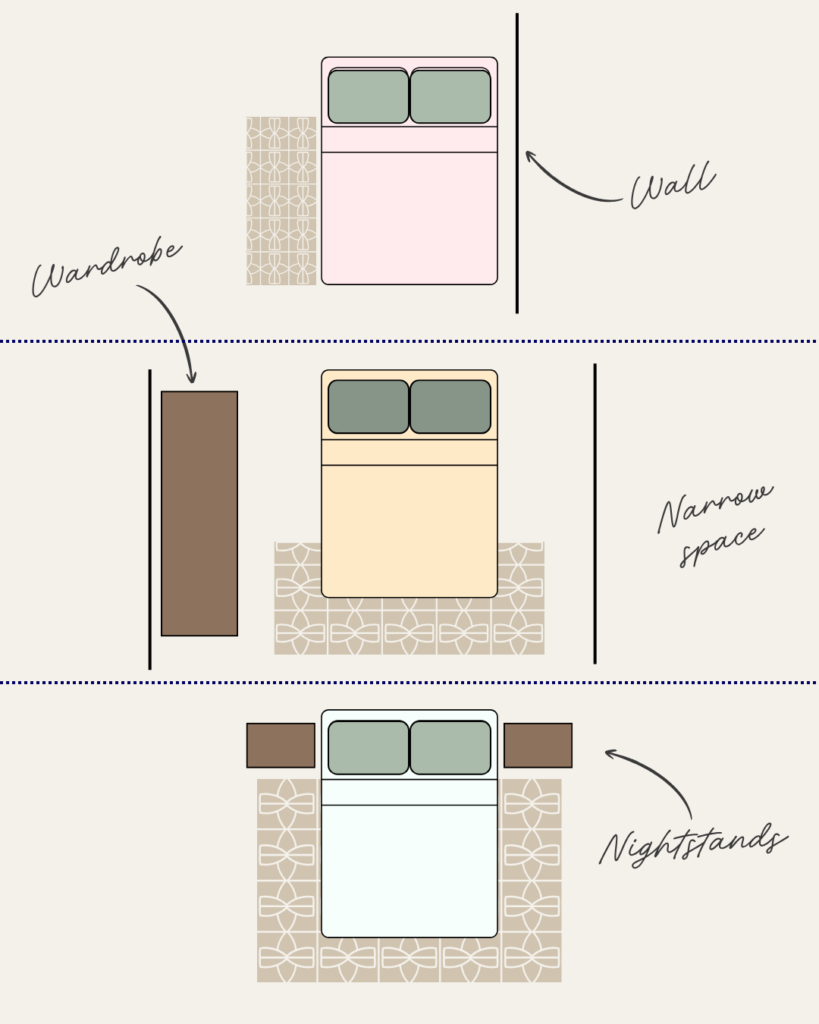
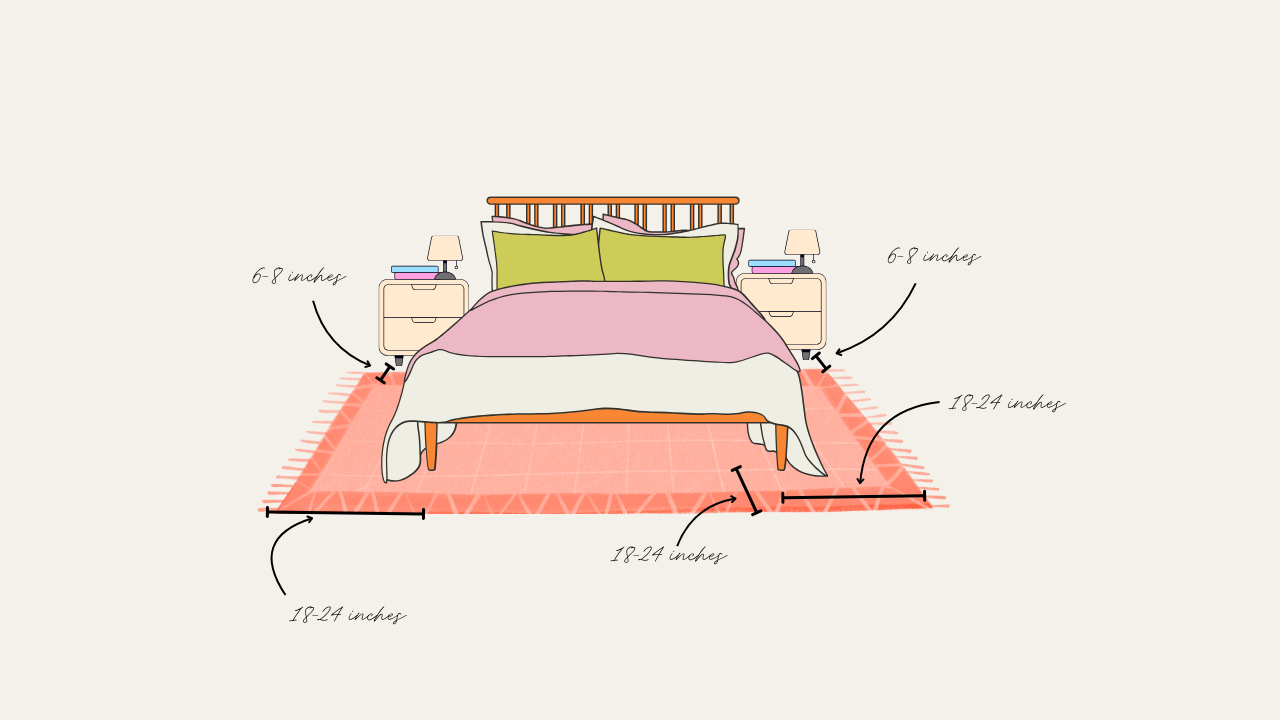
Your area rug should extend 18-24 inches outwards from the sides of the bed.
If your bed is pushed off to the side or corner of the room due to a lack of space: Consider a runner that extends 18-24 inches outwards from the side of the bed.
If your bed is in the center of the wall but your room is too narrow for a full size rug or runner on the sides: Consider a runner at the foot of the bed following the same rule of extending 18-24 inches outwards from the bed.
Pro Tip: We don’t want your area rug to take over your space because it’ll just look like carpet. Pay extra attention to this if you have a small bedroom.
If you have nightstands, the best placement for your rug is to place it 6-8 inches in front of them although it is also acceptable to place the rug underneath them. Ultimately it comes down to preference.
After evaluating your space, we can move on to our next step.
DIMENSIONS
Dimensions can now be taken after finalizing our decisions in the previous steps. Measure out the ideal length and width of your rug on the floor of your bedroom. Then, make sure to write these measurements down. You may also use painters tape on the floor to see if you like the layout.
Don’t forget:
Your area rug should extend 18-24 inches outwards from the sides of the bed.
Your area rug should preferably be 6-8 inches in front of your nightstands
Style
Style is our most exciting step. Use the guide below to help you decide.
Budget: Since a good rug isn’t something you should have to replace often, it’s best to avoid buying a “temporary” option. I recommend investing in a high quality rug because it can save you money in the long run due to their durability. That being said, rugs can get expensive so it is important to set a budget before you choose a style.
Most Popular Design Styles:
Modern
Rug Characteristics
Minimalist patterns, earthy tones, bold abstract art, high low pile heights, and geometric line art
Bohemian
rug Characteristics
Heavily textured Moroccan shags, geometric tribal patterns, distressed vintage looks, and playful details like fringe or tassels
Farmhouse
rug Characateristics
Neutral stripes, classic plaids, simple ticking patterns, or faded, low contrast vintage motifs in muted color palettes.
Traditional
rug Characteristics
Intricate oriental or Persian motifs, formal central medallions, detailed borders, and rich, deep color ways (like navy, burgundy, and sage)
Other Design Styles to consider:
Mid-Century
Rug Characteristics
Bold geometric shapes, iconic retro line work, atomic era bursts, and warm earth tones (mustard, olive, terracotta) paired with high contrast neutrals
Scandinavian
rug Characteristics
Ultra clean minimalism, high texture micro shags, simple neutral monochrome grids, and muted pastel or bright monochromatic tones
Industrial
rug Characteristics
Monochromatic concrete tones, faded or heavily distressed vintage patterns, abstract iron/rust toned washes, and stark geometric grids
Investment Pieces
wool
Characteristics
Wool comes from a sheep's coat.| Pros: Very high quality due to its longevity, Stain Resistant, Fire Resistant, Exceptionally Soft, Natural Elasticity, (It bounces back even after heavy furniture sits on it) Eco- Friendly, Hypoallergenic (Reduces allergy symptoms)| The Cons: High Price Tag, Constant Shedding for the First Few Months, Sensitive to Harsh Chemicals, Sensitive to Moisture
silk
Characateristics
Silk is harvested from the cocoons of the silk worm.| Pros: Intricate Details in Design, Highly Resistant to Natural Wear, Can Increase in Value Over Time| Cons: Very High Cost, High Maintenance, Absorbs Moisture Rapidly, Not for High Traffic Areas, Fades in Direct Sunlight
Mid-Range options
Viscose
Characteristics
Viscose is a semi-synthetic material derived from natural sources like wood pulp and bamboo cellulose.| Pros: Mimics Silk Well, Soft Underfoot, Has Design Versatility| The Cons: Extremely Sensitive to Liquids, (This breaks down the fibers, causing them to permanently mat, yellow, and lose their silk-like sheen.) Prone to Crushing and Matting, Required Professional Cleaning
Nylon
Characteristics
Nylon is derived from petroleum based polymers.| Pros: Bounces Back Quickly, Stain Resistant, Vibrant Colors, Resists Mold and Mildew| The Cons: Most Expensive Synthetic Option, Prone to Generating Static Electricity, Prone to Fading in the Sun, Not Eco Friendly
Jute & Sisal
Characateristics
Jute is derived form the Corchorus Plant. Sisal is derived from the Agave Sisalana Plant.| Pros: Plant Based Materials, Jute is Soft, Sisal is Durable, Often Base Layers for Smaller Rugs| The Cons: Highly Sensitive to Moisture, Jute Sheds Fine Fibers Over Time, Sisal is Quite Coarse and Scratchy,
Most Budget Friendly Options
cotton
Characateristics
Cotton comes from the cotton plant.| Pros: Lightweight and Breathable, More Budget Friendly Option, Many are Machine Washable, Soft Underfoot| The Cons: Wears Down Faster, Can Curl at the Edges, Can Slip and Slide, (This can be treated by adding a thick rug pad, Prone to Stains
Polyester
Characteristics
Polyester is derived from petroleum, natural gas, and petrochemicals.| Pros: Soft, Vibrant Colors, Affordable, Stain Resistant| The Cons: Prone to Matting and Crushing Under Heavy Furniture, Absorbs Oil Based Stains Easily, 1-5 Year Lifespan, Not Eco Friendly
polypropylene
Characteristics
Polypropylene comes from fossil fuels.| This high performance synthetic usually attempts to imitate natural materials like wool and sisal.| Pros: Stain Resistant, Fade Resistant, Hydrophobic, Budget Friendly| The Cons: Highly Flammable, Low Melting Point, Low Resilience, (This material does not bounce back easily.) Attracts Oil and Dirt, Can Have a Chemical Smell, Not Eco Friendly
Overview Comparison Guide
|
Material
|
Durability
|
Maintenance Level
|
Affordability
|
|---|---|---|---|
Patterns and colors may be limited with some materials but there are a plethora of options to choose from. The trick here is to narrow down those options. Now, there are many ways to do this. We can narrow it down by your specific design style or the color scheme you may have or want to integrate into your space. Don’t worry, I will walk you through each one.
By Your Design Style
Hover mouse here to see content.
First, establish whether or not you’ve chosen a design style for your bedroom. If you have a clear style set in mind, perfect! All you have to do now is take a look at the “Design Styles” tab to see what characteristics can be found in a rug with your aesthetic. If your chosen style is not represented there, Pinterest is a great resource to see what others have incorporated into their space with your specific style.
You may find that your vision may be a mix of styles and that is okay. Most spaces are. Look for the commonalities they share and utilize that as your jumping off point. Again, use Pinterest to find what others are doing.
If you aren’t sure how to categorize your style, let’s try a different way of narrowing down your options.
By Your Color Scheme
Hover mouse here to see content.
Chances are, if you're trying to figure out what color your rug should be, perhaps you don't have a set color scheme in your bedroom already. If this is you, you have two options.
- Take a look at what colors naturally exist in your space already. (ex. the color of your flooring, the walls, any furniture you may already have) Note those colors down. If they already work well together, use those colors as a guide. A rug in one of those colors may work nicely in your space.
- Start from scratch. What colors are you naturally drawn to? Jot them down and choose three that you think look good together.
Both options should incorporate the 60/30/10 rule. Your color scheme should consist of 3 different colors. One of them will be used in 60% of your space, one in 30% and one in 10%. The three colors you choose should be used in a variety of hues.
Most of the time, major furniture pieces like rugs, fall into the color used 60% of the time but this is not a hard rule.
Here are some color pallet inspos:
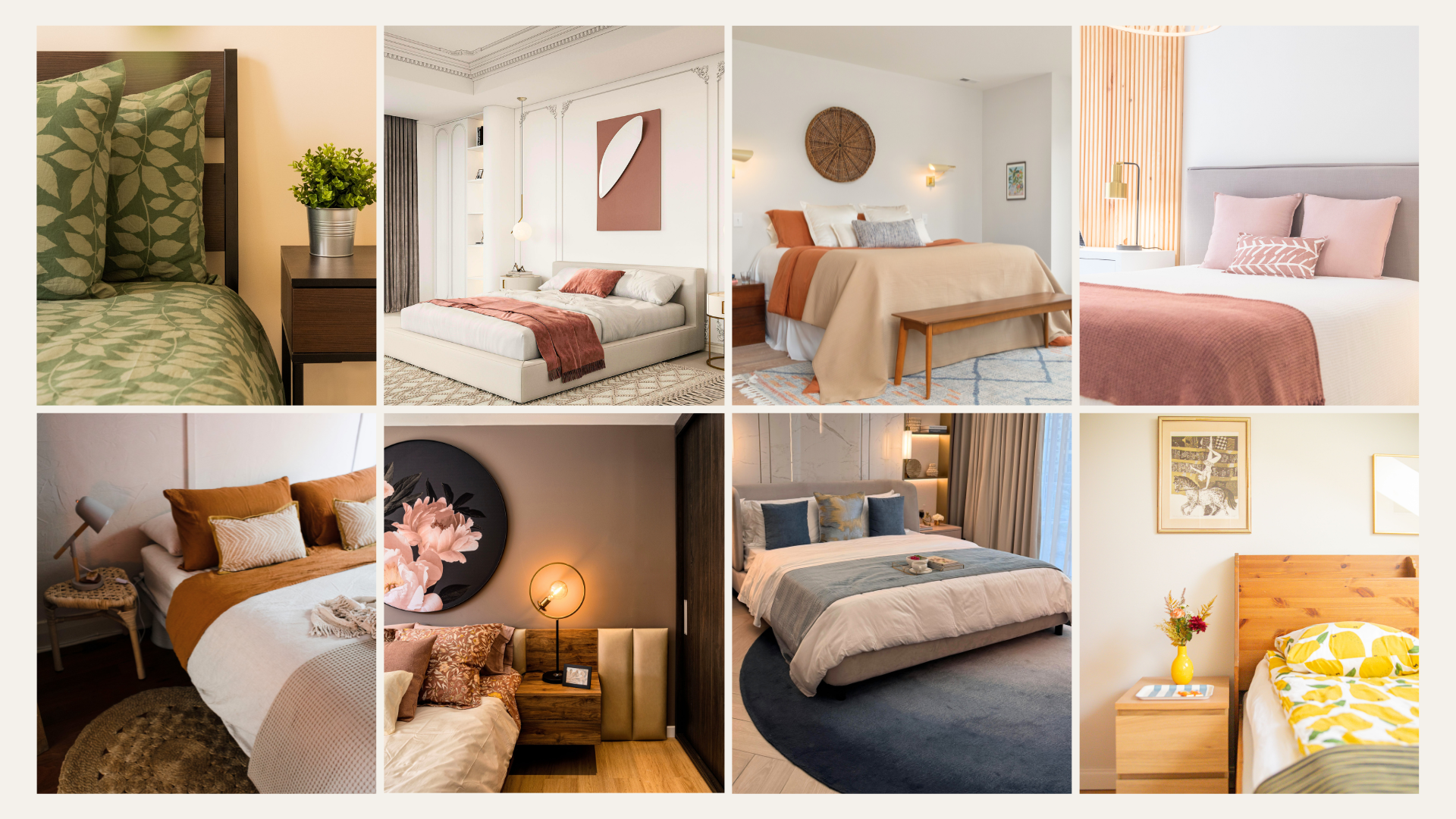
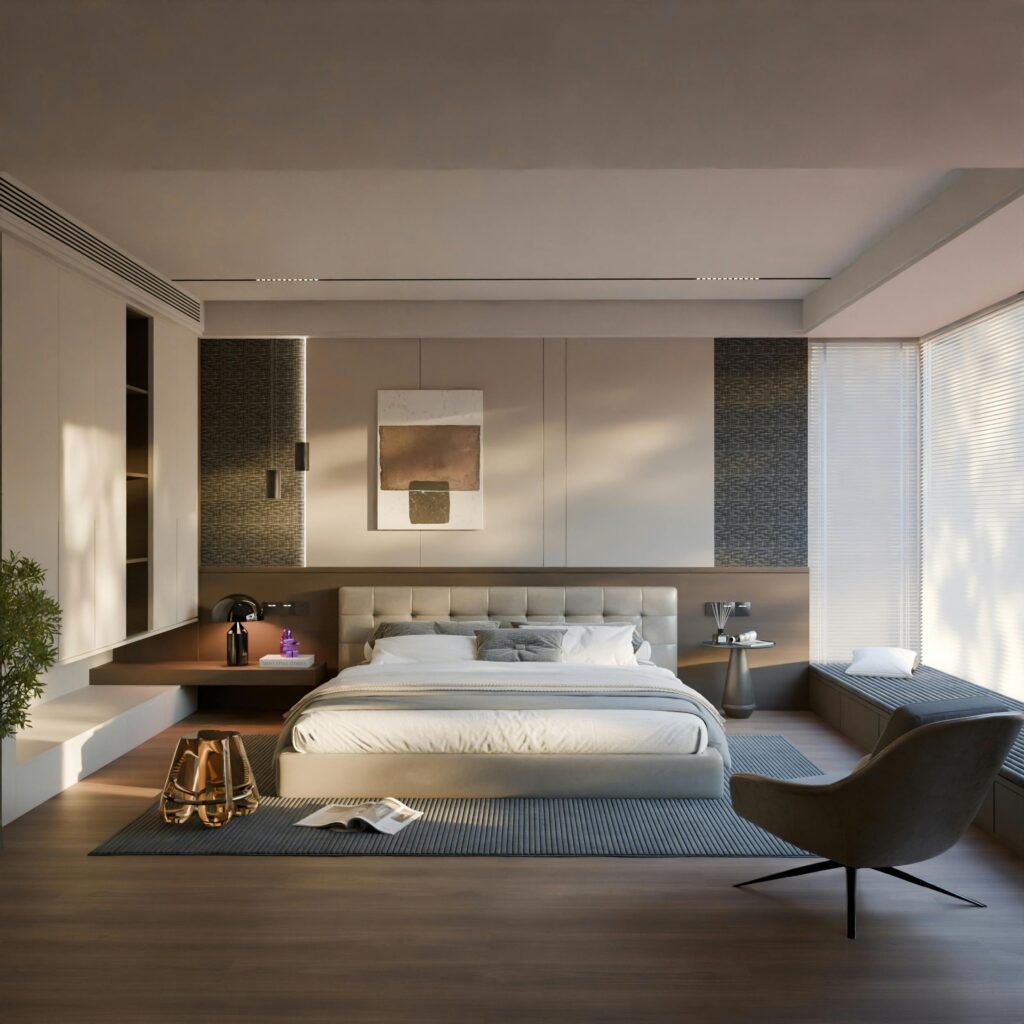
This is the most common and the one that I will recommend. It offers the sleekest design and it is the easiest to work with. Especially in your bedroom.
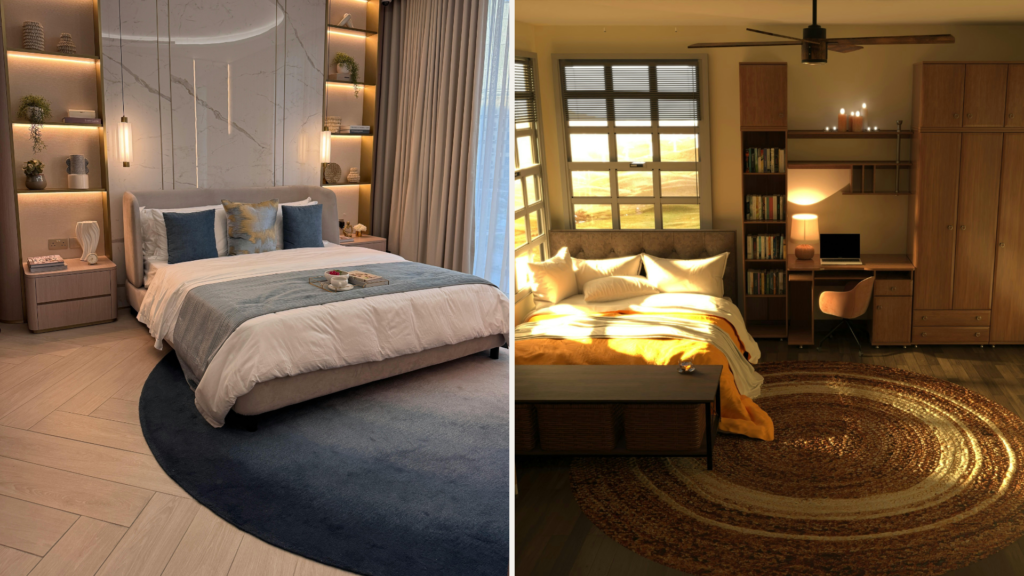
This can be a beautiful shape but I would not recommend this shape for your bedroom. If you want to do it: Placing it at the foot of the bed or completely to the side of the bed will be your best options.
This can be for rooms that are more whimsical and fun. They are used mostly as runners or side rugs and rarely used as the main rug under the bed.