
How to choose the perfect Couch for your Living Room
A Practical Guide
Couches, sofas, sectionals;
The list goes on. There are so many options out there for you to choose from!
Here’s the thing: this is something you will want to think about long and hard before you make a decision. Sofas aren’t just something you can replace every couple of weeks. They are heavy and expensive so you really want to choose the right one the first time around. Don’t get stuck with a sofa that you hate just because you didn’t do your due diligence. So let’s get started.
We will follow four easy steps:



FUNCTION
Before we decide on anything else, we must first consider what functionalities we would like our sofa or couch to offer us.
Avoiding this step is usually the reason people end up having to replace their selection.
Do You have Kids?
Think of what characteristics your child may hold that can affect your selection. Are they messy? Do they like to draw where they're not supposed to? Do they have mobility issues?
do you have pets?
Do you have a cat that loves to scratch up the furniture? Perhaps you have a dog that leaves fur everywhere. Make sure to list out anything that could become an issue by getting the wrong couch.
Do you allow food or drink on the sofa
Spills can happen to anyone so if you're concerned about this, you may want to select a couch that can be easily cleaned.
In your home, are there mainly tall or short people?
Depending on your response to this question, you will want to make sure you select a couch with a reasonably sized cushion. Too wide of a cushion, and short people will have a hard time getting on and off the sofa. Too small, and tall people will feel like they are sitting on a toy chair.
will you hold lots of guests?
Constantly hosting many guests will mean that you will need ample seating. This could also mean you want to be able to easily clean the couch in case of any accidental spills. Think of anything you may want from your couch in this scenario.
will anyone sleep on the couch?
Is there a possibility that anyone might sleep on this couch? If so, you may consider couches that can double as a bed.
how comfortable do you want your couch to be?
Think of what is comfortable to you. Do you want to feel like you're sitting on a cloud? If you have back problems, would you like the option of reclining your seat? Perhaps you prefer to sit more straight.
Do you need easy access to outlets?
Some homes have horribly placed outlets and if this is your home, you may want to consider a couch with integrated technology that allows you to plug any charger into it.
The above are only a few examples of some questions you can ask yourself.
Go ahead and list out any other functionalities you want your couch to offer that will work with your lifestyle. These will be your non-negotiables. From now on, any couch you look at will need to have the functionalities you listed. This will narrow down your options which is good for those that tend to get decision paralysis.
SPACE
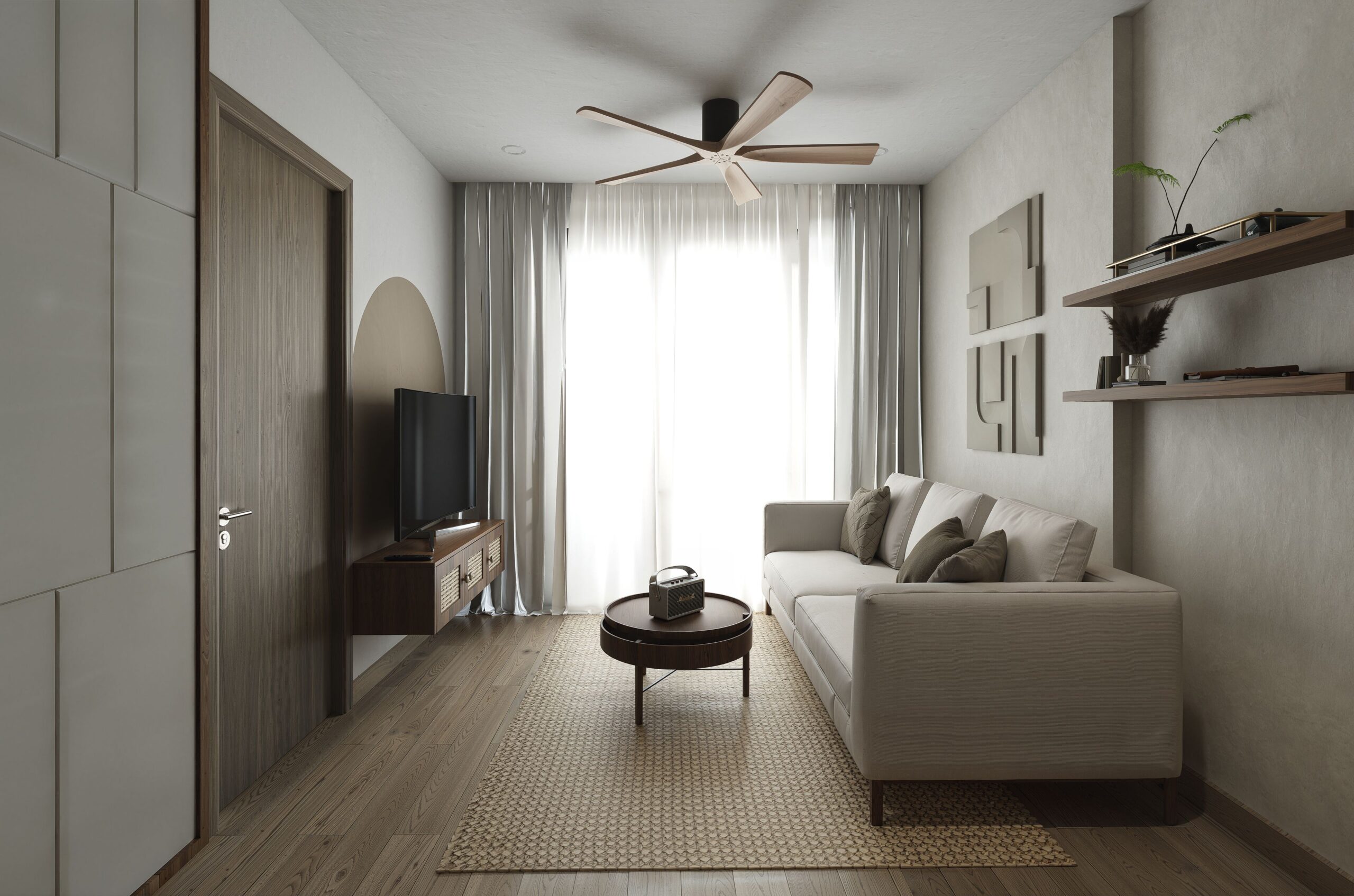
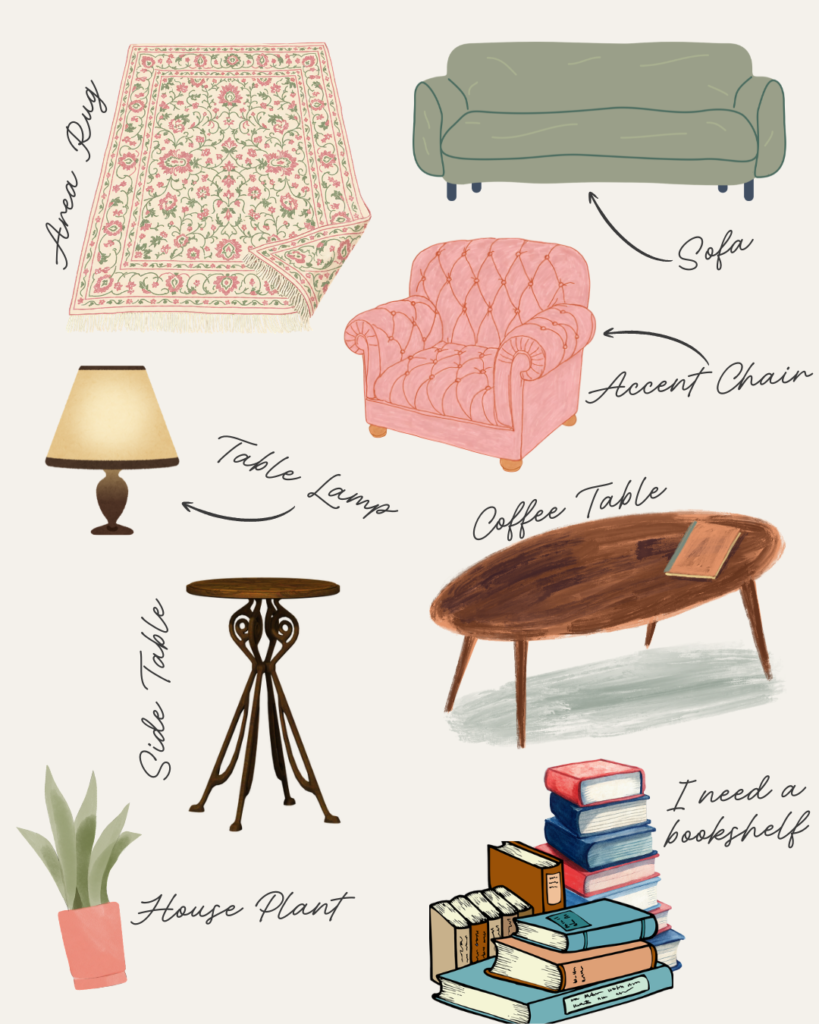
Our next step is to consider how much space we actually have. This is extremely important because lots of times we want it all; the sectional, the accent chairs, the arm chair, the coffee table, side tables, and even some floor lamps. Even if you can fit it all, we want to make sure everything has some breathing room. This is how we will make everything feel intentional.
Here’s what to do:
Step One: Make a list of everything you’d like to ideally place in your space.
Step Two: Physically walk to your living room to get a sense of how much or how little space you actually have. An important thing to remember here is that your sofa will most likely be the largest piece of furniture in your space. If you already have a sofa that you’re looking to replace, ask yourself this:
Is this couch taking over my space completely?
Does my living room still feel empty even with this couch here?
If your answer the first question is yes, then you may need to find a smaller option.
If your answer to the second question is yes, it could be one of two things. Perhaps your couch is much too small for your space OR perhaps it is just a matter of balancing it out with other furniture pieces like a coffee table or an accent chair.
If you currently have NO sofa at all, don’t worry. We will soon look at how we can determine the perfect size for our sofa.
Step Three: Now that we have evaluated our space, look back at that list you created in step one. Is that list practical? Will there be enough breathing room in between all furniture pieces? It’s crucial that we determine this so that we don’t run the risk of overcrowding.
This is an example of a living room that is too crowded.

This is an example of a living room that is too empty.
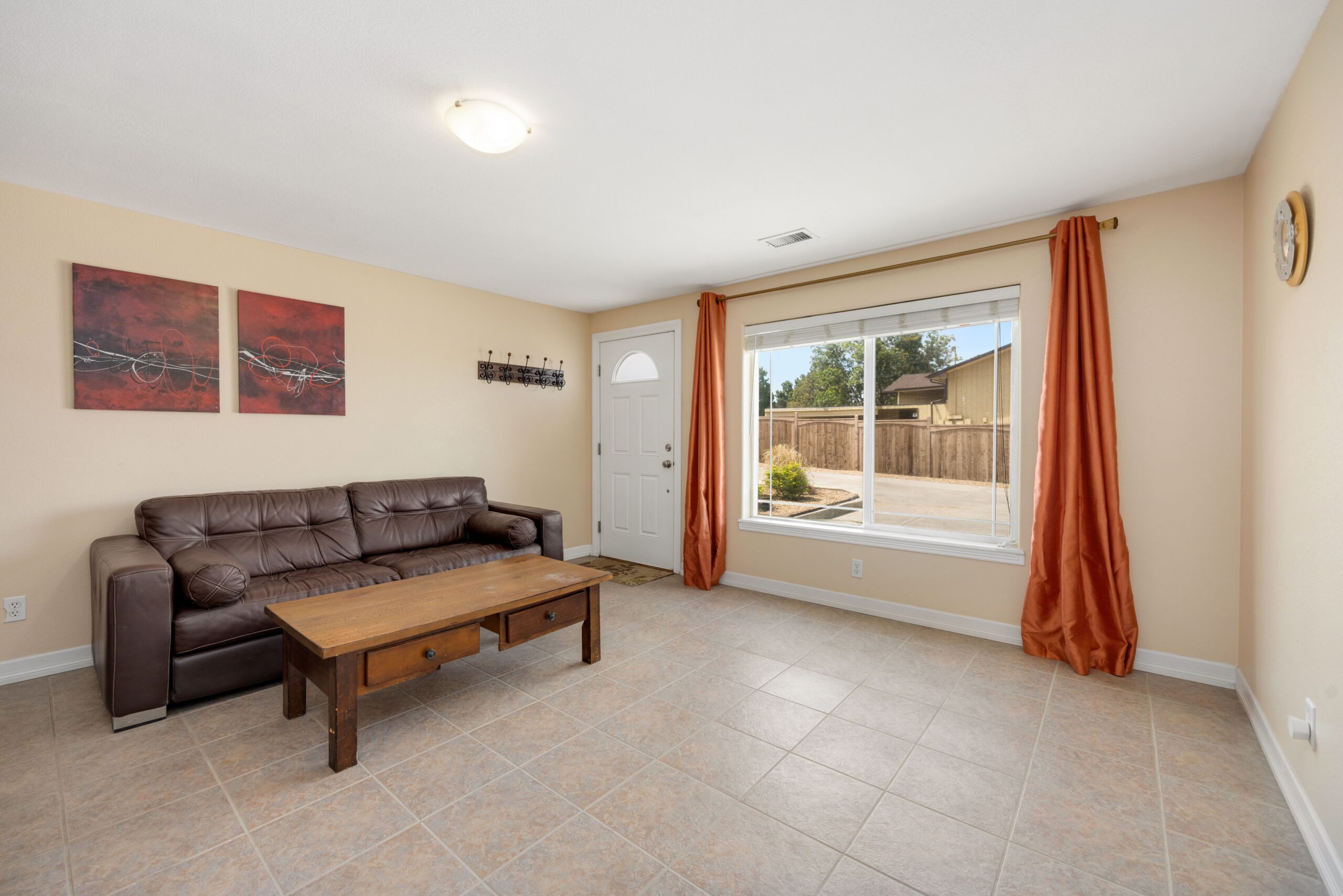
After evaluating your space, we can move on to our next step.
DIMENSIONS
Here is where we start to take action to ensure that our couch fits nicely in our space.
Our guideline will be this:
The sofa should be 2/3 the length of the wall behind it.
For open floor plans where the back wall extends into a different “room” of your home, section off the space. Then, apply the same guideline from above.
For those of you who need visual clarification, take a look at the graphic below.

Before we continue on, if you haven’t already, think about how tall you’d like your backrests and how wide you’d like the cushions to be. Keep in mind that the widest your sofa could possibly be is the widest of your doorways. So, make sure to measure any doorways, halls, or staircases that could pose a challenge.
As we move on to our most exciting and final step, keep the dimensions of your couch in mind. Couches and sofas come in a variety of shapes and sizes so as you are shopping around, look at their dimensions. Maybe map it out on the floor with painters tape and see how the size and shape will interact with the space and any furniture pieces you may already have.
Style
Style is our most exciting step. Use the guide below to help you decide.
It’s important to keep the quality of the base in mind when selecting your couch. If you know that your couch will be used very often by multiple people, you should invest in a sofa with a high quality base like hardwood instead of plywood. Be mindful of the fact that sofas can be quite the investment. You want to make sure that you select a good quality sofa that will last you years.
Most Popular Design Styles:
Modern
Couch Characteristics
Rectangular shapes, low backs, low to the ground, organic curves, exposed legs, low contrast neutral colors, modular sofas
Bohemian
Couch Characteristics
low to the ground, over stuffed cushions, frames of rattan, cane paneling, and exposed wood, earthy warm neutrals
Farmhouse
Couch Characateristics
Neutrals, overstuffed cushions, roll arms, floral patterns, stripes, deep seating
Traditional
Couch Characteristics
Roll arms, Chesterfield arms, camelback profile, button tufting, high backs, carved legs, mahogany, cherry, dark walnut
Other Design Styles to consider:
Mid-Century
Couch Characteristics
Tapered peg legs, exposed wood frames, low backs, narrow arms, button/blind tufting, terracotta, orange, yellow, green
Scandinavian
Couch Characteristics
Whites, light toned wood frames, slender tapered/ straight legs, clean lines
Industrial
Couch Characteristics
Exposed metal, vintage castor legs, brown leather, exposed stitching, square arms, boxy, blacks, greys, and dark colors
Investment Pieces
wool
Characteristics
Wool naturally bounces back which means the couch keeps its form over the years. It also repels water and is resistant to dust. However, wool is sensitive to harsh chemicals; so when it needs to be cleaned, it is advised to use a professional.
Full Grain Leather
Characteristics
Full grain leather is extremely durable and breathable. Two things to keep in mind is that it is susceptible to scratches and it needs to be conditioned every so often to prevent it from drying out or cracking.
Linen
Characateristics
Linen sofas are breathable, resistant to dust, and have strong fibers. Some cons to this material is that it wrinkles incredibly easily and it is not resistant to staining.
Top Grain Leather
Characteristics
Top grain leather is another great option for those who want a durable, low maintenance sofa. It is real leather but smoother. Because of its sanded surface, this material is not as breathable as full grain leather and it scratches more easily.
Mid-Range options
Cotton
Characteristics
Cotton is highly breathable, durable, and soft against the skin but it is prone to wrinkles and can absorb stains easily.
Chenille
Characteristics
Chenille is perfect for those who prioritize a soft and cozy feel. However, this material is prone to snags, can trap dust, and hold on to stains.
Velvet
Characateristics
Velvet is known for the way it reflects light and it offers a luxurious feel to your space. A con to velvet sofas may be that it can easily catch dust and is sensitive to stains.
Boucle
Characteristics
This fabric is very popular for contemporary, mid-century, and modern design styles. It adds texture into your space. Boucle holds its shape and is resistant to matting. Unfortunately, this material easy snags on things, holds onto crumbs, hair, and lint and is harder to clean because of it.
Most Budget Friendly Options
Polyester
Characteristics
Polyester is the most used fabric for sofas. It is durable, low maintenance, and stain resistant. Polyester, however, is prone to static, dust, and holding on to odors. Overtime, pilling can occur from friction.
Faux Leather
Characteristics
This is a great option for those who want leather but are not ready to make the investment. It is easy to clean and has a consistent look throughout. The con of faux leather is that it lacks the durability of genuine leather. It is prone to peeling and cracking and is less breathable.
Microfiber
Characateristics
Microfiber fabrics are resistant to stains and dust mites. They also offer a soft, cozy feel to your space. A con for this material is that it attracts hair, lint, and heat.
Overview Comparison Guide
|
Material
|
Durability
|
Maintenance Level
|
Affordability
|
|---|---|---|---|
Patterns and colors may be limited with some materials but there are a plethora of options to choose from. The trick here is to narrow down those options. Now, there are many ways to do this. We can narrow it down by your specific design style or the color scheme you may have or want to integrate into your space. Don’t worry, I will walk you through each one.
By Your Design Style
Hover mouse here to see content.
First, establish whether or not you’ve chosen a design style for your living room. If you have a clear style set in mind, perfect! All you have to do now is take a look at the “Design Styles” tab to see what characteristics can be found in a couch with your aesthetic. If your chosen style is not represented there, Pinterest is a great resource to see what others have incorporated into their space with your specific style.
You may find that your vision may be a mix of styles and that is okay. Most spaces are. Look for the commonalities they share and utilize that as your jumping off point. Again, use Pinterest to find what others are doing.
If you aren’t sure how to categorize your style, let’s try a different way of narrowing down your options.
By Your Color Scheme
Hover mouse here to see content.
Chances are, if you're trying to figure out what color your couch should be, perhaps you don't have a set color scheme in your living room already. If this is you, you have two options.
- Take a look at what colors naturally exist in your space already. (ex. the color of your flooring, the walls, any furniture you may already have) Note those colors down. If they already work well together, use those colors as a guide. A couch in one of those colors may work nicely in your space.
- Start from scratch. What colors are you naturally drawn to? Jot them down and choose three that you think look good together.
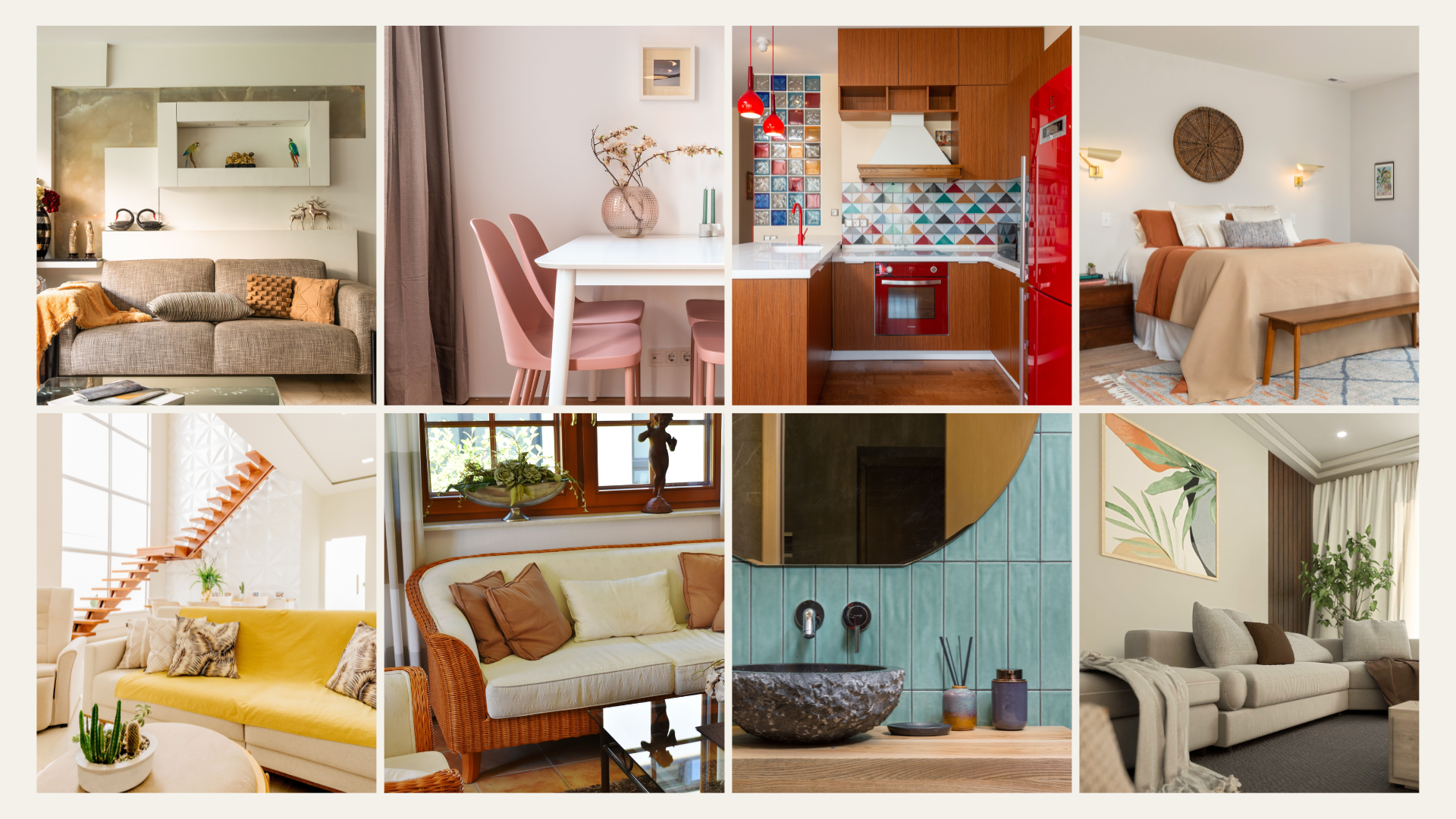
Both options should incorporate the 60/30/10 rule. Your color scheme should consist of 3 different colors. One of them will be used in 60% of your space, one in 30% and one in 10%. The three colors you choose should be used in a variety of hues.
Most of the time, major furniture pieces like sofas, fall into the color used 60% of the time but this is not a hard rule.
Here are some color pallet inspos:
The standard sofa is referring to a three or full length two seater.

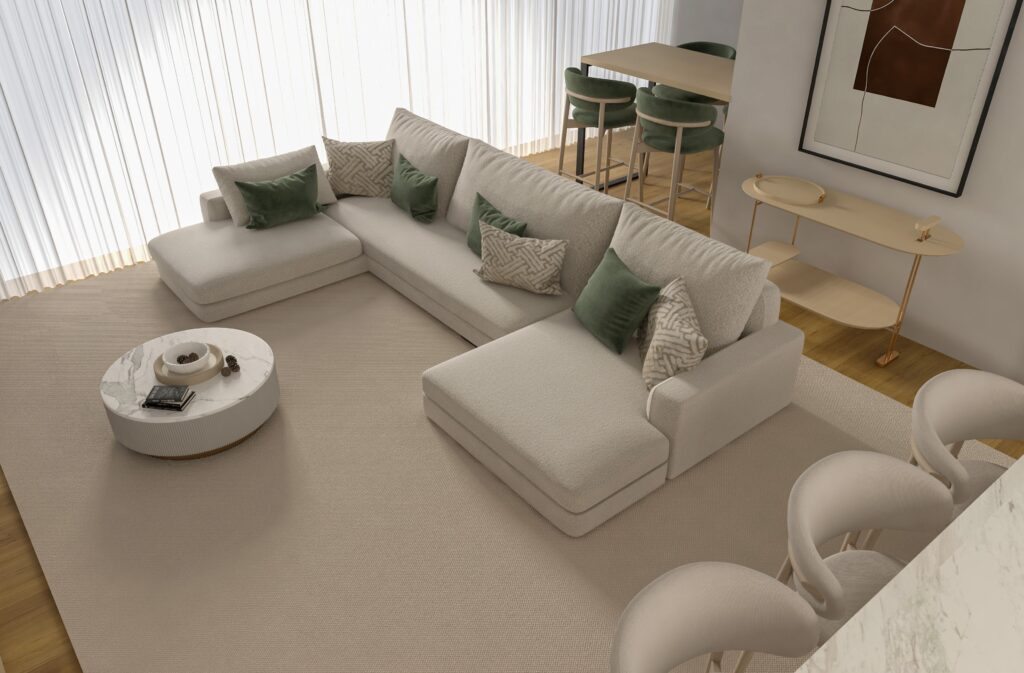
This sofa, usually very large, forms a U shape. This type of sofa is not recommended for small spaces.
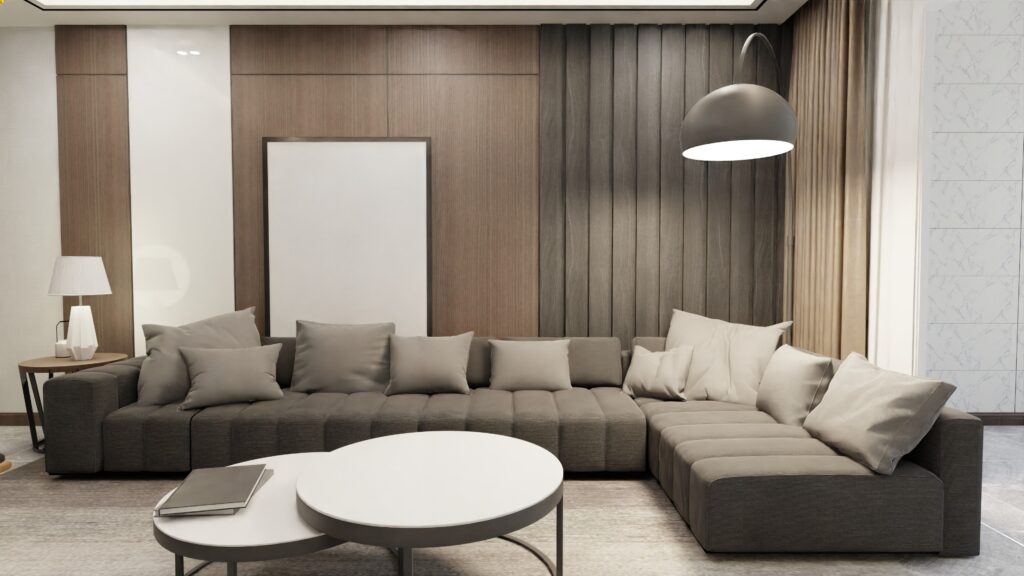
This is a very common sofa in many spaces because it can seat many people. The L-Shape sofa is usually large but can also come in smaller sizes.
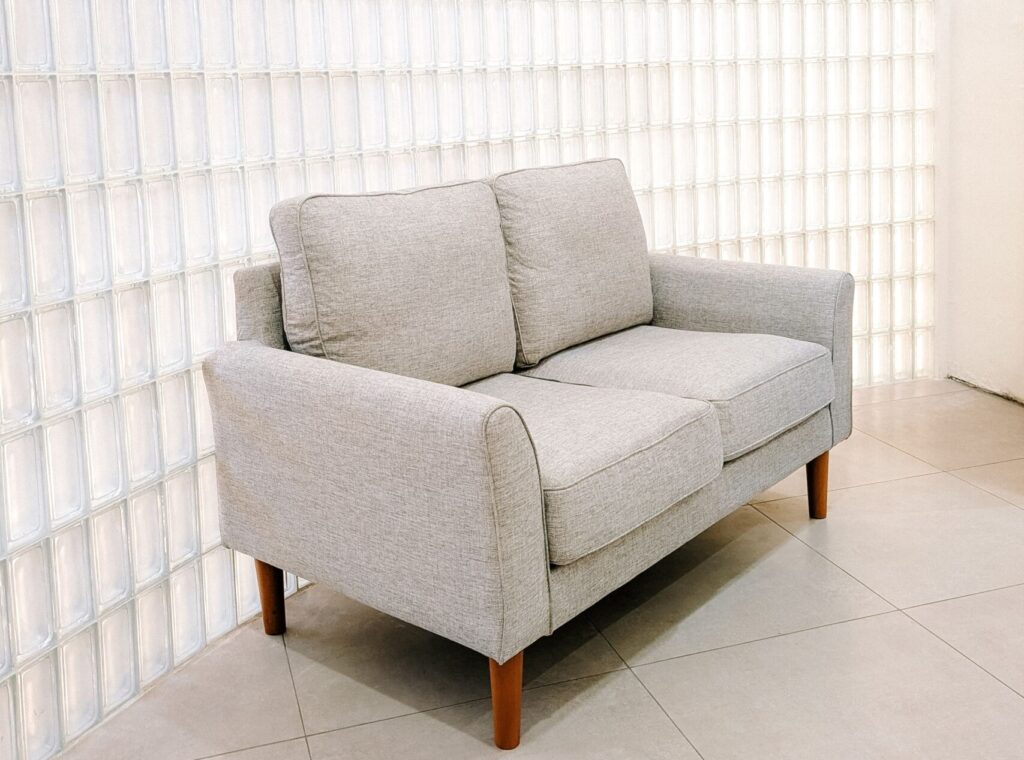
The Loveseat is similar to the two seater standard sofa but it is much smaller. The loveseat is usually to the side of a standard sofa unless the living room is extremely tiny or it is placed in a studio apartment.
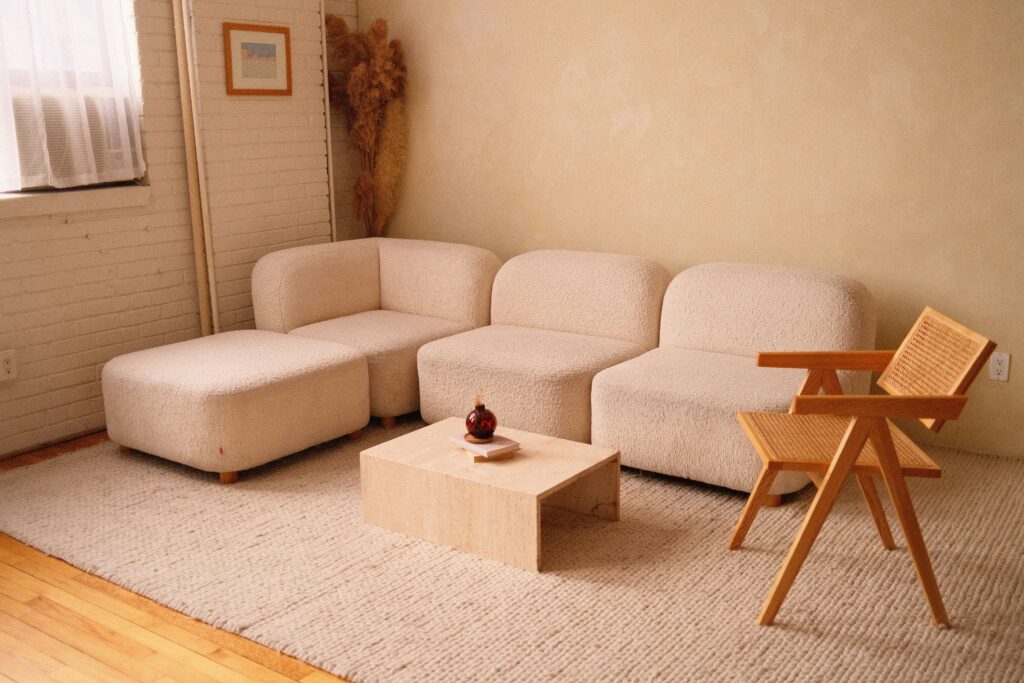
The modular sofa is a great choice for those who want a variety of options on how to shape their living rooms. You can organize each piece to form different shapes like the standard, U shape, and L shape.
The curved sofa is great for those who prioritize conversations with guests over simply staring at the TV. They soften the space up but work best in larger rooms while being away from the wall.