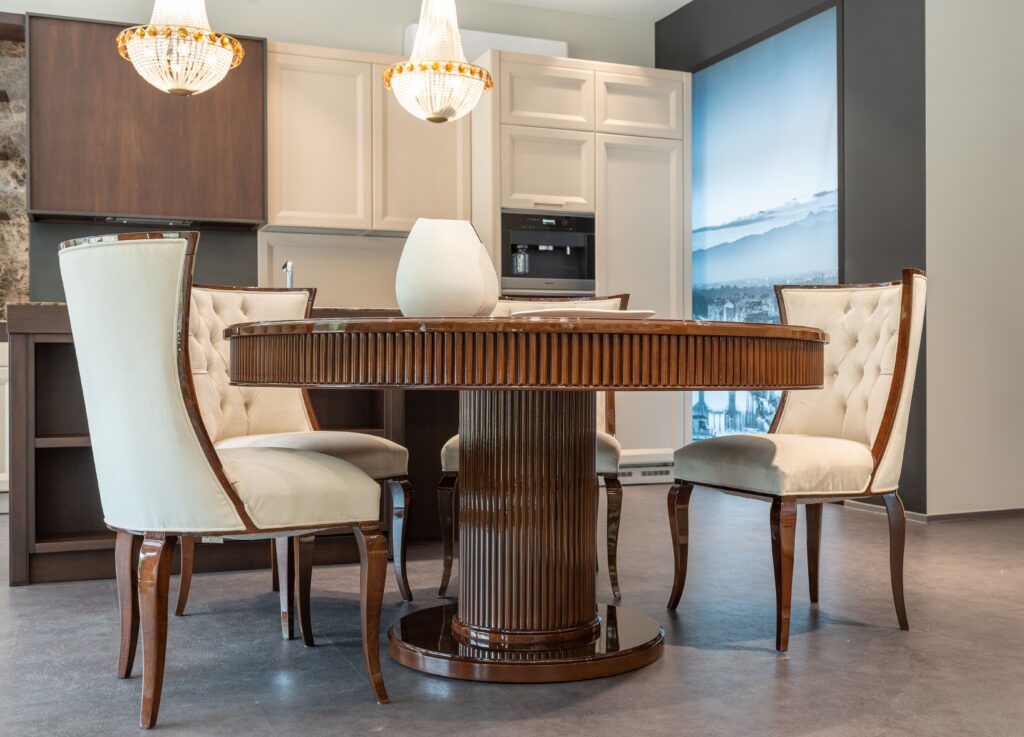
How to choose the perfect table for your Dining Room
A Practical Guide
If you’re reading this, chances are you really care about the look of your space and you are on the hunt for a dining table. For most people, it’s common to settle for the nicest dining table set in their price range at the closest furniture store to them. This isn’t exactly a sin however since you’re here reading this, YOU probably want to be more selective with your shopping. For starters, let’s try to avoid the matching set, and do something a little more custom and tailored to your interests. (Note: If you like the matching sets, there’s nothing wrong with that. You do you!) This guide will solely focus on selecting a dining room table.
So let’s get started.
We will follow four easy steps:


FUNCTION
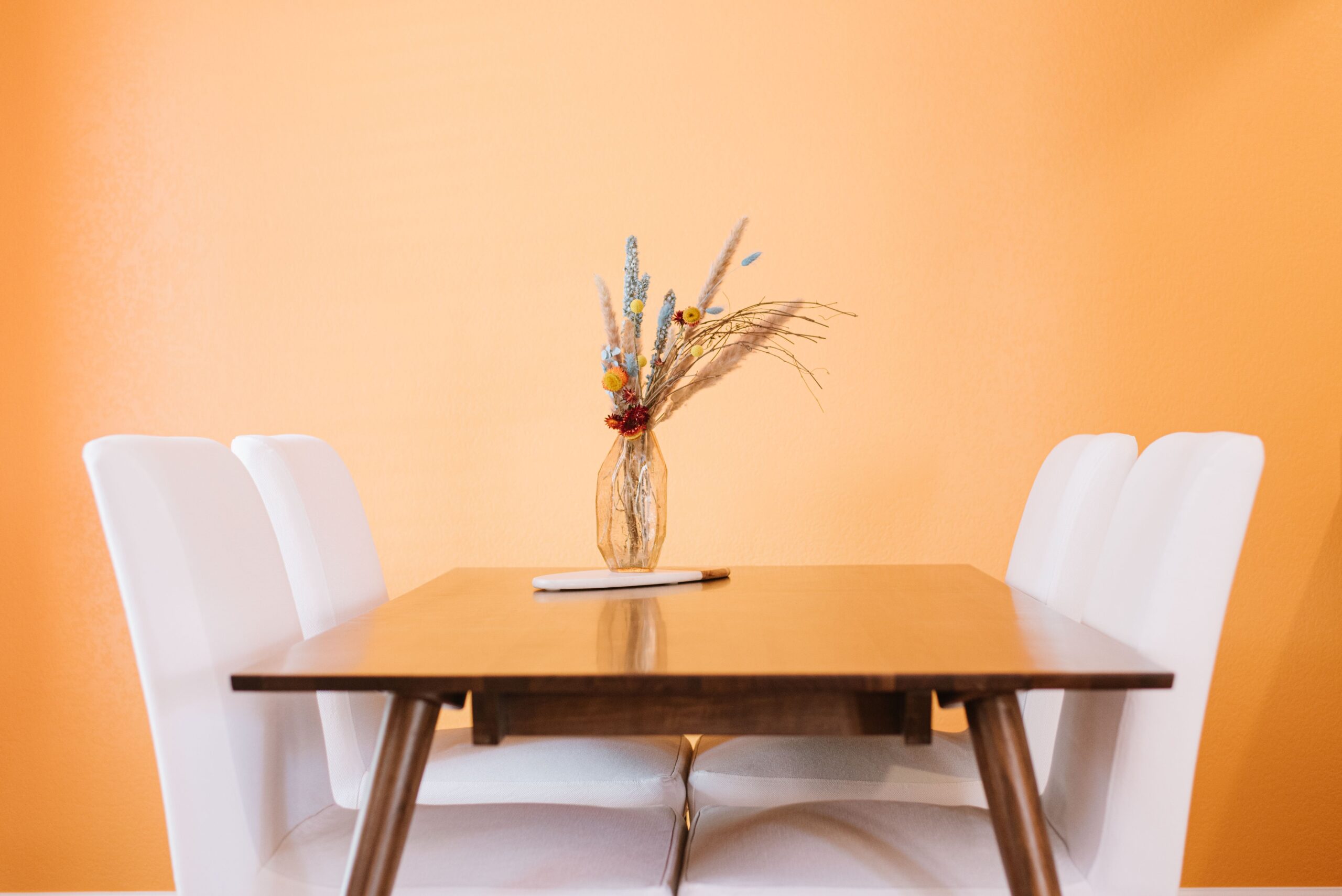
Before we decide on anything else, we must first consider what functionalities we would like our dining room table to offer us.
Avoiding this step is usually the reason people end up having to replace their selection.
Do You have a large family?
Depending on how large of a family you may have, you may want to choose a rectangular or oval shaped table. These usually allow for more seats.
do you have very little space?
In the case that you have little room to work with, you will want to stay away from rectangular tables and opt for a round or small square table.
Do you have a small space but host a lot of guests?
There are many tables that can extend further out when need be.
In your home, is there someone with mobility issues?
In this case, you want to make sure you don't choose a table that is too tall. Everyone is different so take into account your family's own personal needs.
Will you be using this table everyday?
If so, you may want to get a table that is durable and high quality.
Is your dining room too dark and cramped?
A table with a glass top can help make a space feel more airy by reflecting light.
Are you or anyone in your home clumsy?
Perhaps selecting an easy to clean table will be the best option for you.
Are you worried about the safety of your kids?
Consider purchasing a table with rounded corners.
The above are only a few examples of some questions you can ask yourself.
Go ahead and list out any other functionalities you want your dining table to offer that will work with your lifestyle. These will be your non-negotiables. From now on, any table you look at will need to have the functionalities you listed. This will narrow down your options which is good for those that tend to get decision paralysis.
SPACE
Our next step is to consider the space we are working with. The size and shape of your room will dictate the type of table we can reasonably place in there.
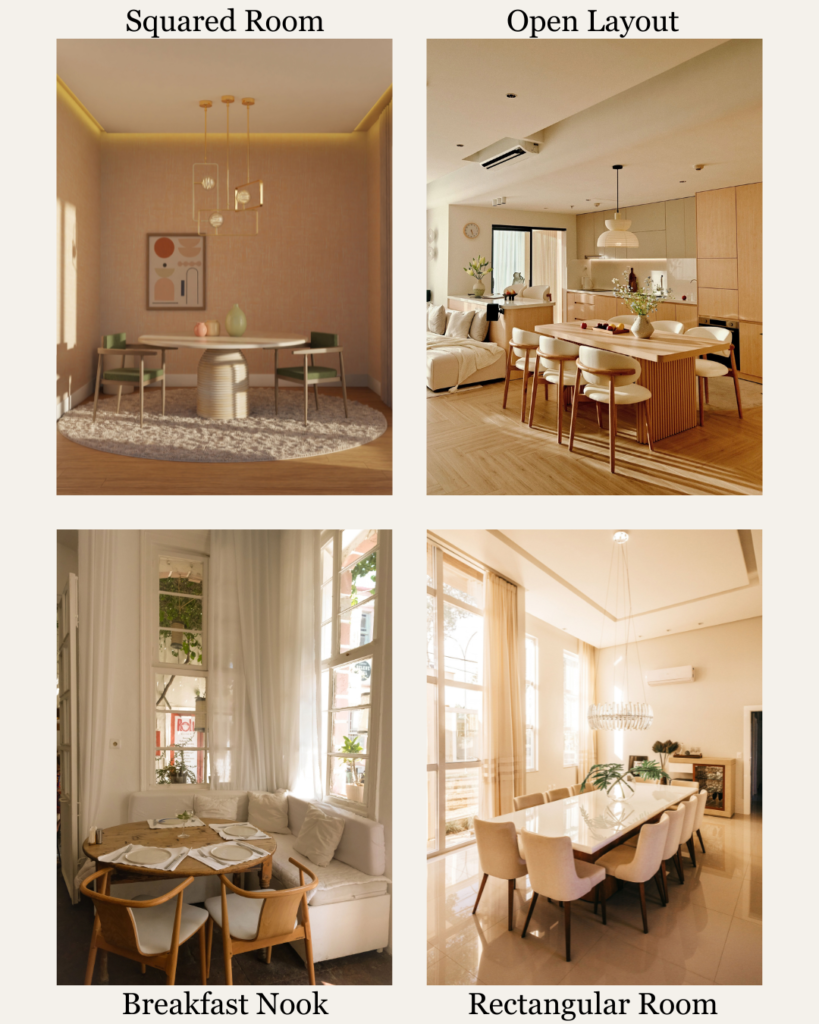
We have 3 main types of spaces
- The Squared Space
- The Rectangular Space
- The Open Layout
The important guideline to follow here is to ALWAYS follow the shape of your room.
Standard Squared Spaces: Round or squared tables are best.
Rectangular spaces: Oval or rectangular tables are best.
Open layout: If you have an open dining space and no formal room, have a clear visual divide of each section of your open layout. In other words, have a clear understanding of where your kitchen stops and where your dining area starts. If you need more help with this, look towards architectural signs like doors, walls, raised or lowered ceilings to help guide your divides of the open space. THEN dictate whether that space leans more towards a squared or rectangular shape.
Have A Bay Window?: This is commonly found in dining rooms and if you do have one, consider a breakfast nook. They are perfect for those who prefer to have a cozy and casual place to eat. Otherwise, follow the shape of your room.
It is also important to consider:
how much space do we actually have in this room?
Trying to fit too large of a table in a small space will look crowded and be hard to walk around in. For tight spaces, round tables take up the least amount of space so that is something to keep in mind.
After evaluating your space, we can move on to our next step.
DIMENSIONS
Here is where we start to take action to ensure that our table fits nicely in our space.
Our guideline will be this:
Keep 30-36 inches (3 ft/ 90cm) from the table to the wall to allow for chair movement.
It is also best to keep at least 24 inches of width per seat.
Measure the width and length of your room to get an idea of how large your table can be. Remember:
- If the length and width are pretty equal (square), a round or square table would look best
- If the length is larger than the width (rectangular), an oval or rectangular table would look best
For those of you who need visual clarification, take a look at the graphic below.
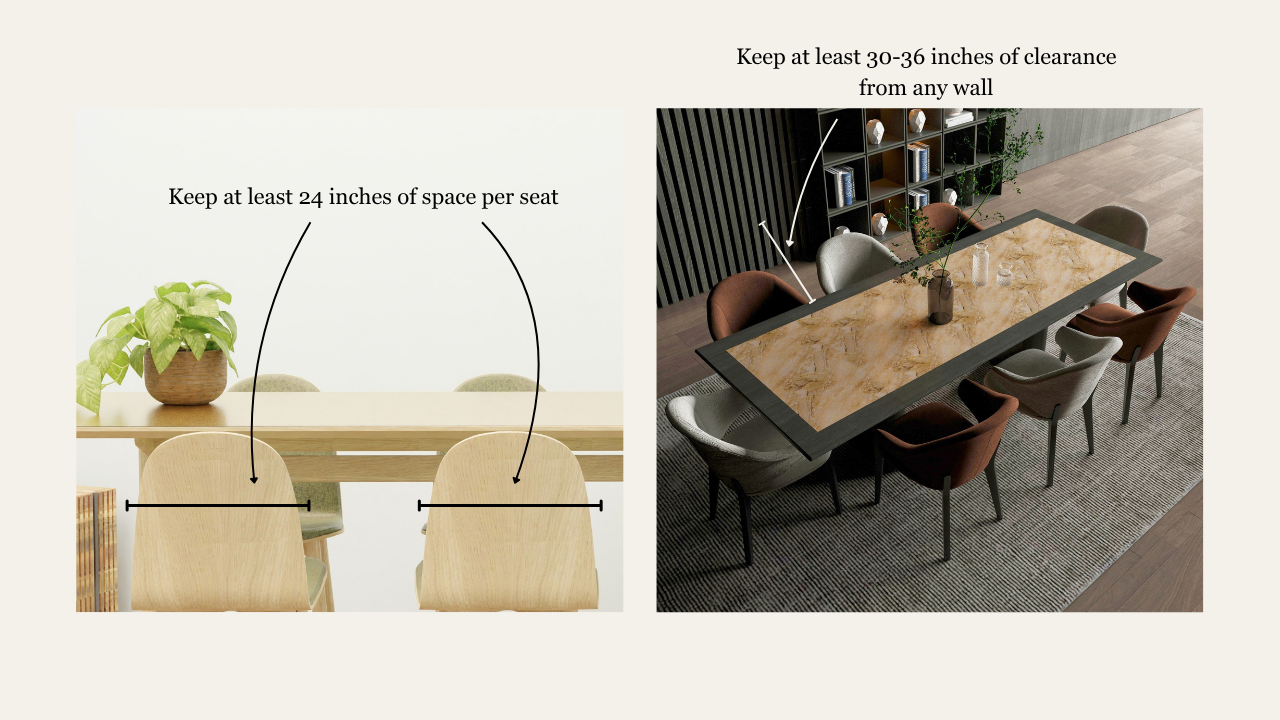
Before we continue on, if you haven’t already, think about how tall you’d like your table to be.
As we move on to our most exciting and final step, keep the dimensions of your table in mind. Kitchen tables come in a variety of shapes and sizes so as you are shopping around, look at their dimensions. Maybe map it out on the floor with painters tape and see how the size and shape will interact with the space and any furniture pieces you may already have.
Style
Style is our most exciting step. Use the guide below to help you decide.
Most Popular Design Styles:
Modern
Table Characteristics
clean lines, geometric shapes, mix of industrial and natural materials (wood, metal, glass, slim legs) low profile, pedestals
Bohemian
Table Characteristics
pale oak, mango wood, teak, or rattan, round and oval shapes
Farmhouse
Table Characteristics
thick trestle, rustic, painted, typically has two tones, (natural wood and painted)
Traditional
Table Characteristics
lots of details, carvings, high gloss varnish, heavy, solid wood
Other Design Styles to consider:
Mid-Century
Table Characteristics
pedestal tables, tapered slim legs, walnut, teak, oak, warm ash, rounded corners
Scandinavian
Table Characteristics
blonde pale wood tones, clean silhouettes, slender legs, airy, bright, minimalist
Industrial
Table Characteristics
exposed metal, solid wood slabs, barn wood, distressed
Investment Pieces
Solid Wood
Characteristics
Durable, timeless, repairable BUT Susceptible to water rings, heat marks
Natural Stone / Marble
Characteristics
Heat resistant, sturdy BUT Can stain easily because of the porous surface (especially marble), very heavy, requires re-sealing every so often
Mid-Range options
Ceramic
Characteristics
highly resistant to knife scratches and stains, non porous, heat resistance BUT corners and edges can chip
Most Budget Friendly Options
Tempered glass
Characteristics
Creates an airy and open feel, easy to clean, able to showcase a beautiful base through the glass BUT fingerprint and dust magnet, creates loud clink noises when setting down plates, susceptible to scratches
Wood Veneer
Characteristics
Lightweight, budget friendly option BUT If water seeps under the edges, the veneer layer can bubble, lift, or peel away from the core over time, harder to refinish or repair
Metal
Characateristics
Durable, resistant to stains, easy to clean BUT can feel cold, and can be heavy
Overview Comparison Guide
|
Material
|
Durability
|
Maintenance Level
|
Affordability
|
|---|---|---|---|
Finishes and colors may be limited with some materials but there are a plethora of options to choose from. The trick here is to narrow down those options. Now, there are many ways to do this. We can narrow it down by your specific design style or the color scheme you may have or want to integrate into your space. Don’t worry, I will walk you through each one.
By Your Design Style
Hover mouse here to see content.
First, establish whether or not you’ve chosen a design style for your kitchen / dining room. If you have a clear style set in mind, perfect! All you have to do now is take a look at the “Design Styles” tab to see what characteristics can be found in a table with your aesthetic. If your chosen style is not represented there, Pinterest is a great resource to see what others have incorporated into their space with your specific style.
You may find that your vision may be a mix of styles and that is okay. Most spaces are. Look for the commonalities they share and utilize that as your jumping off point. Again, use Pinterest to find what others are doing.
If you aren’t sure how to categorize your style, let’s try a different way of narrowing down your options.
By Your Color Scheme
Hover mouse here to see content.
Chances are, if you're trying to figure out what finish your table should be, perhaps you don't have a set color scheme in your dining room already. If this is you, you have two options.
- Take a look at what colors naturally exist in your space. (ex. the color of your flooring, the walls, any furniture you may already have) Note those colors down. If they already work well together, use those colors as a guide. A table in one of those colors may work nicely in your space.
- Start from scratch. What colors are you naturally drawn to? Jot them down and choose three that you think look good together.
Both options should incorporate the 60/30/10 rule. Your color scheme should consist of 3 different colors. One of them will be used in 60% of your space, one in 30% and one in 10%. The three colors you choose should be used in a variety of hues.
When in doubt, choose a table that shows off its natural wood because wood finishes typically look good in most styles.
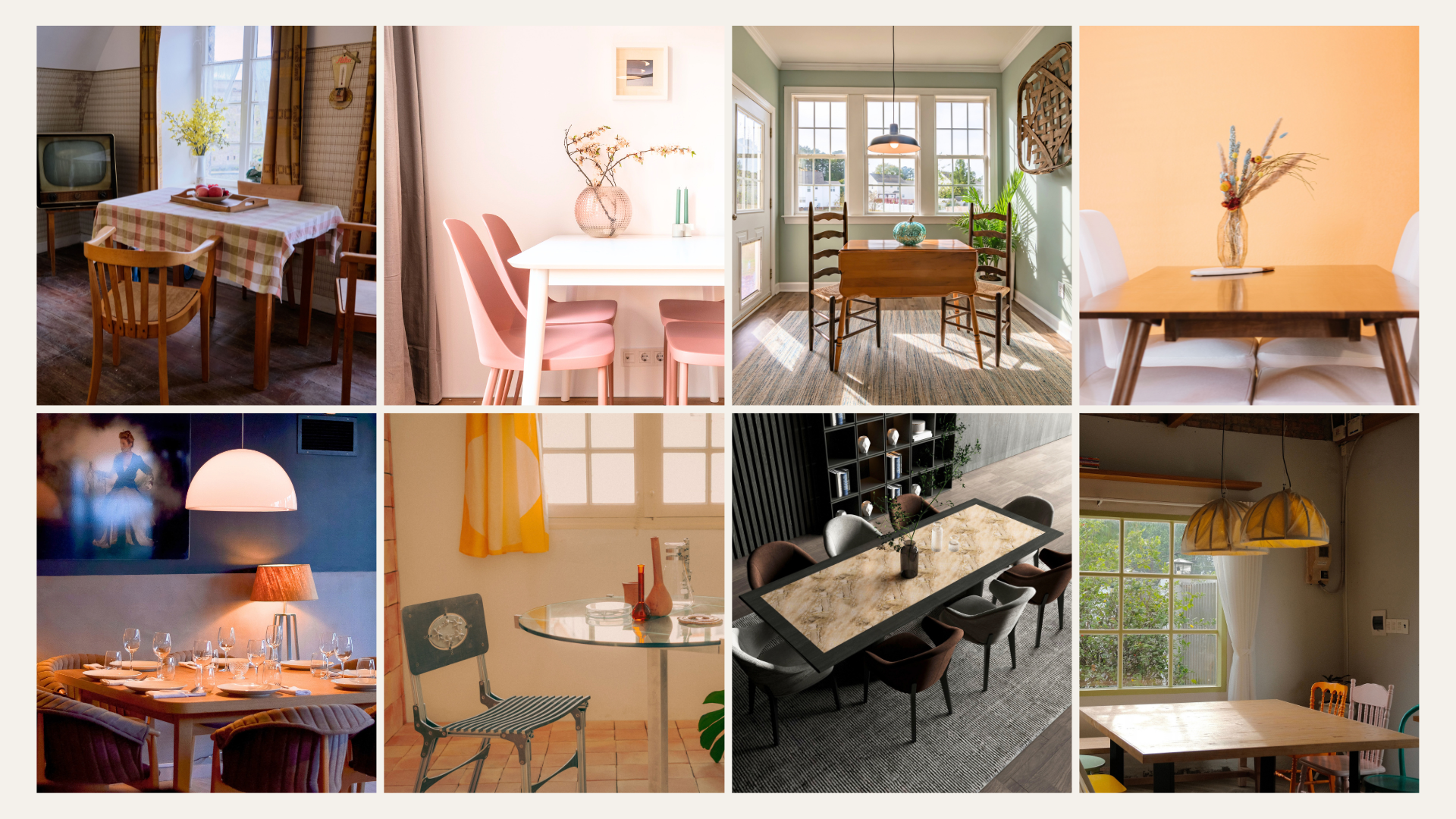
Here are some color pallet inspos:
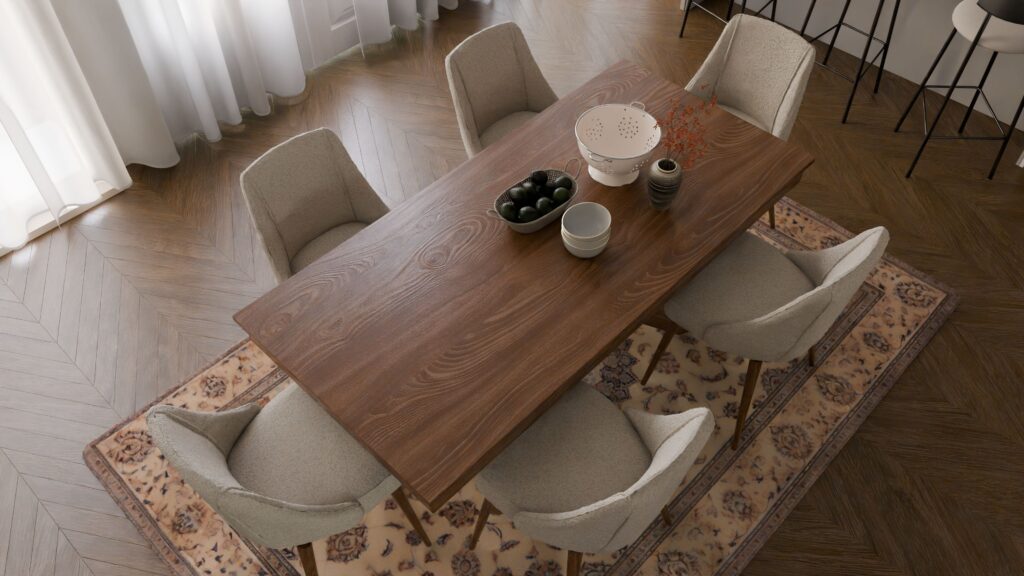
This is the most common shape. It allows for more seating and has the most surface space. This is also the most formal dining table.
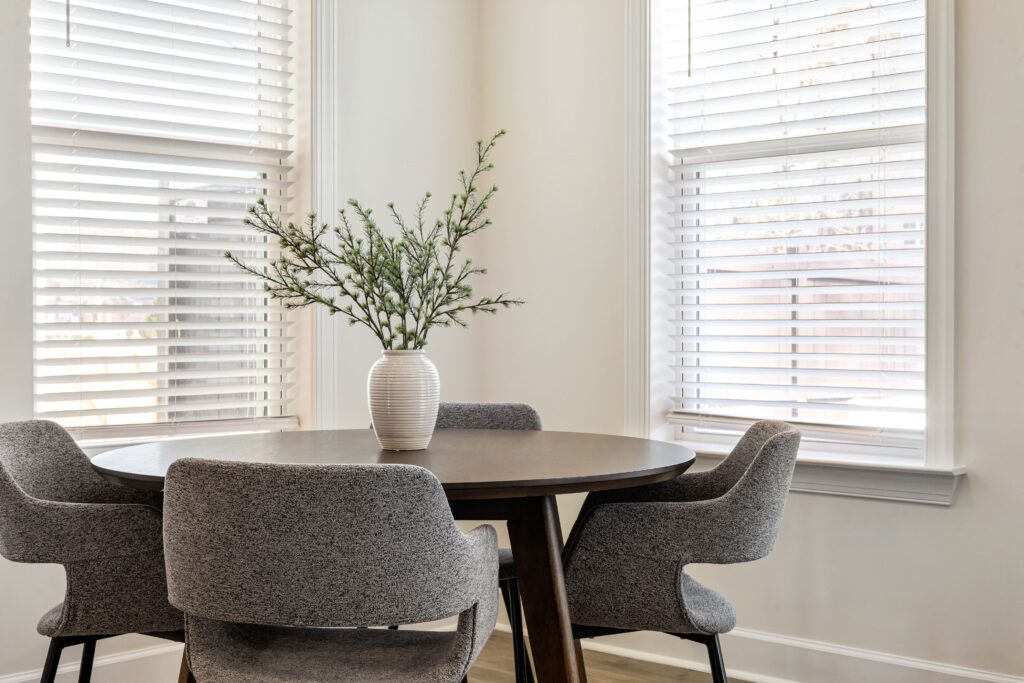
This shape takes up the least space making it perfect for small rooms. This is best for small groups while encouraging conversations.
With square tables, the visual weight is distributed equally on all sides.
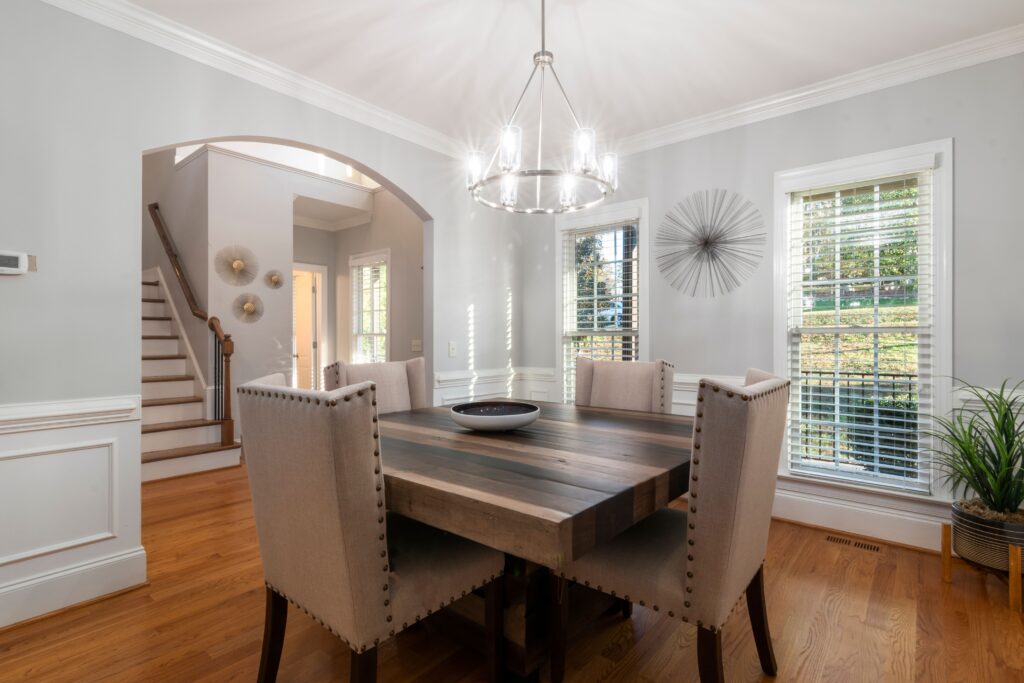
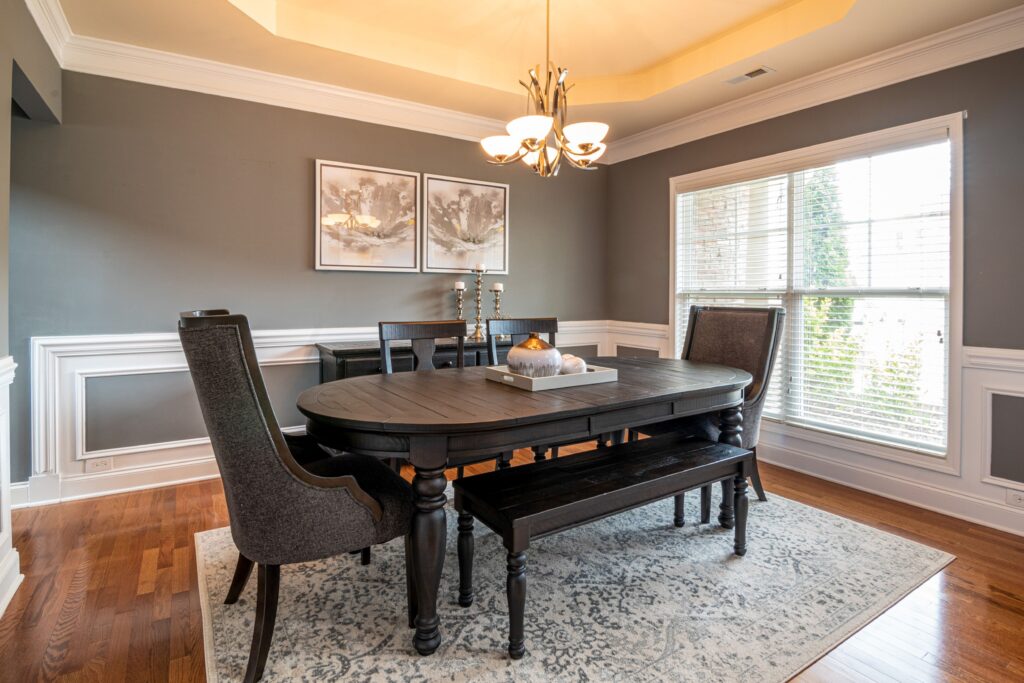
The oval shape is essentially a mix of the round and rectangular shapes. It is a more casual version of the rectangular table while maintaining a longer length.
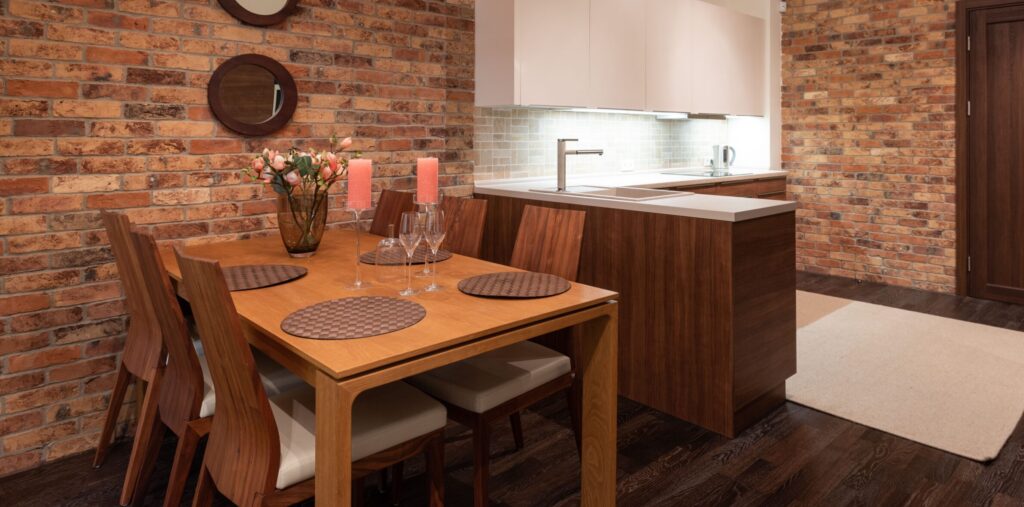
This refers to the base of your table. Four-legged is a very common base and this just means the table has four legs.
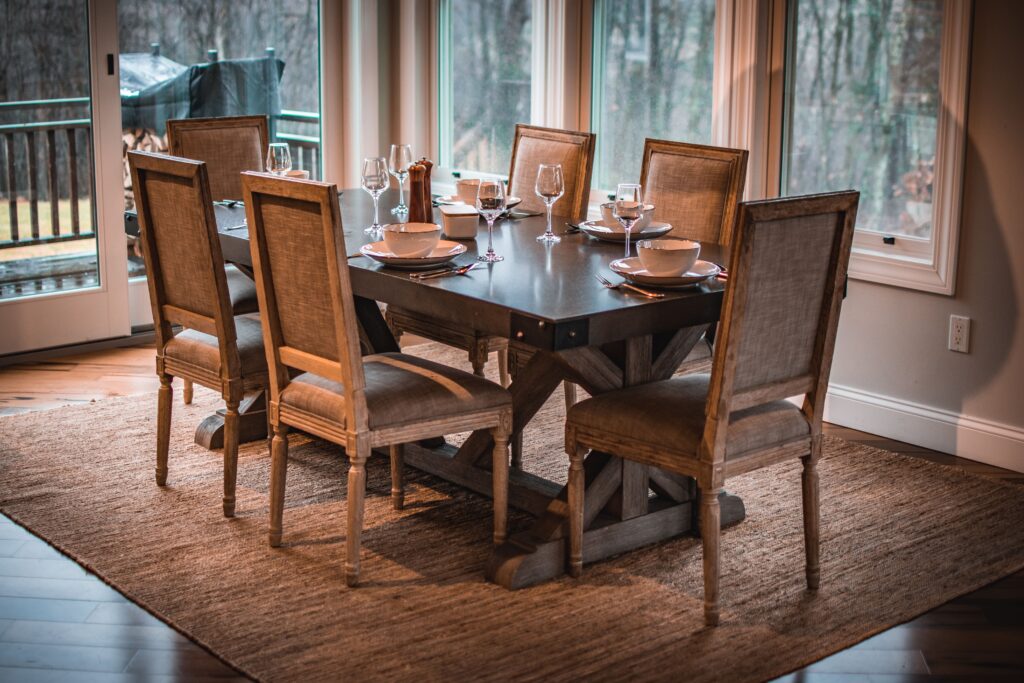
This refers to the base of your table. A trestle table is a table that has two separate frames connected by a beam.
This refers to the base of your table. A pedestal table is a table with just “one leg” in the center.