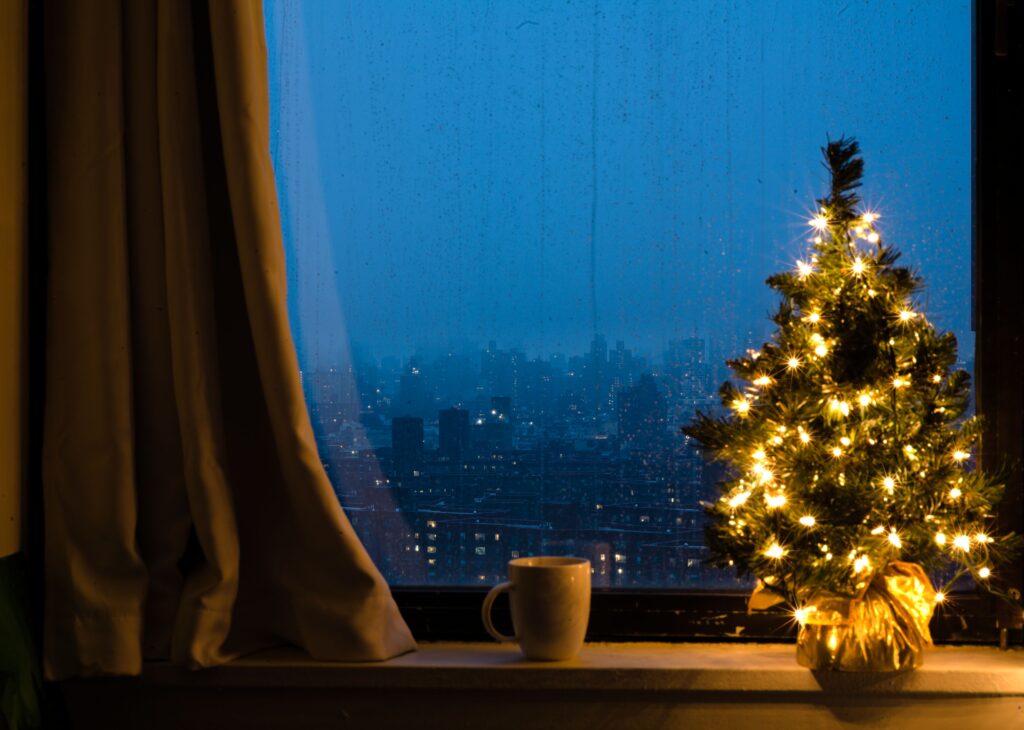
Christmas is coming! This means it’s time to start decorating for the holidays and the tree is undoubtedly the centerpiece of it all. Whether you’re replacing an old one or buying one for the very first time, the goal is to find a tree that meets your needs and makes you happy. So, let’s get started.
We will follow four easy steps:
Function
Space
Dimensions
Style
FUNCTION
Before we decide on anything else, we must first consider what functionalities we would like our tree to offer us.
Avoiding this step is usually the reason people end up regretting their selection.
Do you want a timeless or trendy tree?
Timeless trees are those that rely on natural and traditional elements. These never go out of style.
Trendy Treesincludes options like colorful, silver, gold, or upside down trees. Typically, with anything following a trend, you have to be okay with replacing it sooner rather than later. You might love it today, but you may hate it next year.
Will you be placing a topper on the tree?
If you plan on placing a topper on your tree this year or the next, make sure you account for it when selecting the height of your tree.
Do you want your tree to be a blank canvas?
If you’d like to decorate your tree differently every year, make sure to choose a tree without built-in lights or preset decorations.
Do you want a low maintenance tree?
A low maintenance tree can mean choosing one that doesn’t leave flocking or glitter all over the floor.
Do you want a tree with a fast set up?
If you want a tree that can be set up quickly, choose one that comes pre-lit and pre-decorated.
The above are only a few examples of some questions you can ask yourself.
Go ahead and list out any other functionalities you want your christmas tree to offer that will work with your lifestyle. These will be your non-negotiables. From now on, any tree you look at will need to have the functionalities you listed. This will help narrow down your options.
SPACE
Once you’ve established where in the room you’d like your Christmas tree to be, we can consider the space we’re working with.
Small Space?
There are plenty of options for small spaces, but first, define what a “small space” means to you. Is it a living room with low ceilings? Or perhaps a bedroom with only a small corner to spare? Whatever your space, there is an option for you.
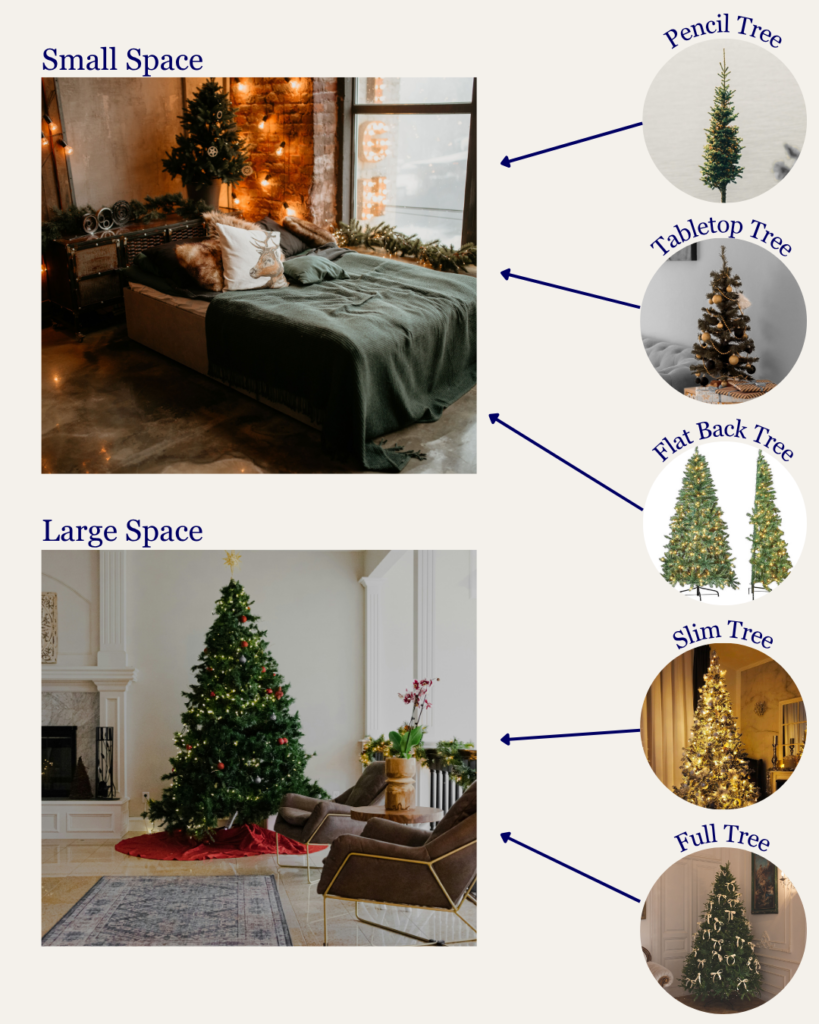
1. tabletop trees
These are miniature Christmas trees that can sit on any table top. Perfect for spaces that don’t have any floor space available.
2. Flat back trees
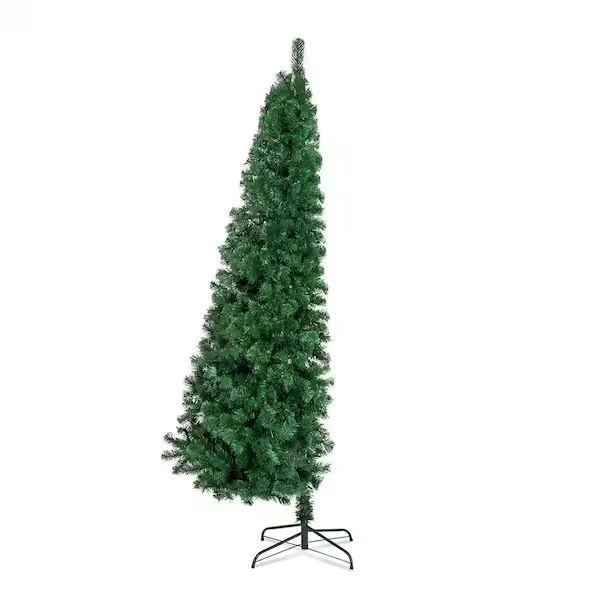
Flat-back (or half) trees give you the visual appeal of a full tree without taking up as much floor space because they sit flush against the wall.
3. Pencil Trees
Pencil trees are the slimmest option available, making them ideal when you want to minimize floor space as much as possible.
4. Slim Trees
Slim trees are slightly wider than pencil trees. They take up a little more room, but still nowhere near as much as a traditional full Christmas tree.
Large space?
Large spaces can accommodate tall, full Christmas trees or any other style of your choice. Just remember:
a tree that is too small in a large room can look awkward and out of proportion.
After evaluating your space, we can move on to our next step.
DIMENSIONS
How to Find the right height
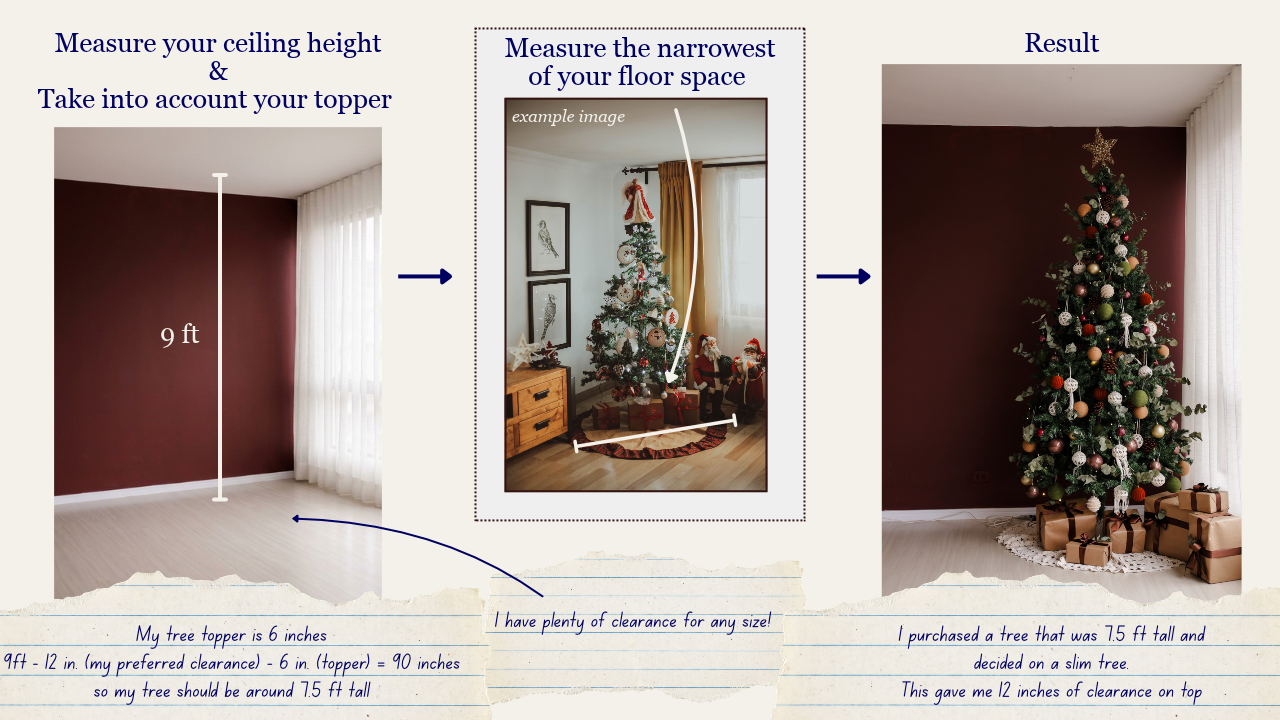
Step one: Measure your Ceiling Height
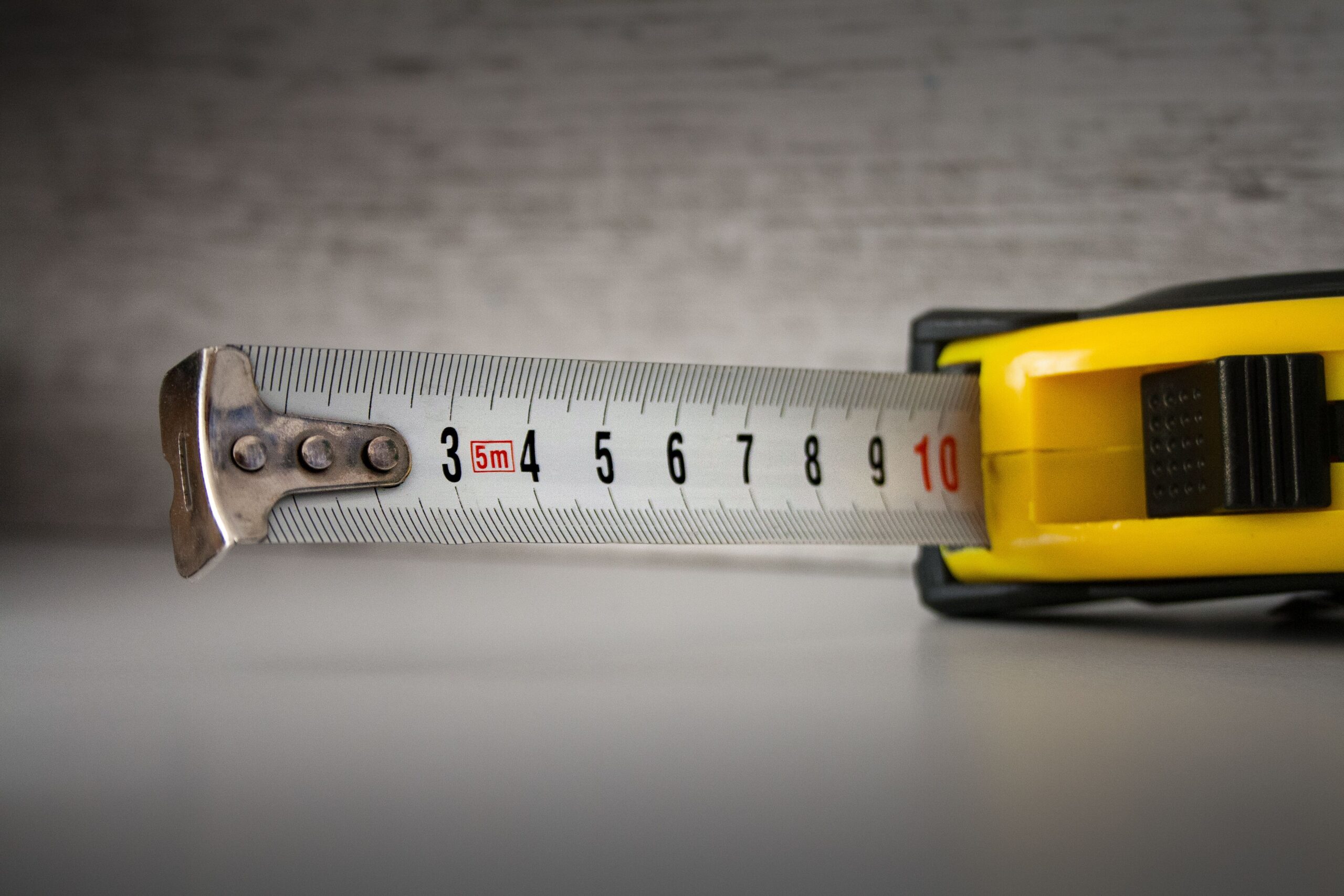
Use your measuring tape to measure straight from the floor to the ceiling.
Standard ceiling heights typically range from 7 to 9 feet.
Step two: Calculate your clearance and tree topper
Ideally, your tree should sit 12 to 18 inches below your ceiling. Subtract 12 to 18 inches from your ceiling height.
Using a tree topper? If you know the height of your topper, subtract that number from your remaining height as well. If you don’t know the exact size yet, subtract an additional 8 inches as a safe estimate.
Formula:
Total ceiling height – 12-18 inches of clearance – tree topper height = Ideal Christmas Tree Height
For those of you who have extremely tall or vaulted ceilings, 9-12 feet Christmas trees are ideal.
How to Find the right width
In a confined space:
Measure the total available floor space where the tree will stand. The narrowest spot in that area dictates the absolute widest your tree can be.
Aim to leave 12 to 18 inches of clearance between the tree branches and any surrounding walls, doorways, or furniture.
In a large space:
As long as you leave 12-18 inches of clearance on all sides, you are free to choose whatever width your heart desires.
Full trees are typically 52-64 inches wide.
For visual clarification, take a look at the graphic below.
As you look around, don’t forget to take a look at the tree’s dimensions. If you need to map it out on the floor with painters tape, do so. It’s a great way to ensure your tree will fit perfectly.
Style
Style is our most exciting step. Use the guide below to help you decide.
Flooring Used in Different Design Styles:
MAXIMALIST: This design style is all about bold colors and decor pieces. These trees will typically have a theme to them and go all out. These trees are typically full in size but slim and pencil trees have also been used.
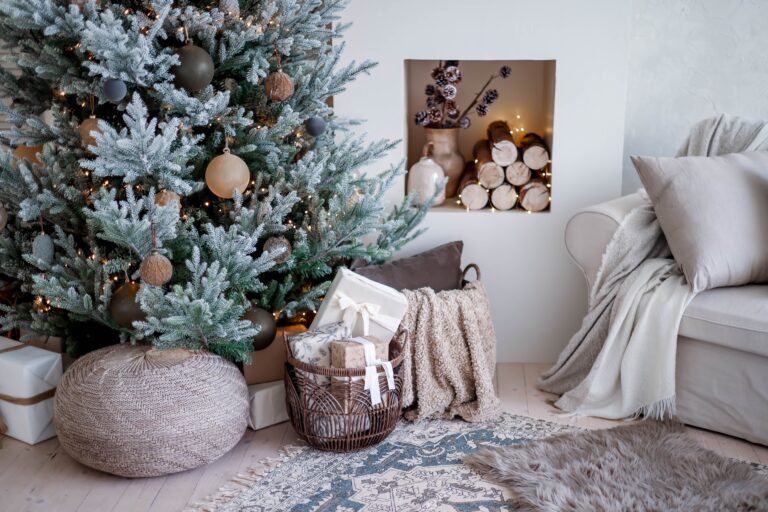
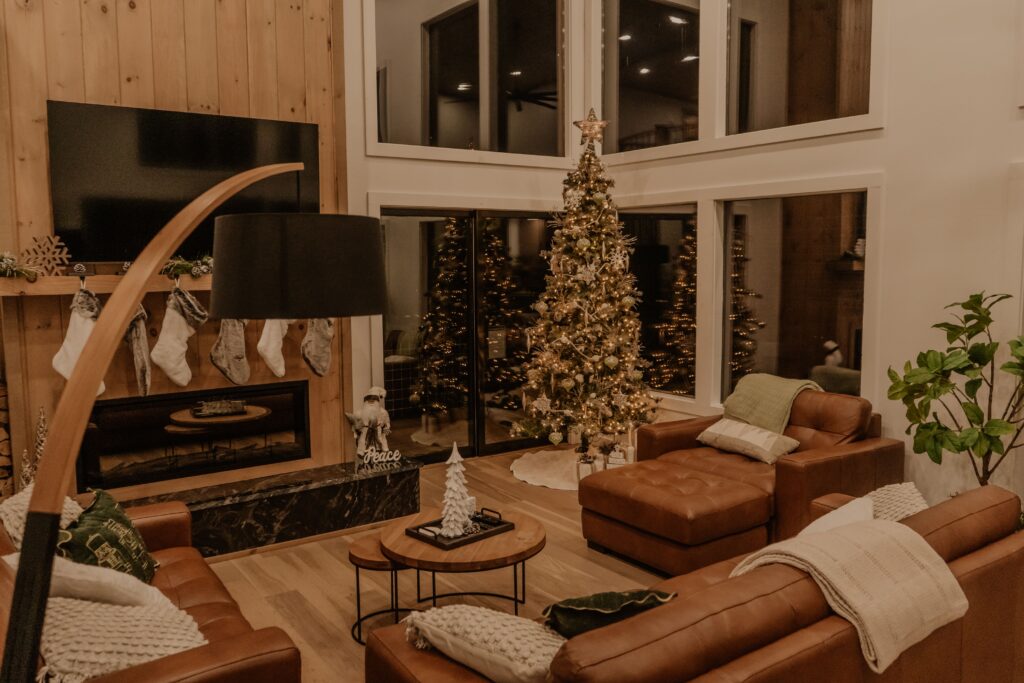
MINIMALIST: In this style we will see Christmas trees that are sleek and modern. They also feature muted neutral color palettes and light but intentional decor. These trees range from all sizes.
CONTEMPORARY / TRENDY: Recent holiday contemporary trends have leaned heavily into minimalism, with the sparse "Charlie Brown" tree as a prime example. On the opposite end, micro-trends like "Ralph Lauren Christmas" bring a sort of nostalgia while having a high end feel. Trendy decor is constantly evolving, shifting fluidly between sleek modernism, traditional, and bold maximalism.
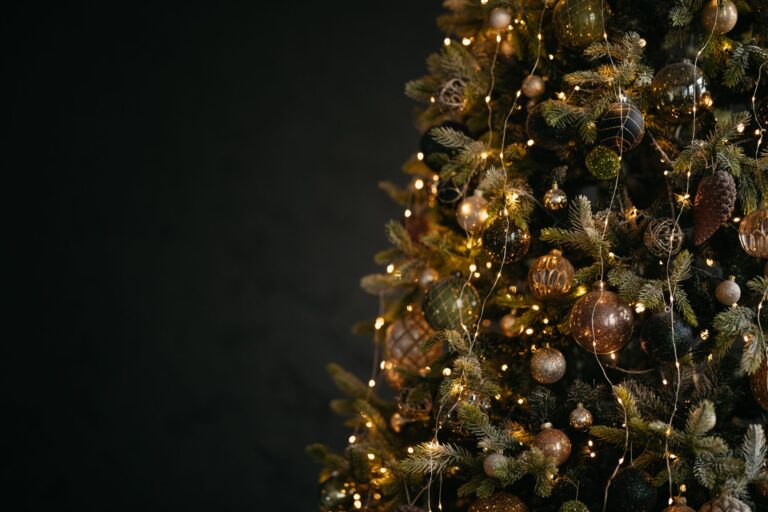
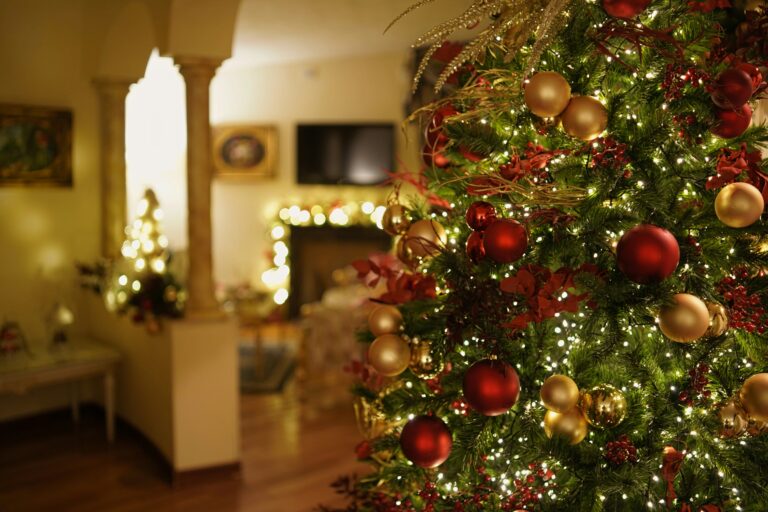
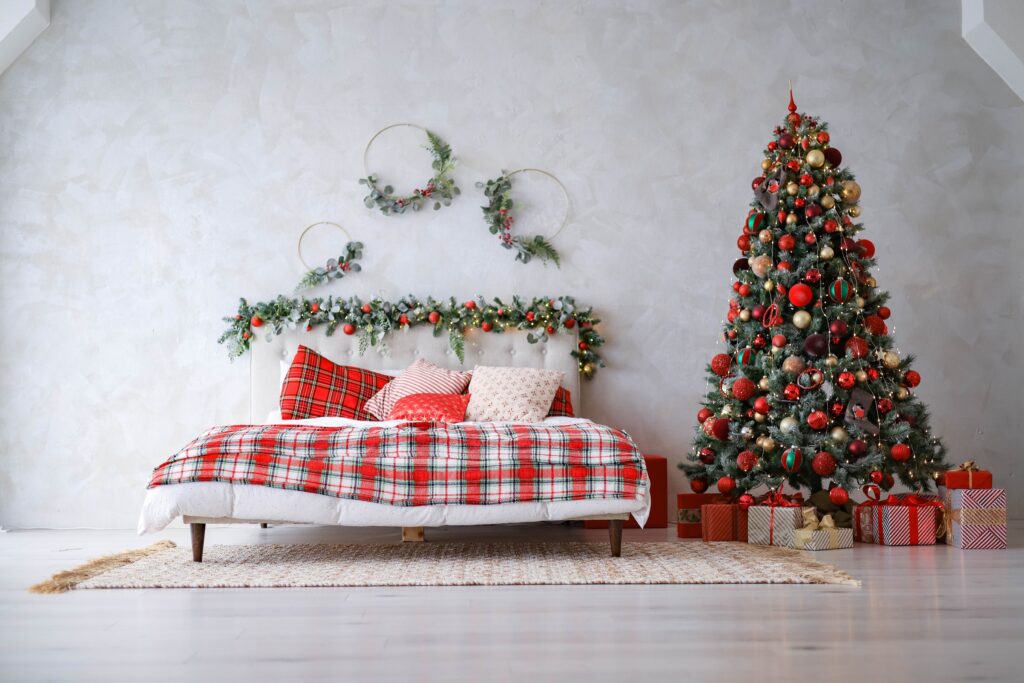
TRADITIONAL: This is a timeless style that leans into classic Christmas colors like red and green. You’ll also find plenty of plaid patterns, detailed ornaments, and warm toned twinkling lights. These trees will usually be tall and full.
Base
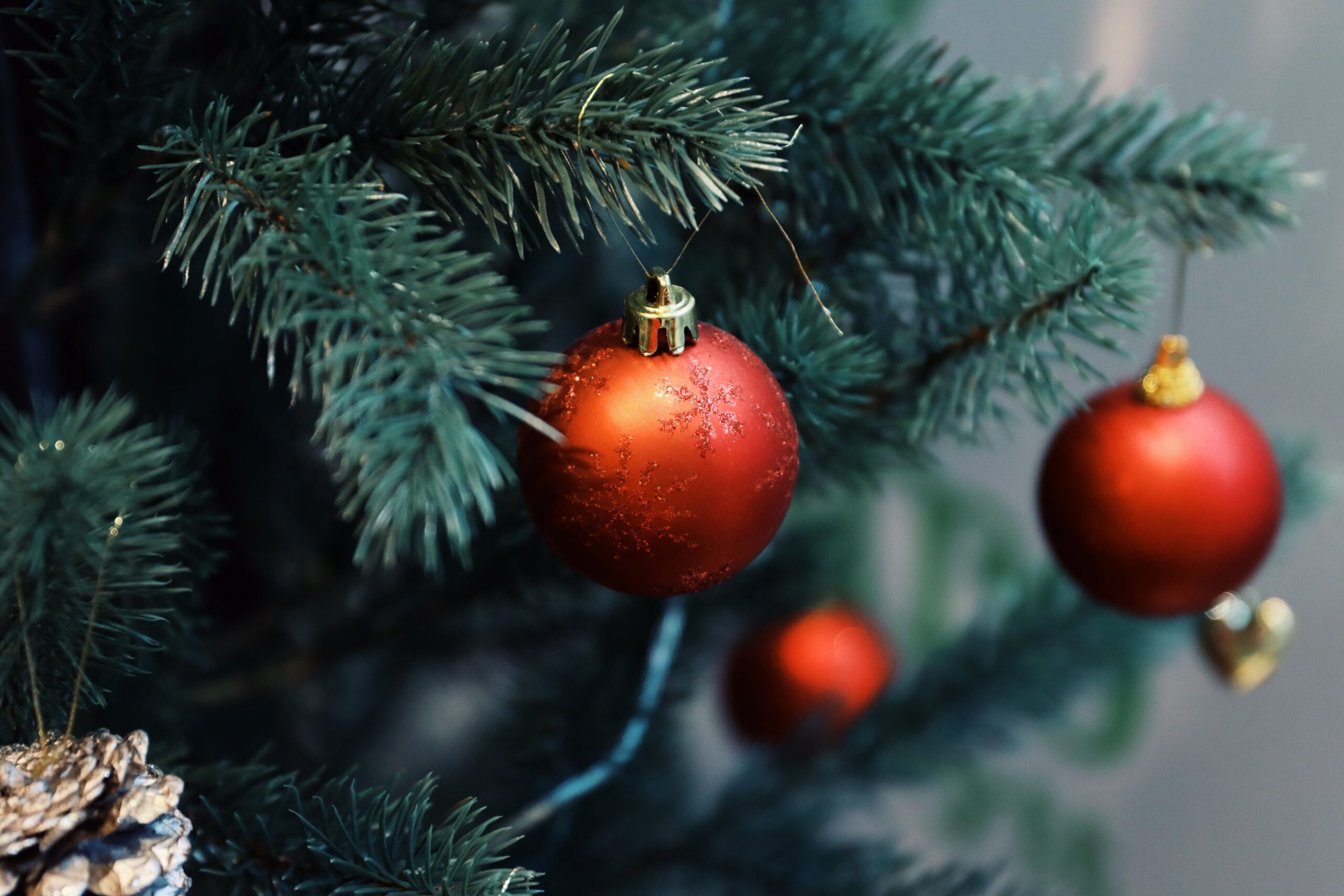
PE (Polyethylene) Tips: Made from 3D molds to look as realistic as possible.
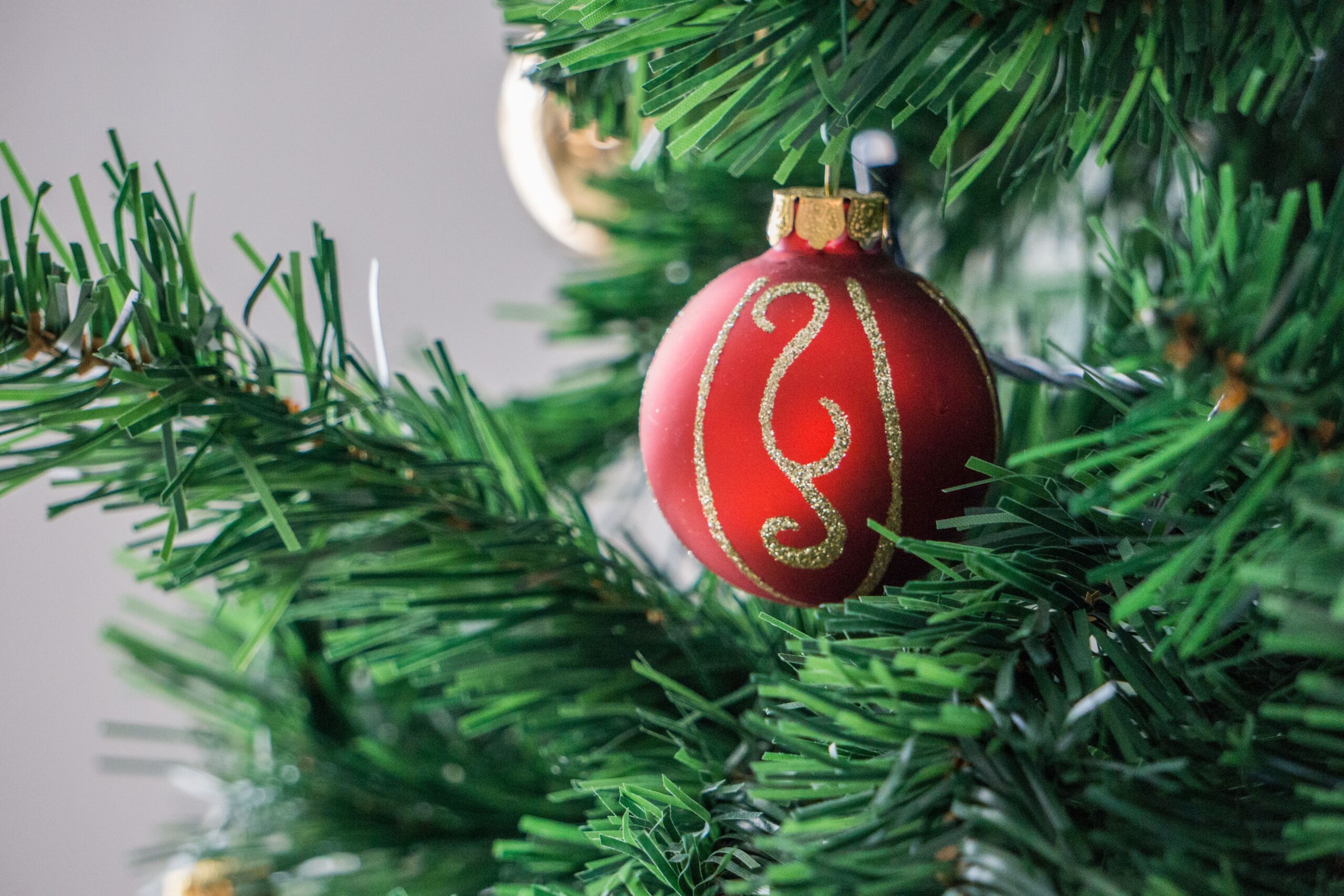
PVC (Polyvinyl Chloride) Tips: Thin plastic that is shredded into flat rectangular strips. They don't look realistic but it is a budget friendly option.
PE/PVC MIXED TREES: This is a mix of the two. Molded PE branches line the outer edges of the tree while the PVC strips fill out the interior to add density. Most buyers aim for a tree with around 70% PE to keep that realistic look while keeping the cost down.
Before we continue, I’d Like to preface by saying this:
There are no real rules to this; only guidelines. You are the only one who gets to decide what looks good in your space. If it makes you happy, go for it.
Green Tree
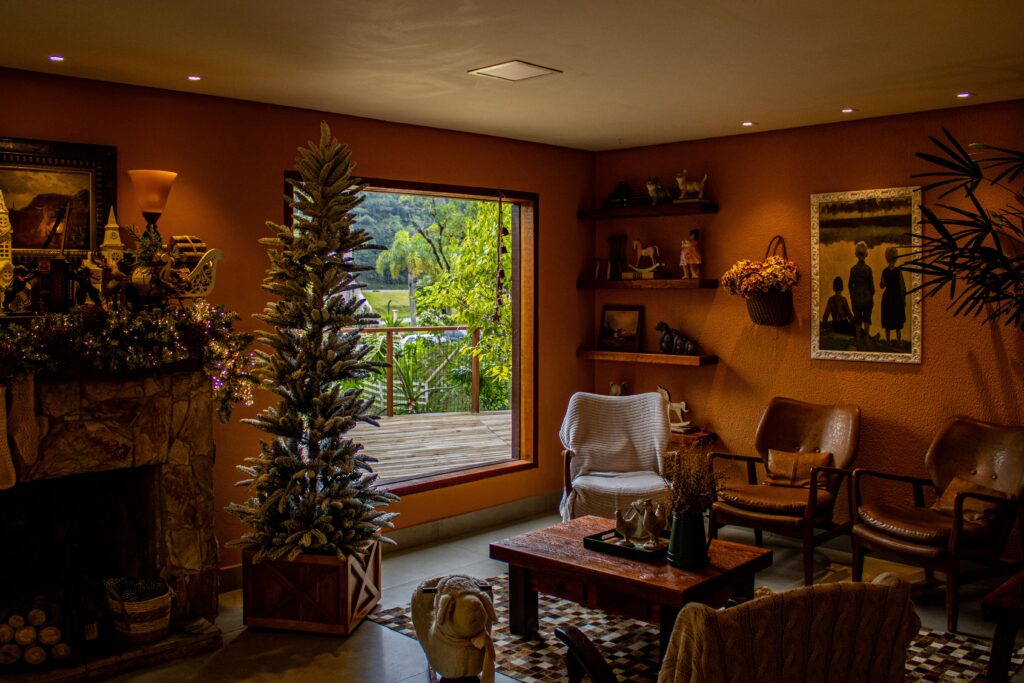
Flocked Tree
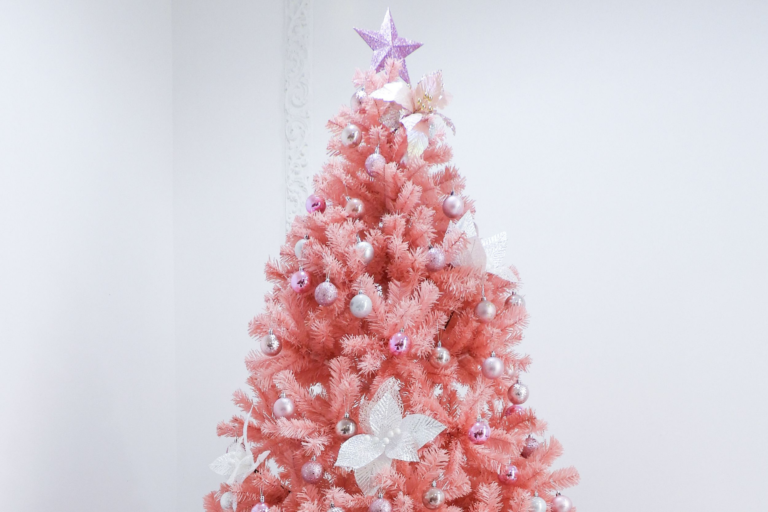
Unnatural Colors
Many Christmas trees combine several of these features. Some include a remote control or foot pedal to adjust the light settings, while others have fixed lighting with no option to change the display.
Integrated Warm Lights
Integrated Lights that Twinkle
Integrated Colorful Lights
Integrated Lights that Change Colors
No Integrated Lights
Quick Tip: Pay attention to the tip count when shopping for a Christmas tree. A higher tip count means a denser, fuller, and more realistic tree.
Full trees are usually around 56 – 64 inches wide.
Slim trees are usually around 29 – 40 inches wide.
Pencil trees are usually around 19 – 23 inches wide.
Half or flat back Christmas trees are trees that are meant to be placed flush against the wall to maximize floor space when limited.
Tabletop trees are miniature Christmas trees meant to be placed on any table when floor space is extremely limited.