How to choose the perfect Curtains for your Space
A Practical Guide
Curtains have the power to transform a room and they can be placed in every single room of your home. Unfortunately, if hung poorly, they can really drag down the look of your space so by the end of this article, you will know exactly what curtains to purchase and how to properly hang them up.
So let’s get started.
We will follow four easy steps:

FUNCTION
Function is incredibly important when it comes to curtains and before we look into what color we want, we have to ask ourselves a couple of questions.
How do you and your household function in your space?
In other words:
What do you need in your curtains that will blend well with your lifestyle?
In What room will you be placing your curtains?
Bedroom, Living Room, Kitchen, Bathroom
Do You prioritize Privacy?
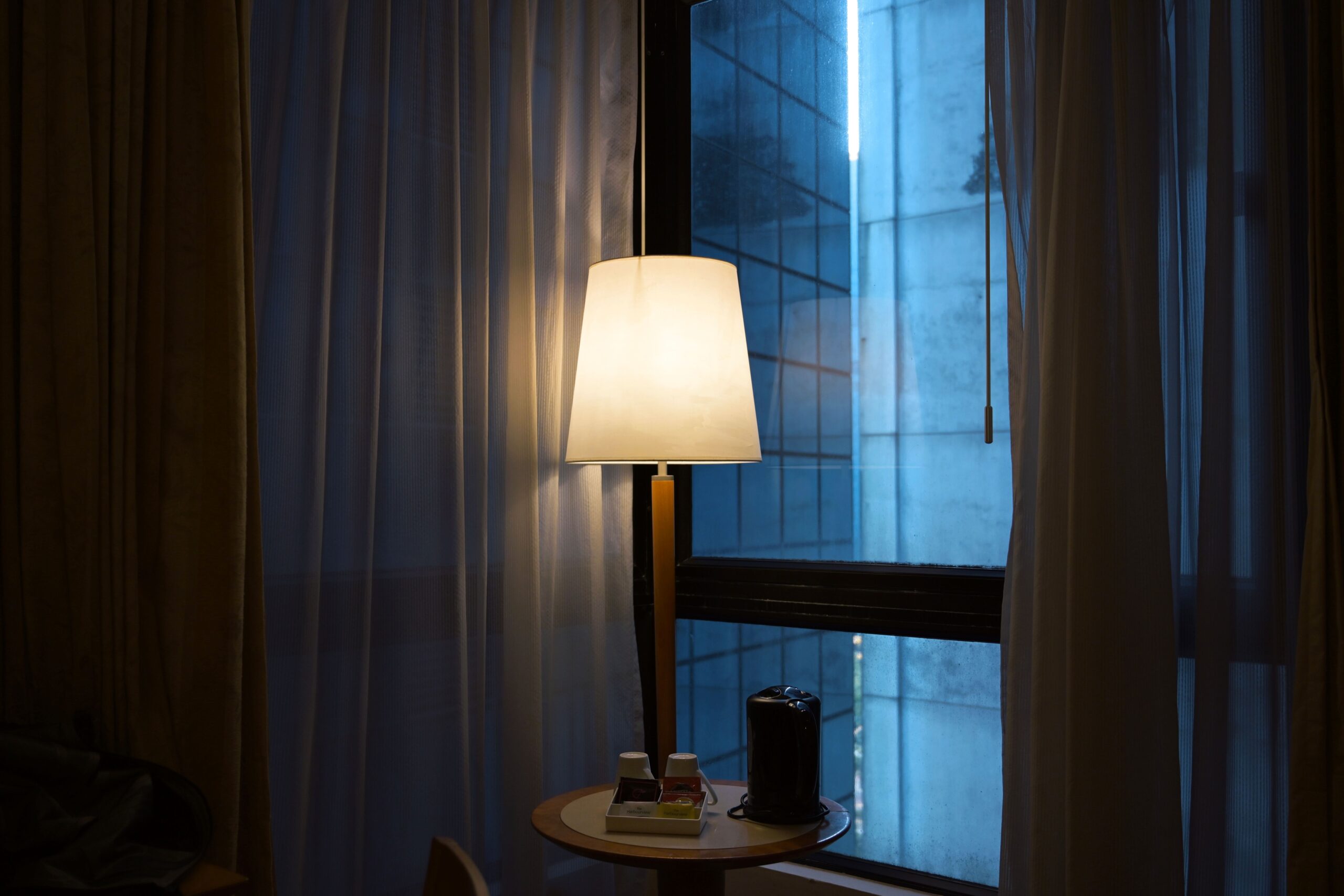
Opt for blackout or room darkening curtains for maximum privacy. Alternatively, you can also hang sheer and light blocking curtains together on a double rod so you can easily adjust the light and privacy levels throughout the day.
Do you prioritize Natural light shining through?
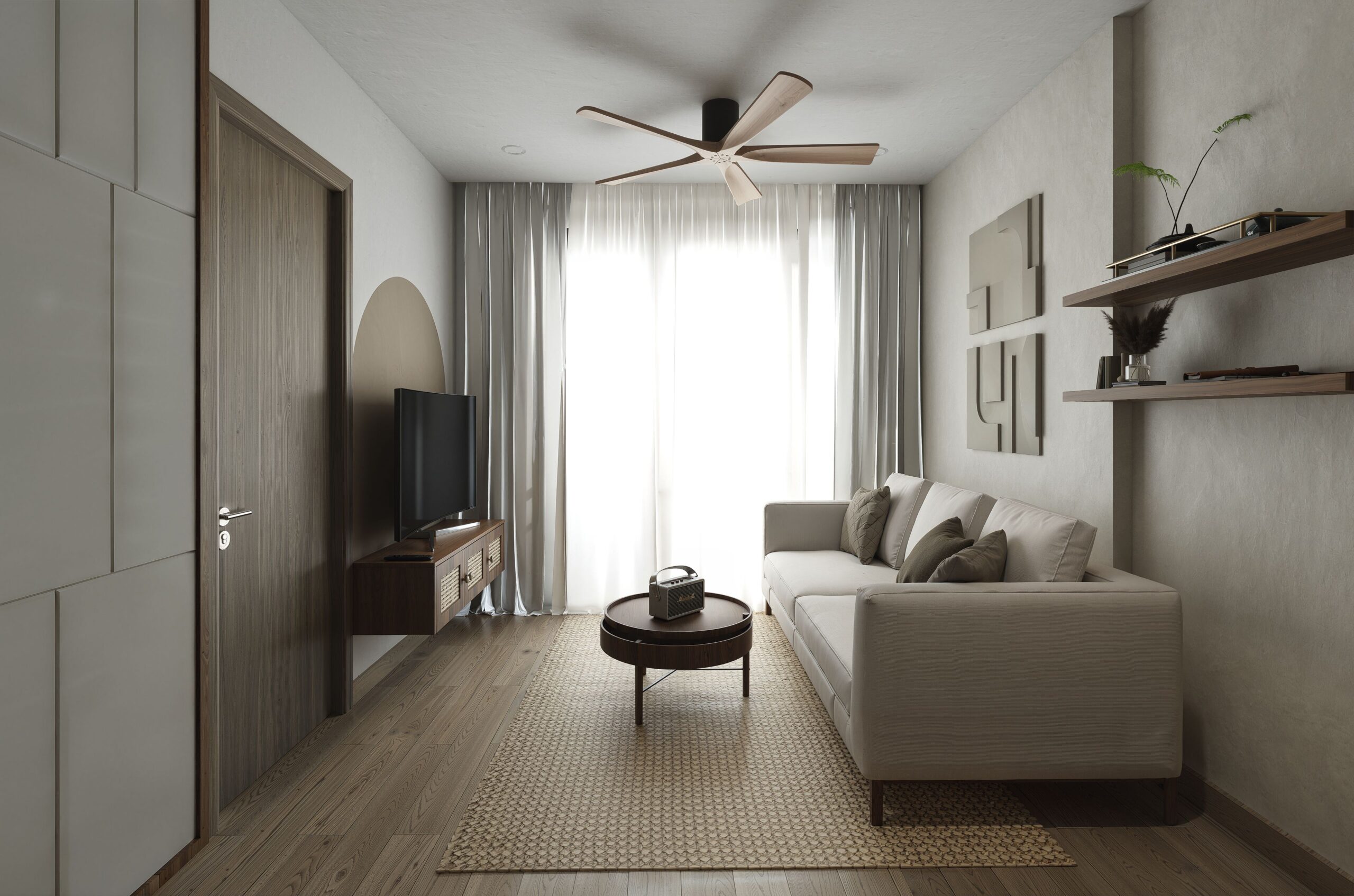
Opt for sheer or light filtering curtains. You also have the option of using a double rod with two types of curtains to adjust privacy levels throughout the day if you so choose.
Is there furniture partially or fully blocking the window?
Is this furniture that can be moved or are you forced to work around it? Decide if you want to have access to draw your curtains open and shut. Roman shades can also be a great option for you.
The above are only a few examples of some questions you can ask yourself.
Go ahead and list out any other functionalities you want your rug to offer that will work with your lifestyle. These will be your non-negotiables. From now on, any curtains you look at will need to have the functionalities you listed. This will narrow down your options which is good for those that tend to get decision paralysis.
SPACE
Space dictates how we move forward. Analyze your space and how much or how little you have to work with.
Tricky Window Shapes
Corner Windows:
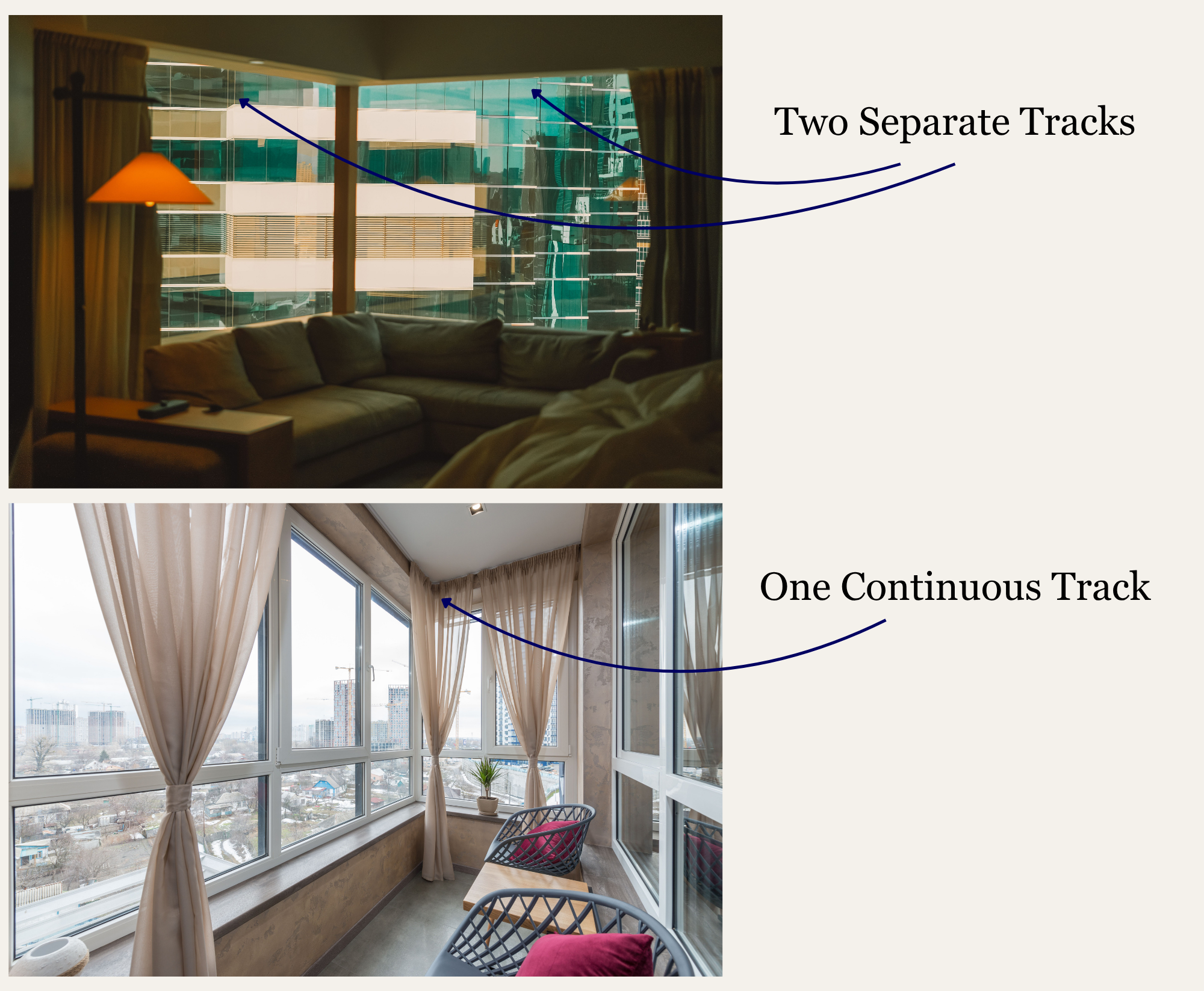
Determine whether you’d like a singular Curved Rod or Two Separate Rods. This will depend on how you want the fabric to move.
- A curved rod allows curtains to slide seamlessly across the entire bend.
- Separate rods create a distinct break.
Bay Windows:
You have two layout options.
- You can use specialized hardware to have the curtains follow the exact angled path of the windows.
- You can mount a straight rod further out across the entire alcove to frame the space.
Furniture Obstacles
Bed in Front of the Window:
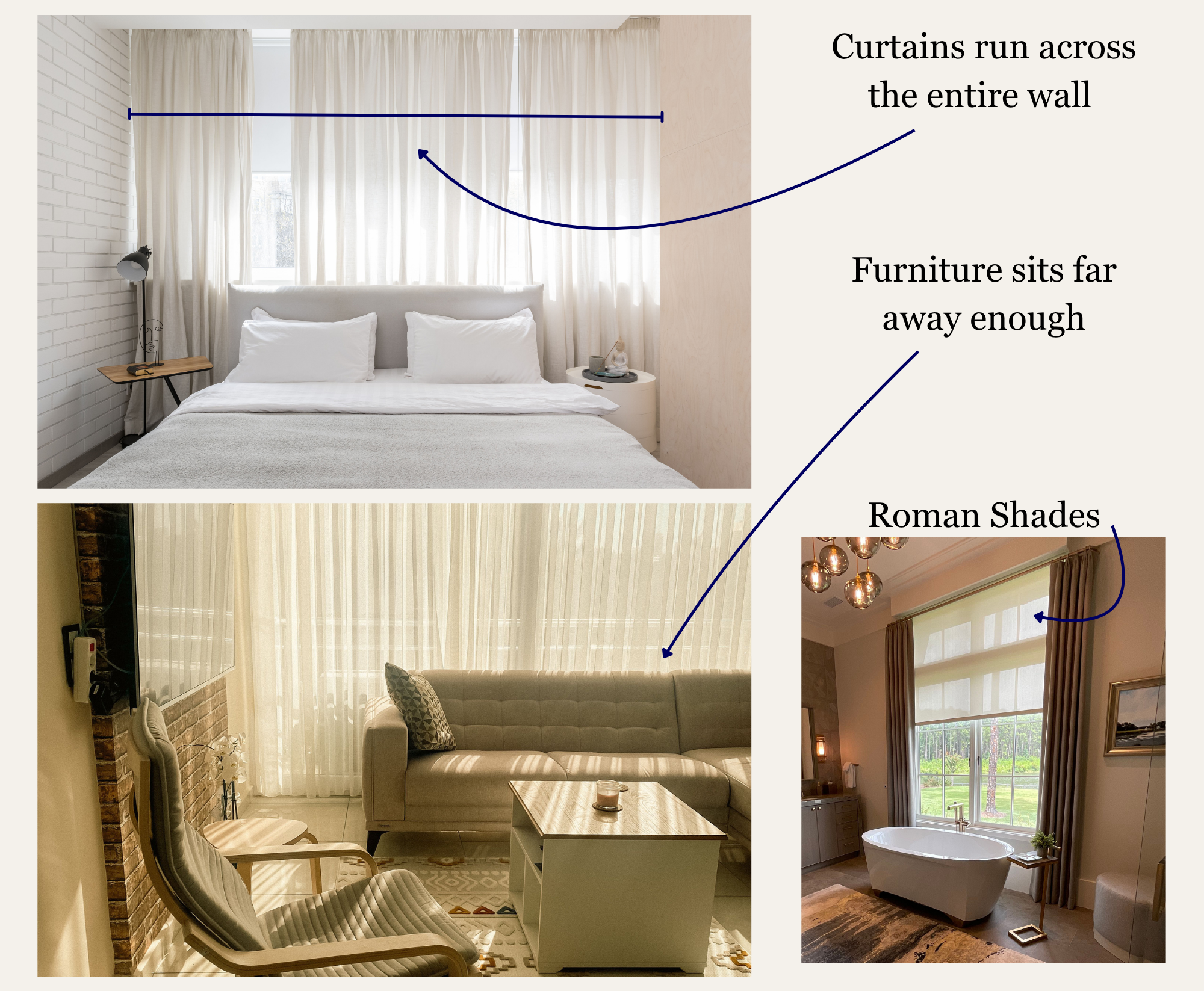
If you are working with a small bedroom and the bed must sit in front of the window, consider running curtains across the entire back wall. This creates a cohesive, high end backdrop.
Furniture Partially Blocking Windows:
If a dresser, chair, or console is in the way, pull the furniture slightly forward. Giving the fabric a few inches of breathing room allows you to draw the curtains open and closed without a struggle.
Remember, you also have the option of using roman shades instead of curtains. If you think that will work best for your needs, don’t hesitate to try it out.
If none of the above apply to you:
Look at the wall space around your window frames. Especially the sides.
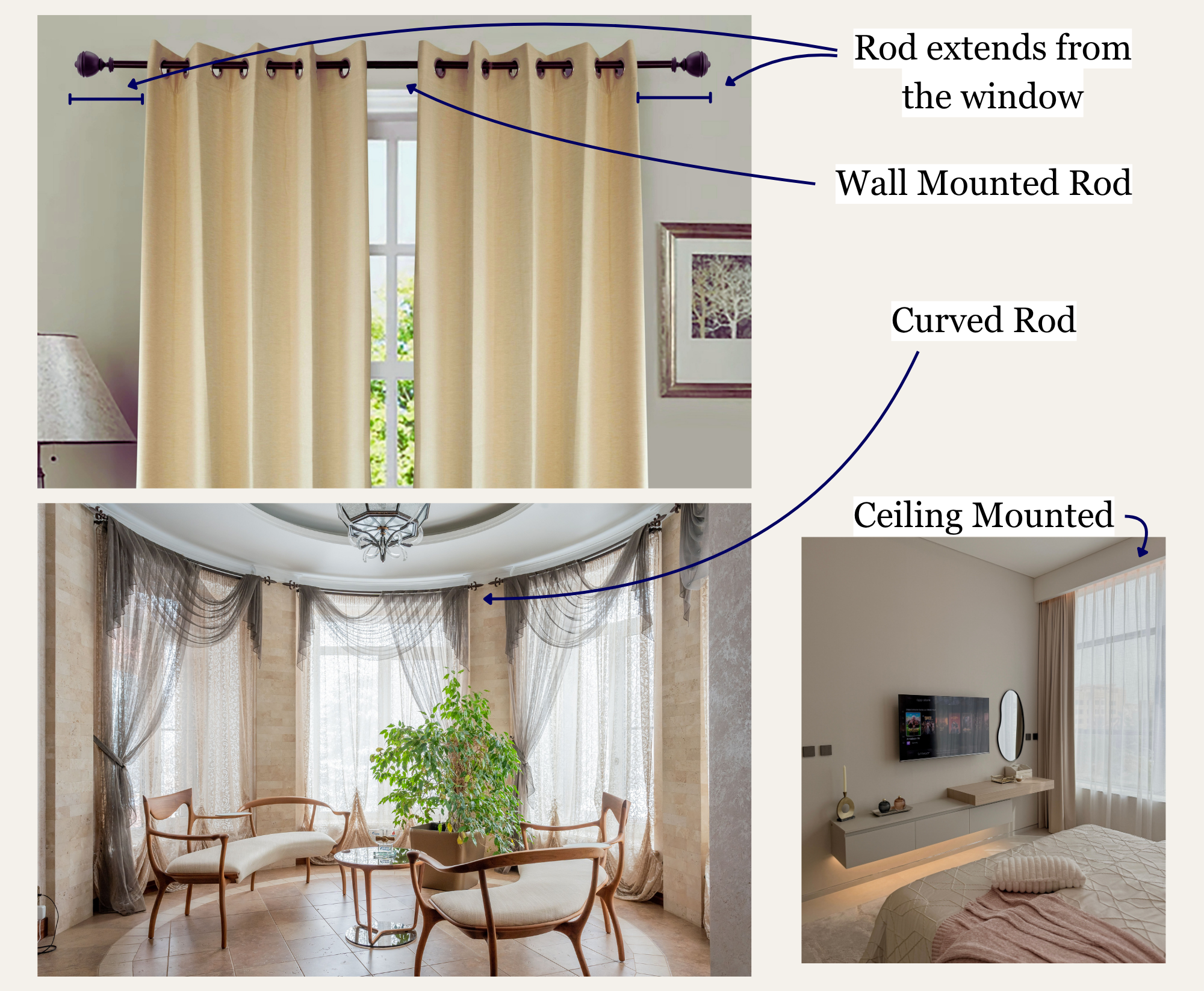
Extending your curtain rods past the actual window frame always looks better. Functionally, it allows you to fully draw the curtains open to let in maximum light.
Don’t have the extra wall space? That is completely fine. Let’s work with what you have!
Choose Your Rod
Once you know your layout, choose the rod type that fits your architecture:
Curved Rods: Perfect for continuous corner or bay window tracking.
Ceiling Mounts: Ideal for adding height or when wall space is limited.
Wall Mounts: The standard approach for traditional framing.
After evaluating your space, we can move on to our next step.
DIMENSIONS
Dimensions are going to be our best friend in this process. It is very important we don’t skip this step as this is going to determine how many panels we need and how long we need our curtains to be. Here is our guideline:
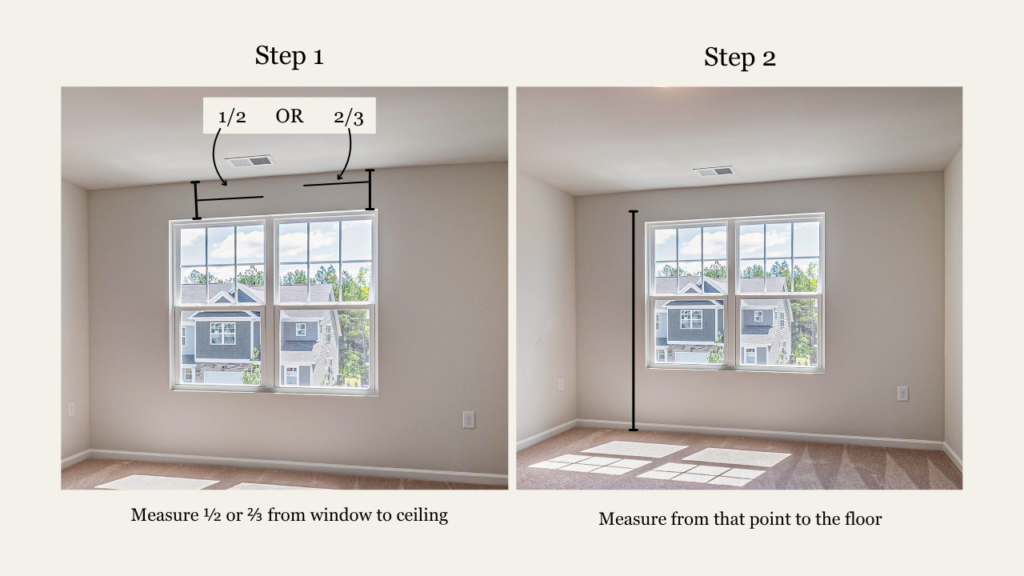
If wall mounted: We want our curtain rod to be mounted ½ to ⅔ the way to the ceiling from the window AND extended 6-10 inches outward from window
If ceiling mounted (not necessary information for the purchase of the curtains but necessary for installation) the rod or track must be placed 2-3 inches from the wall
We want the curtain to either:
Float
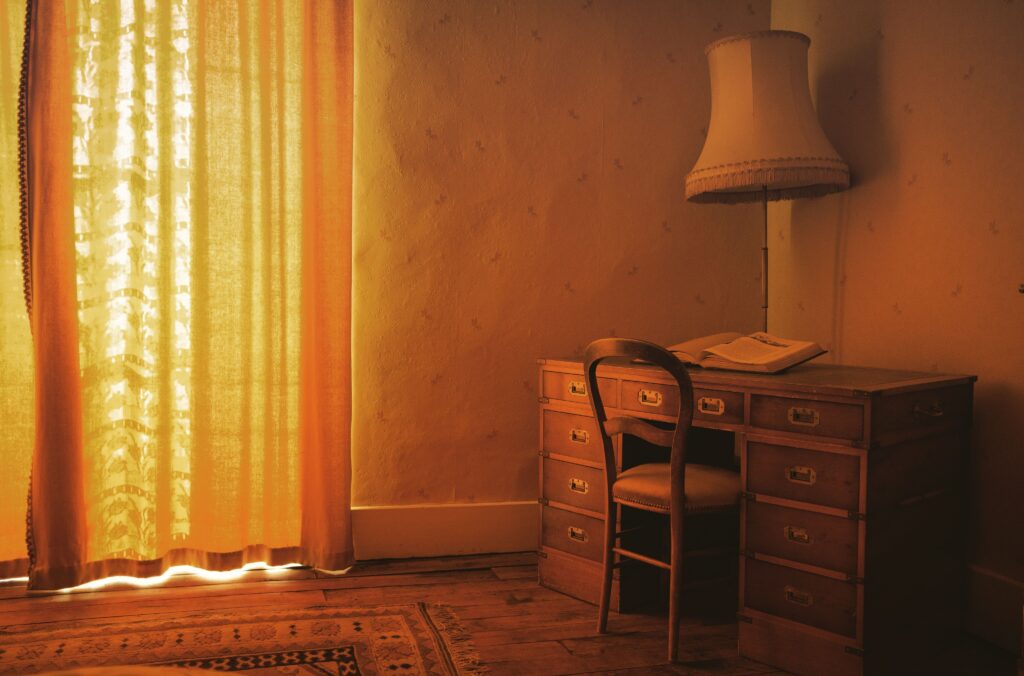
Just off the floor (less than an inch distance from floor)
Kiss
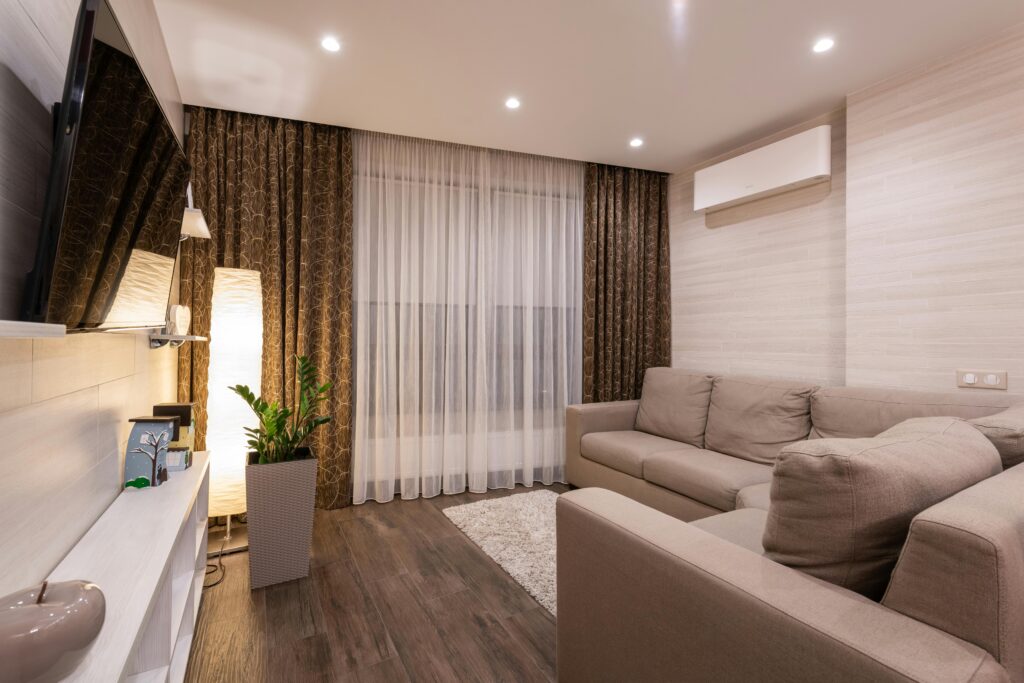
Gracing the floor
Puddle
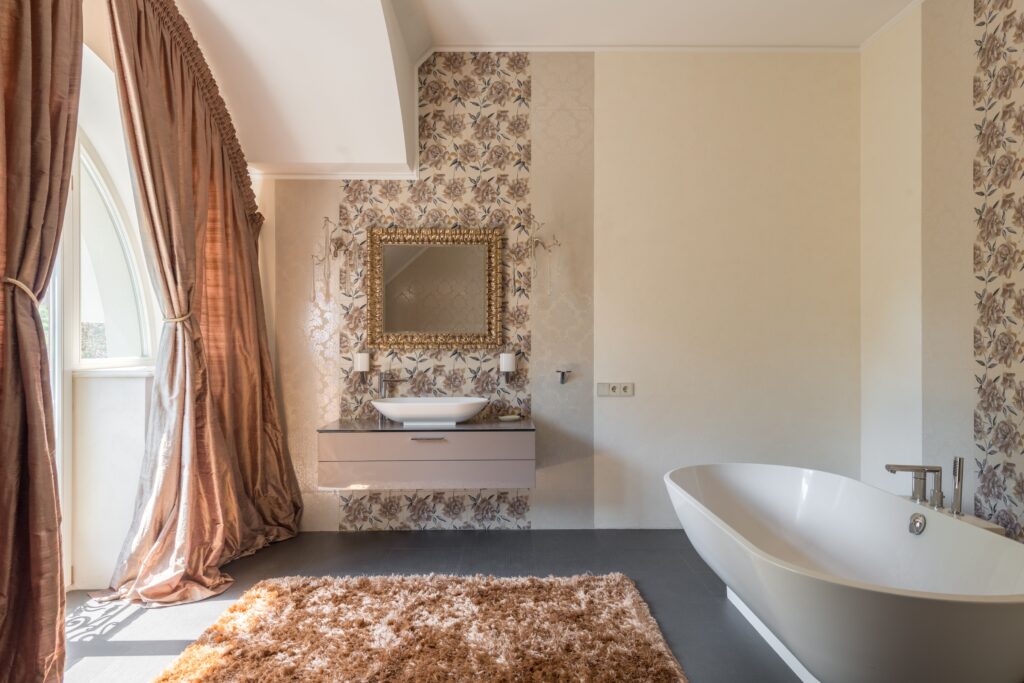
Puddles on the floor (2-4 inches excess)
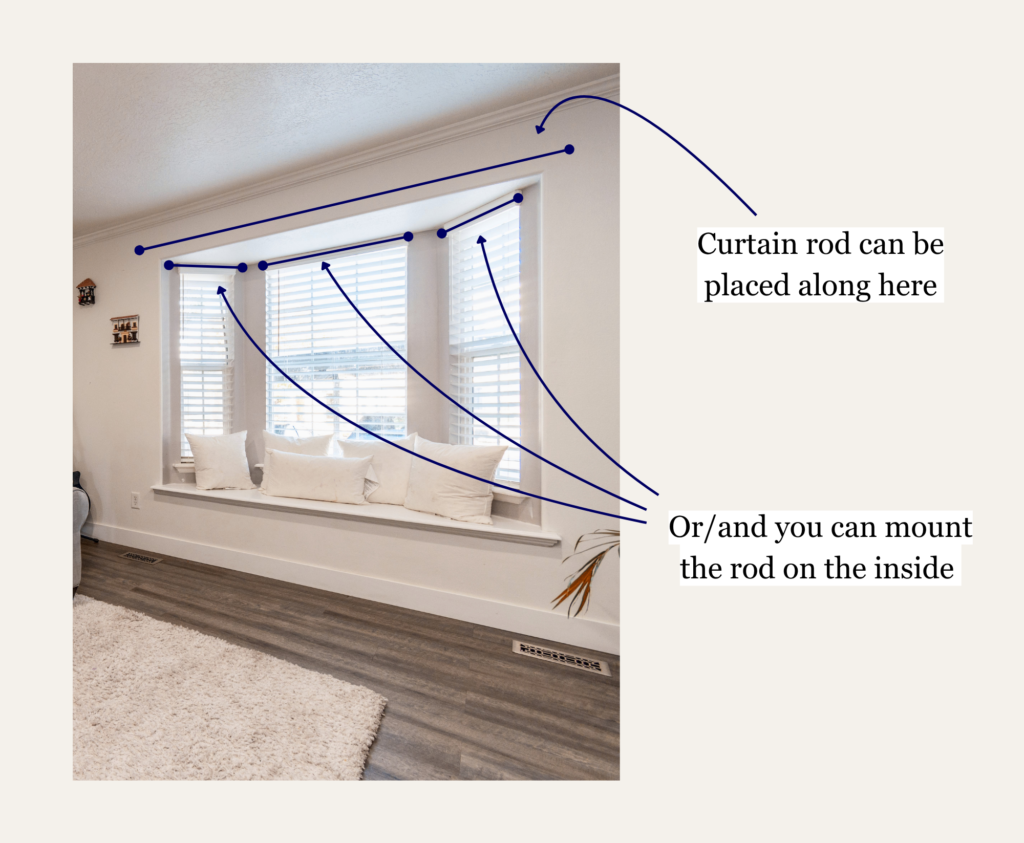
Bay Window with Nook Seat
If you have a bay window with a nook seat, I recommend mounting a straight curtain rod on the main room wall just outside the alcove. This allows the fabric to fall beautifully to the floor.
However, if you prefer to mount the curtains inside the bay recess, make sure to adjust your length measurements to your desired length. Instead of kissing, floating, or puddling on to the floor, it would be onto your nook.
Measure the Height
You can now measure out your curtain’s ideal height.
Step 1: Determine what is ½ to ⅔ the way to the ceiling from the window
Step 2: From there, measure to the ground. (If you want the puddle look, just add 2-4 inches to this.)
Pro tip: Too long of a curtain can be hemmed but you can’t do anything with too short of a curtain.
Measure the Length
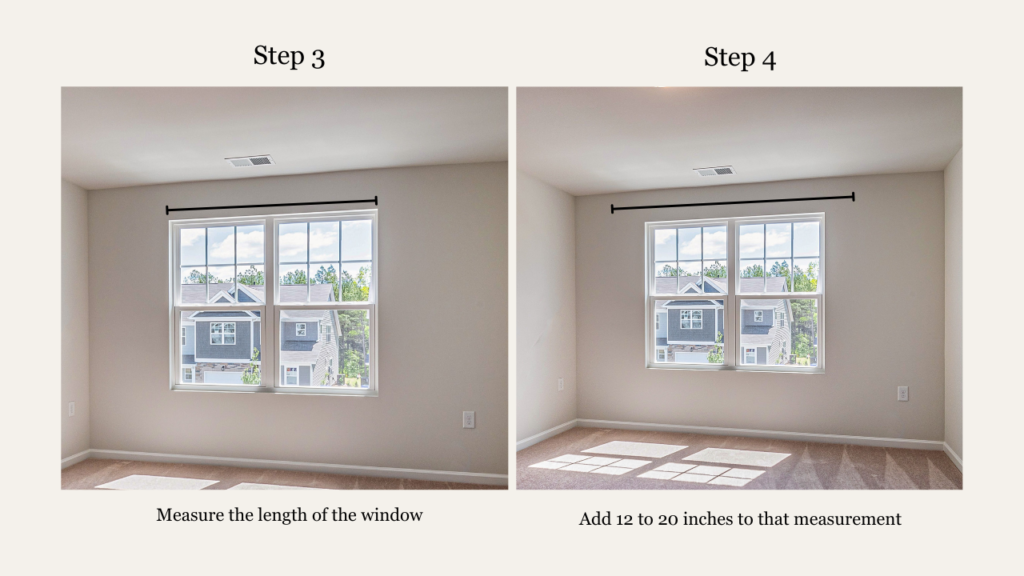
You also want to measure the length of your window for the purchase of your rod.
Step 3: With your measuring tape, determine the length of your window(s).
Step 4: Add 12-20 inches to that number for 6-10 inches of curtain on either side.
(Note* Panel lengths vary from seller to seller. I would recommend getting a couple more panels than you think to get a nice ripple effect.)
Style
Style is our most exciting step. Use the guide below to help you decide.
Design styles are here to guide you but they are not hard rules. Most people have a mix of styles in their homes and when done right, it can look beautiful. Don’t be afraid to step out of your interior design style.
Most Popular Design Styles:
Modern
Curtain Characteristics
Solid Neutral Colored Panels (Whites, grays, blacks) Sleek Header Style (Grommets or a hidden back tab) Curtains Hang Straight Without Excessive Pooling on the Floor, Lightweight Linen Blends, Cotton, Smooth Synthetics
Bohemian
Curtain Characteristics
Flowy, Semi Sheer Panels, Tassels, Macramé Trim, Fringe, Warm Neutrals, Terracotta, Soft Olive, Raw Linen, Cotton
Farmhouse
Curtain Characateristics
Rod Pocket or Ring Top Curtains, Subtle Traditional Patterns (Stripes, plaid, small gingham, Cotton, Burlap Blends, White Linen
Traditional
Curtain Characteristics
Fully Structured Drapery Panels, Pinch Pleats, Inverted Pleats, Gentle Puddling (An inch or two,) Deep tones, Jacquard Prints, Velvet, Silk Faux Silk
Other Design Styles to consider:
Mid-Century
Curtain Characteristics
Bold Geometric Patterns, Abstract Mid-century Prints, Colors Like Mustard Yellow, Orange, Olive, or Teal, Cotton Blends, Barkcloth
Scandinavian
Curtain Characteristics
Ultra Simple Hidden Tab, Ring Top Curtains, Bright Whites, Creams, Grays, Linen, Sheer Cotton
Industrial
Curtain Characteristics
Straight Hanging Panels, Dark Iron or Black Metal Rods, Charcoal, Concrete Gray, or Navy Panels, Distressed Linen, Faux Leather Textures
Investment Pieces
silk
Characateristics
Silk is harvested from the cocoons of the silk worm.| Pros: Anti-wrinkling, Strong Material, Highly Resistant to Natural Wear| Cons: Silk is Extremely Delicate and Easily Damaged by Moisture and UV Rays. Without a Protective Lining, Direct Sunlight can Rot and Shred the Fabric Over Time. Dry Clean Only High Price Point
Velvet
Characteristics
Heavy and luxurious window treatments made from densely woven fabric.| Pros: Blocks Light Incredibly Well, Sound Dampening, Insulation, Drapes Beautifully| The Cons: Dust, Pet Hair, and Lint Magnet Very Heavy
Linen
Characteristics
Breathable fabric made from flax fibers.| Pros: Airy Feel, Natural Insulator, Hypoallergenic, Eco-friendly| The Cons: It Wrinkles Easily, Can Shrink if Washed Incorrectly at Home
Mid-Range options
Cotton
Characteristics
A versatile natural fabric available in countless weaves, colors, and prints.| Pros: Hypoallergenic, Breathable, Lightweight, Eco-friendly| The Cons: Prone to Fading, Can Shrink if Washed Incorrectly at Home
Canvas/ Duck Cloth
Characteristics
A heavy duty tightly woven cotton fabric.| Pros: Durable, Excellent at Blocking Light| The Cons: Can Be Stiff, Can Look Bulky, Susceptible to Shrinkage, Heavy
Most Budget Friendly Options
Polyester/ Synthetics
Characteristics
Polyester is derived from petroleum, natural gas, and petrochemicals.| Pros: Low Maintenance, Durable, Affordable, Resistant to Wrinkling, Stretching, and Fading| The Cons: Holds Onto Static Electricity, Trap odors, Not Eco-friendly
Overview Comparison Guide
|
Material
|
Durability
|
Maintenance Level
|
Affordability
|
|---|---|---|---|
Patterns and colors may be limited with some materials but there are a plethora of options to choose from. The trick here is to narrow down those options. Now, there are many ways to do this. We can narrow it down by your specific design style or the color scheme you may have or want to integrate into your space. Don’t worry, I will walk you through each one.
By Your Design Style
Hover mouse here to see content.
First, establish whether or not you’ve chosen a design style for your space. If you have a clear style set in mind, perfect! All you have to do now is take a look at the “Design Styles” tab to see what characteristics can be found in curtains with your aesthetic. If your chosen style is not represented there, Pinterest is a great resource to see what others have incorporated into their space with your specific style.
You may find that your vision may be a mix of styles and that is okay. Most spaces are. Look for the commonalities they share and utilize that as your jumping off point. Again, use Pinterest to find what others are doing.
If you aren’t sure how to categorize your style, let’s try a different way of narrowing down your options.
By Your Color Scheme
Hover mouse here to see content.
Chances are, if you're trying to figure out what color your curtains should be, perhaps you don't have a set color scheme in your space already. If this is you, you have two options.
- Take a look at what colors naturally exist in your space already. (ex. the color of your flooring, the walls, any furniture you may already have) Note those colors down. If they already work well together, use those colors as a guide. A rug in one of those colors may work nicely in your space.
- Start from scratch. What colors are you naturally drawn to? Jot them down and choose three that you think look good together.
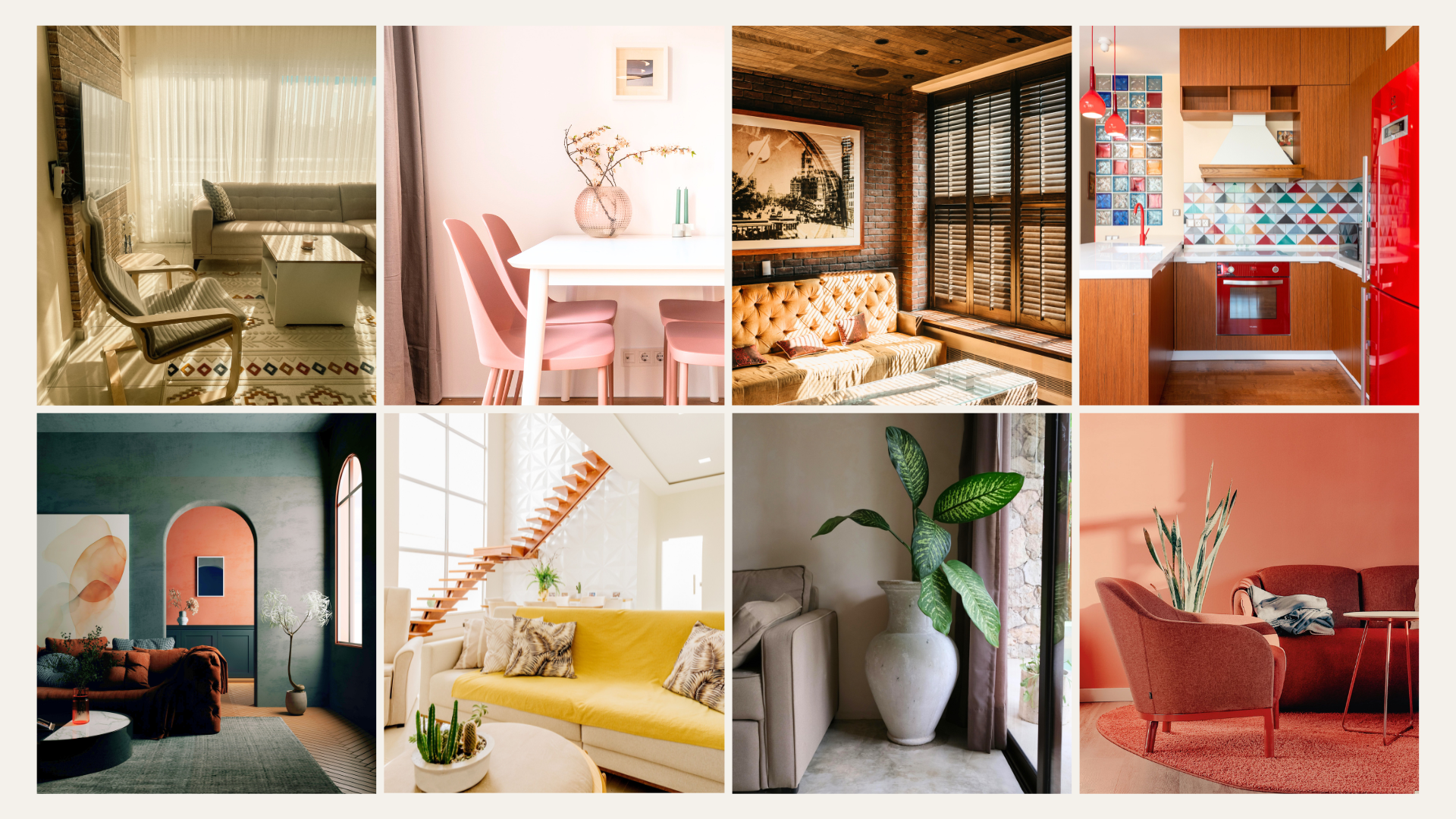
Both options should incorporate the 60/30/10 rule. Your color scheme should consist of 3 different colors. One of them will be used in 60% of your space, one in 30% and one in 10%. The three colors you choose should be used in a variety of hues.
Most of the time, curtains fall into the color used 30% of the time but this is not a hard rule.
Here are some color pallet inspos:
This style features fabric that is tightly gathered and stitched together a few inches below the top edge.
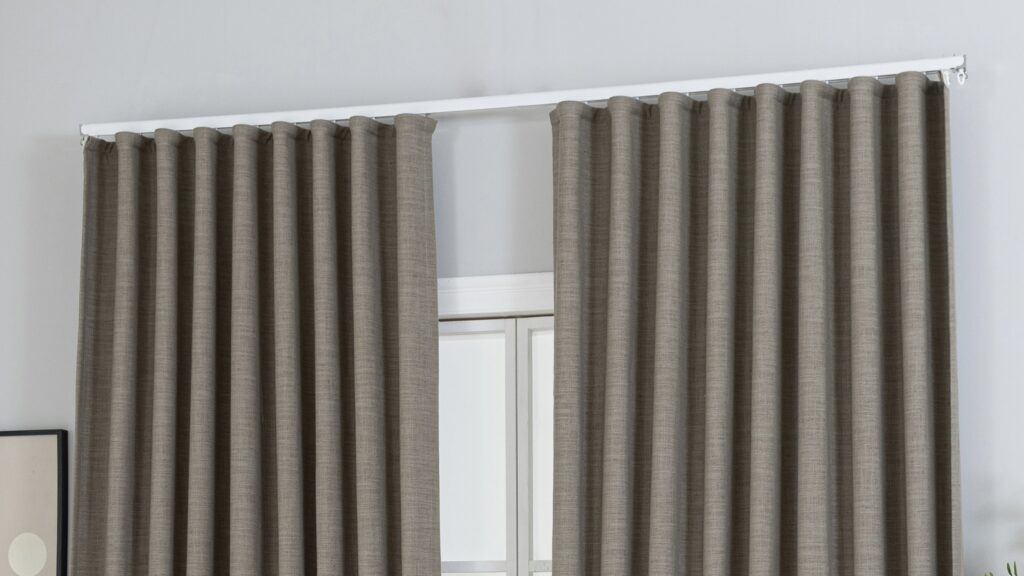
This style uses a specialized track system to guide the fabric into perfectly uniform, continuous S-curve waves.
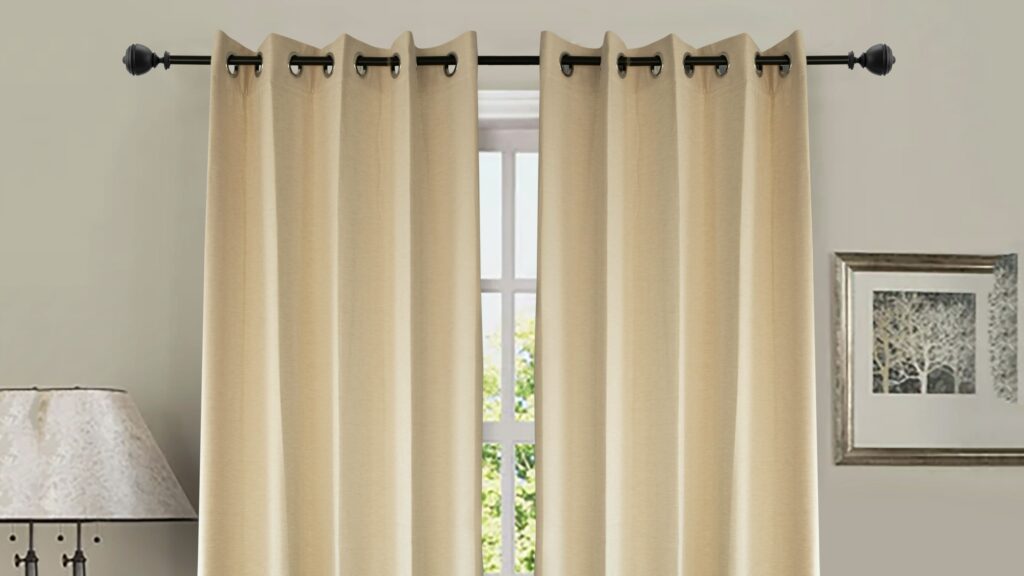
This style features metal-ringed eyelets punched directly into the top of the fabric, allowing for a curtain rod to slide right through to create deep folds that slide open and closed easily.
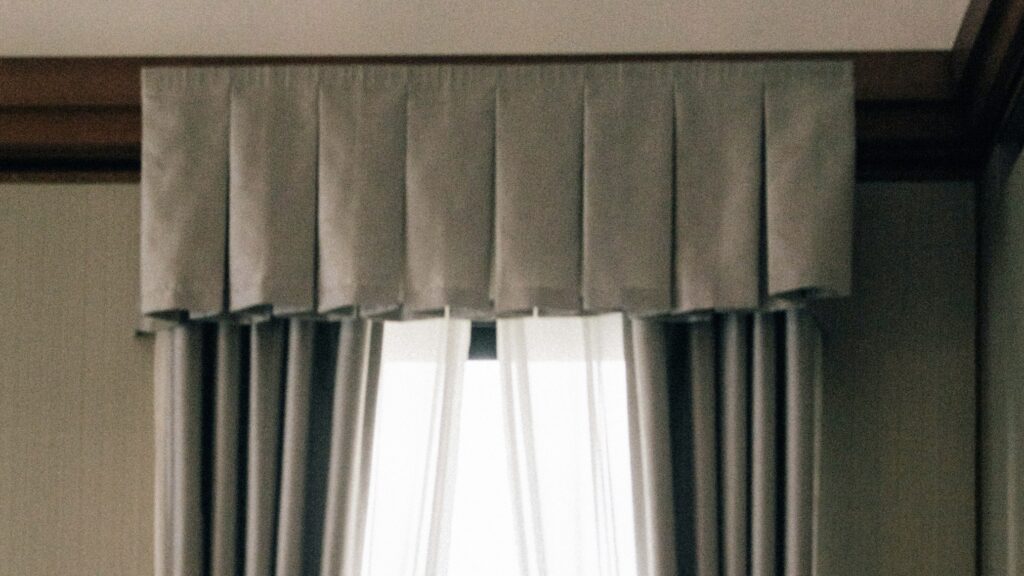
This style features fabric folded outward and stitched to create a series of wide, flat, rectangular panels across the top.
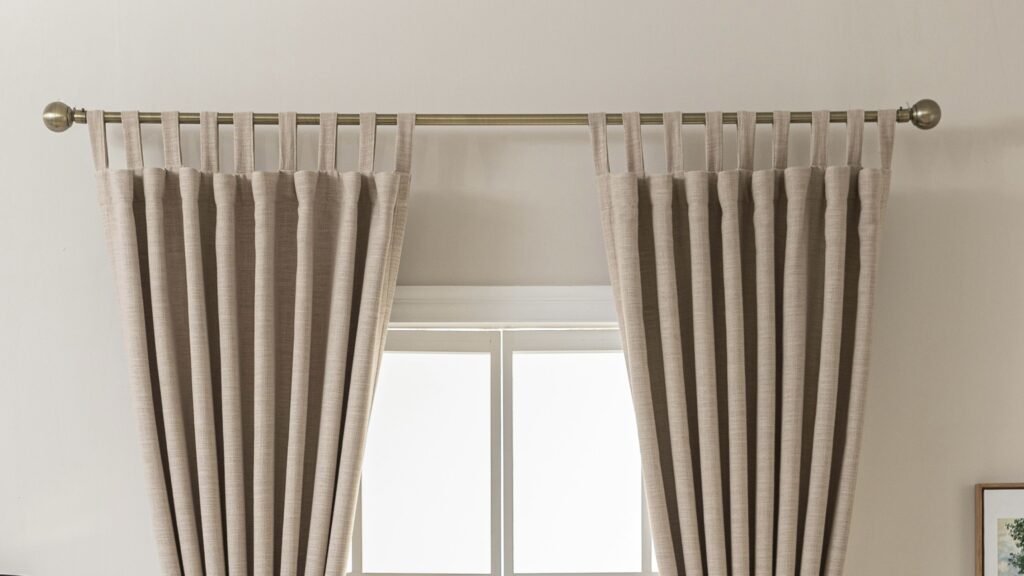
This style features exposed loops of fabric sewn onto the very top edge allowing for a curtain rod to threat directly through them.
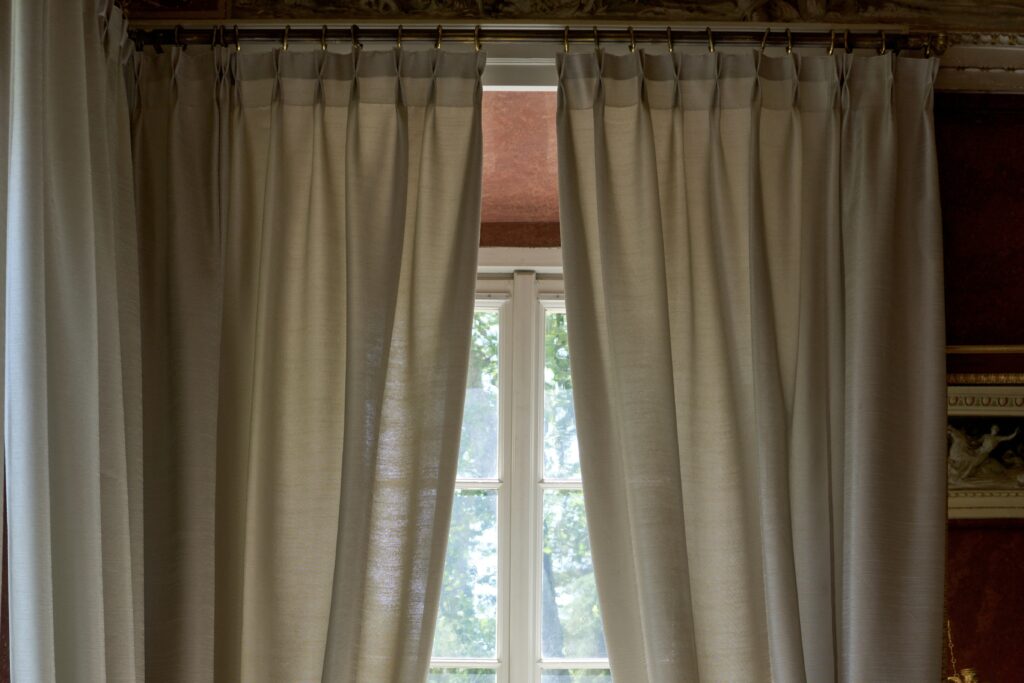
This style features a series of tightly packed, thin, and round folds running continuously across the top edge that resemble a neat row of pencils.
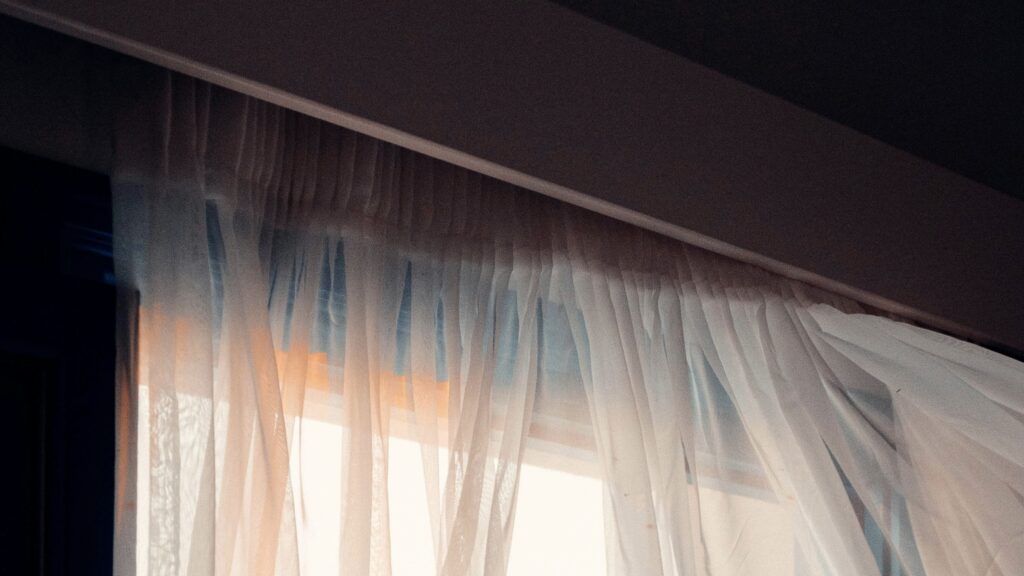
This style features loops hidden on the reverse side of the panel so the curtain rod can slide through unseen.
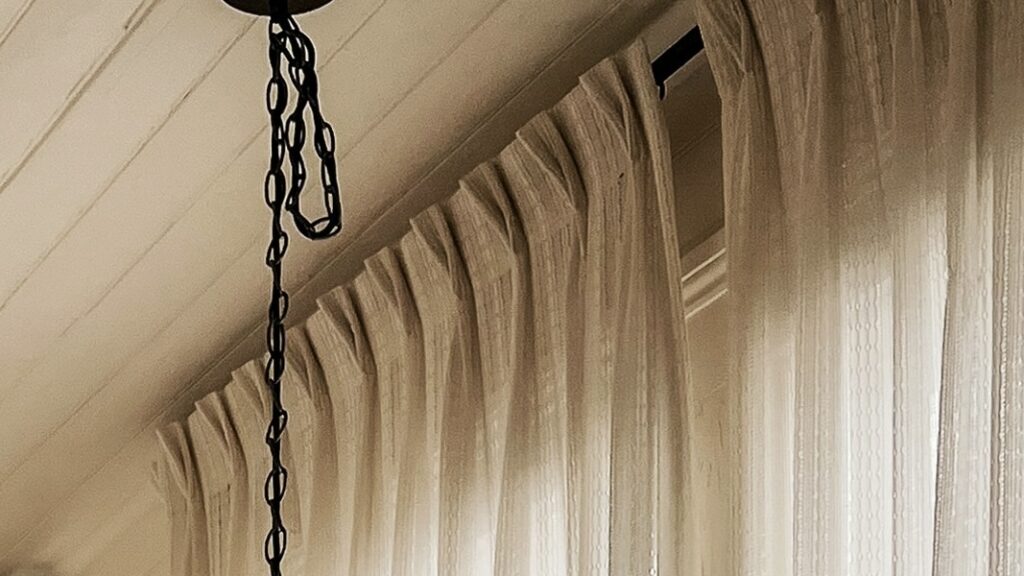
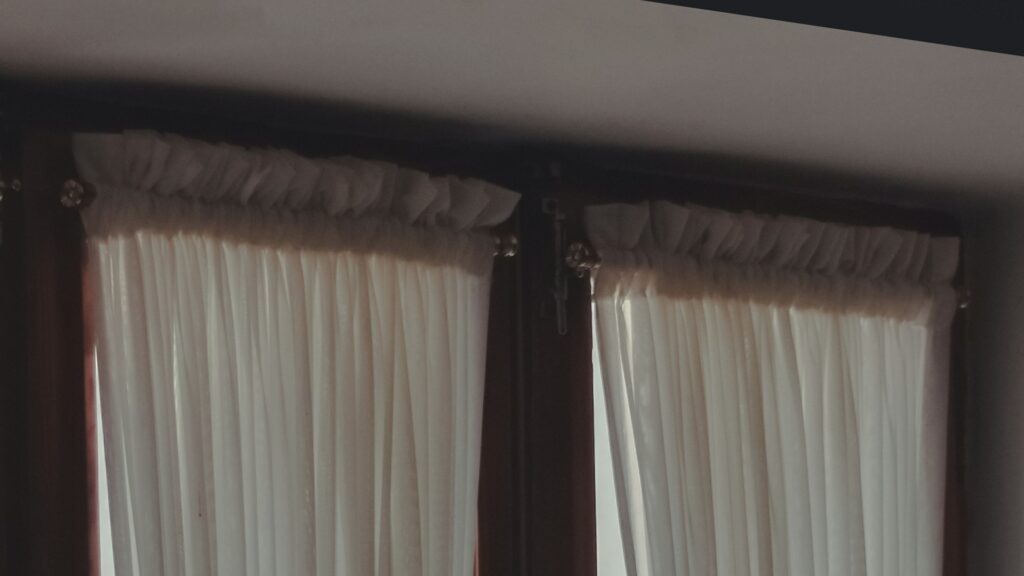
This style features a continuous stitched runner along the very top edge that slips directly over the curtain rod, gathering the fabric into a tight, closely bunched look.