How to choose the perfect chairs for your Dining Table
A Practical Guide
Chances are you’ve selected your dining table and are now ready to choose your seats. Perfect! You’ve come to the right place. However, if you haven’t found your table yet, you may want to do that first, as our chair selection will highly depend on it. Click the link below for that guide. Otherwise, let’s get started!
We will follow four easy steps:



FUNCTION
Before we decide on anything else, we must first consider what functionalities we would like our dining room chairs to offer us.
Avoiding this step is usually the reason people end up having to replace their selection.
Do You Prioritize Comfort?
Choose high quality chairs that have proper cushioning.
do you want your dining room to be a formal space?
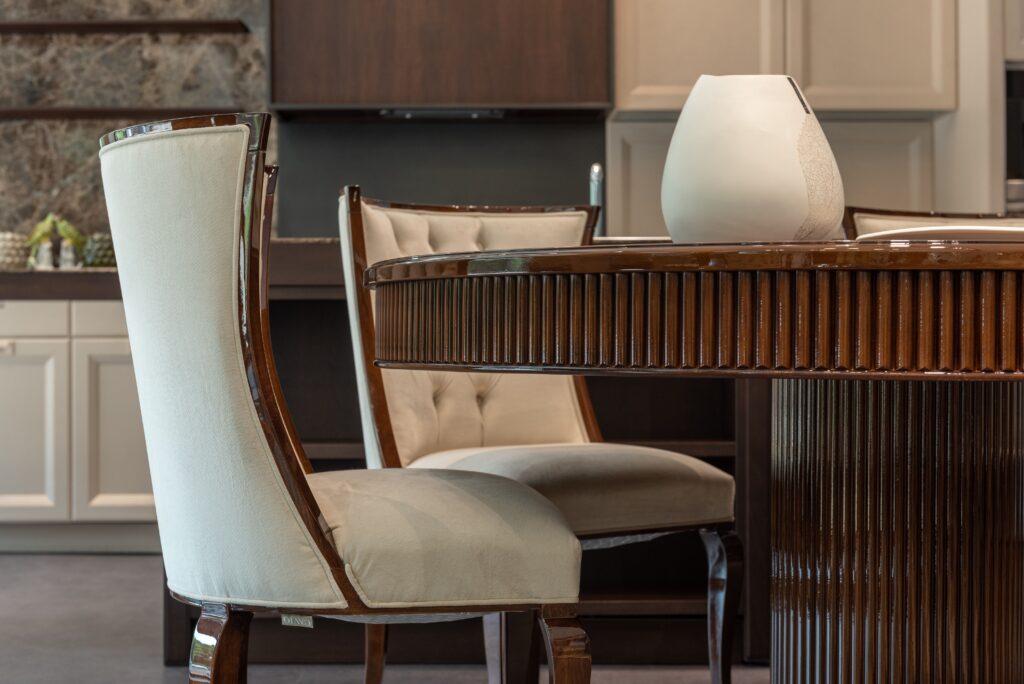
Seats with high backs are more formal while lower backs feel more casual and modern.
Are you worried about spills?
Select chairs with materials that are easy to clean.
In your home, is there someone with mobility issues?
In this case, you want to make sure you purchase at least one to two dining chairs that can be easily used. Whether this means you choose a chair that is lightweight, has soft cushioning, or other characteristics depends on your family's specific needs.
The above are only a few examples of some questions you can ask yourself.
Go ahead and list out any other functionalities you want your dining chairs to offer that will work with your lifestyle. These will be your non-negotiables. From now on, any chairs you look at will need to have the functionalities you listed. This will narrow down your options which is good for those that tend to get decision paralysis.
SPACE
Our next step is to consider the space we’re working with. The good news is that most of the heavy lifting was already done when we chose our table! For this step, we’ll simply focus on how much space we have in relation to the table itself.
So how many dining chairs do I need?
The answer to this question is entirely dependent on how much space your dining table provides. If your read the guide on how to select your dining table, you will know:
You must keep a MINIMUM of 24 inches of width per seat for comfortable seating. Given this guideline, simply measure the length of one side of your table and divide by 24. That should give you the approximate number of chairs you need for that side.
Of course, you can always go up to 30 inches per seat to allow for more space per seat.
worried about your dining room looking too tight?
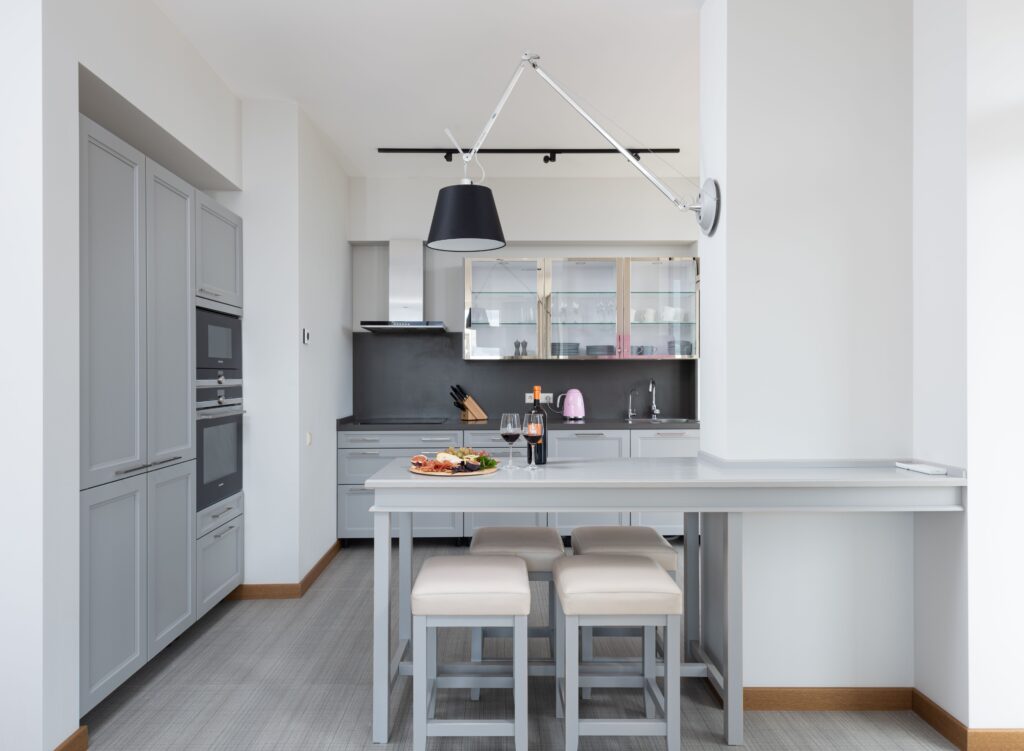
If you have a small space, anything that’s too bulky will make your room feel even tighter. This is because bulky chairs block sightlines, which can make a space feel overcrowded.
Opt for dining chairs that are more minimalistic as they will help make the room feel more open and airy.
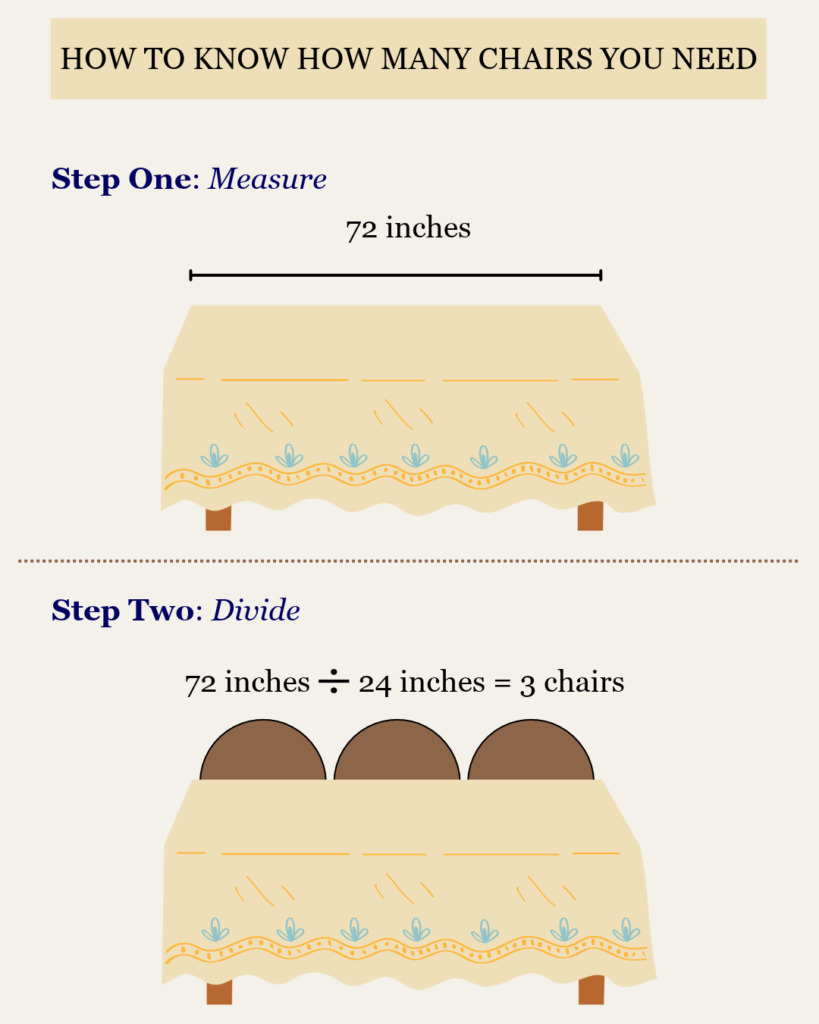
After evaluating your space, we can move on to our next step.
DIMENSIONS
Here is where we start to take action to ensure that our table fits nicely in our space.
Our guidelines will be these:
Ensure you have 30-36 inches (3 ft/ 90cm) from the table to the wall to allow for chair movement.
Keep between 10-12 inches from the seat to the bottom of your table.
Go ahead and measure this out with your measuring tape to find the ideal height of your seats.
If you are looking into getting dining chairs with arm rests, make sure you are able to slide the chair under the table without any scraping.
For those of you who need visual clarification, take a look at the graphic below.
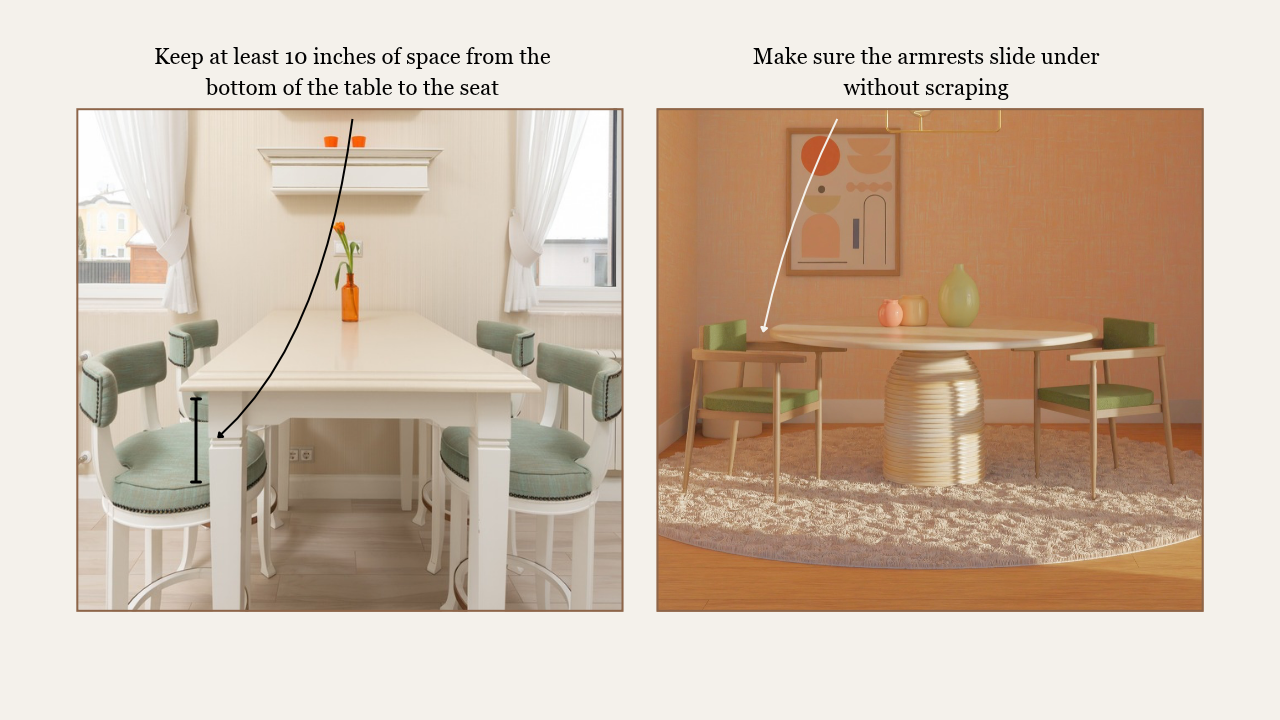
As we move on to our most exciting and final step, keep the dimensions in mind. Dining chairs come in a variety of shapes and sizes so as you are shopping around, don’t forget to take a look at their dimensions.
Style
Style is our most exciting step. Use the guide below to help you decide.
Most Popular Design Styles:
Modern
Chair Characteristics
clean lines, ergonomic shapes, mix of materials
Bohemian
Chair Characteristics
Natural and textured materials
Farmhouse
Chair Characteristics
Rustic woods, spindle or cross backs
Traditional
Chair Characteristics
Ornate woodwork, classic silhouettes, dark wood tones, patterned and velvet upholstered seats
Other Design Styles to consider:
Mid-Century
Chair Characteristics
Organic curves, angled peg legs, warm walnut, teak woods, vibrant
Scandinavian
Chair Characteristics
Light toned woods, minimalistic, organic curves, neutral upholstery, tapered leg
Industrial
Chair Characteristics
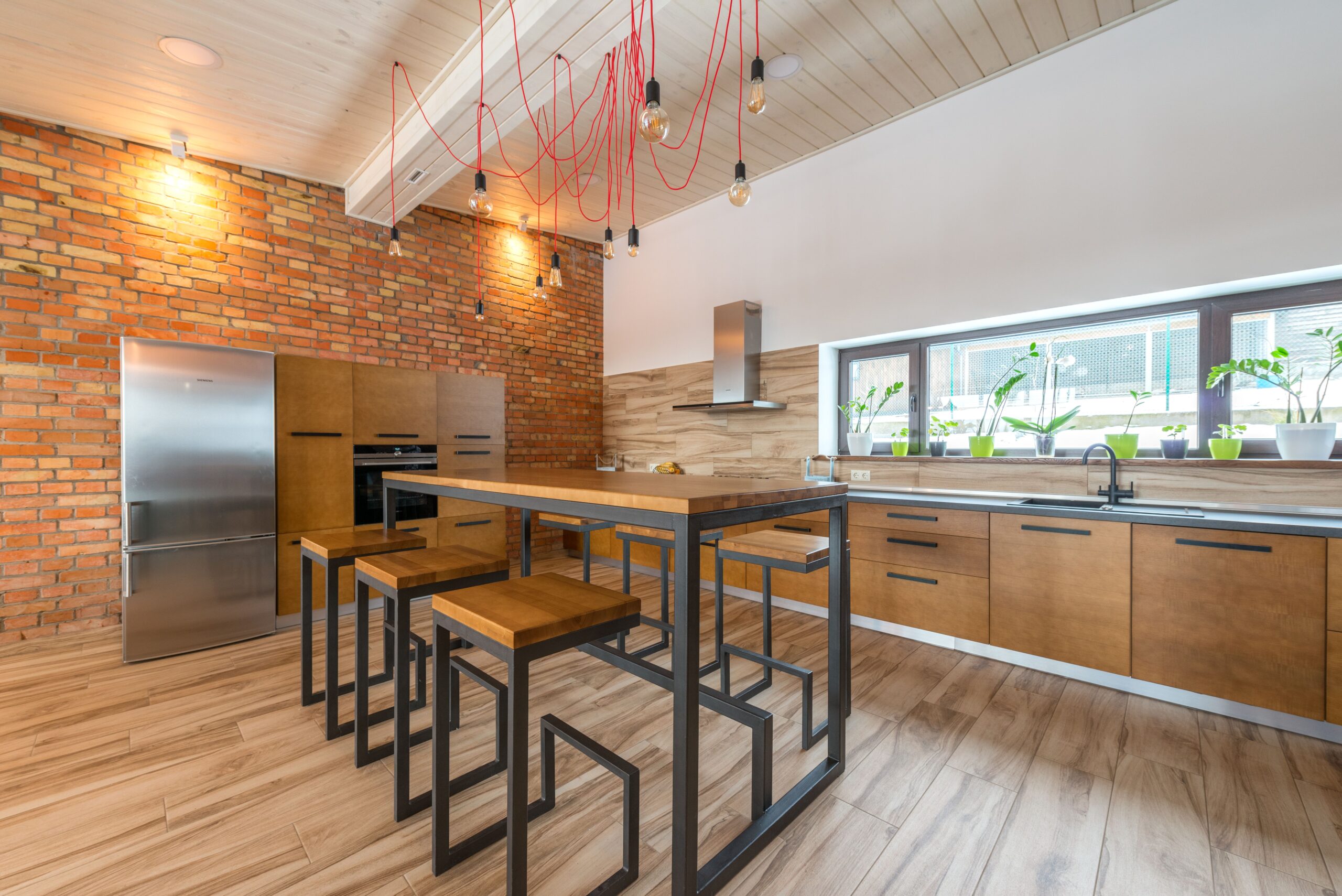
Exposed metal frames, reclaimed wood seats,, exposed bolts
Base

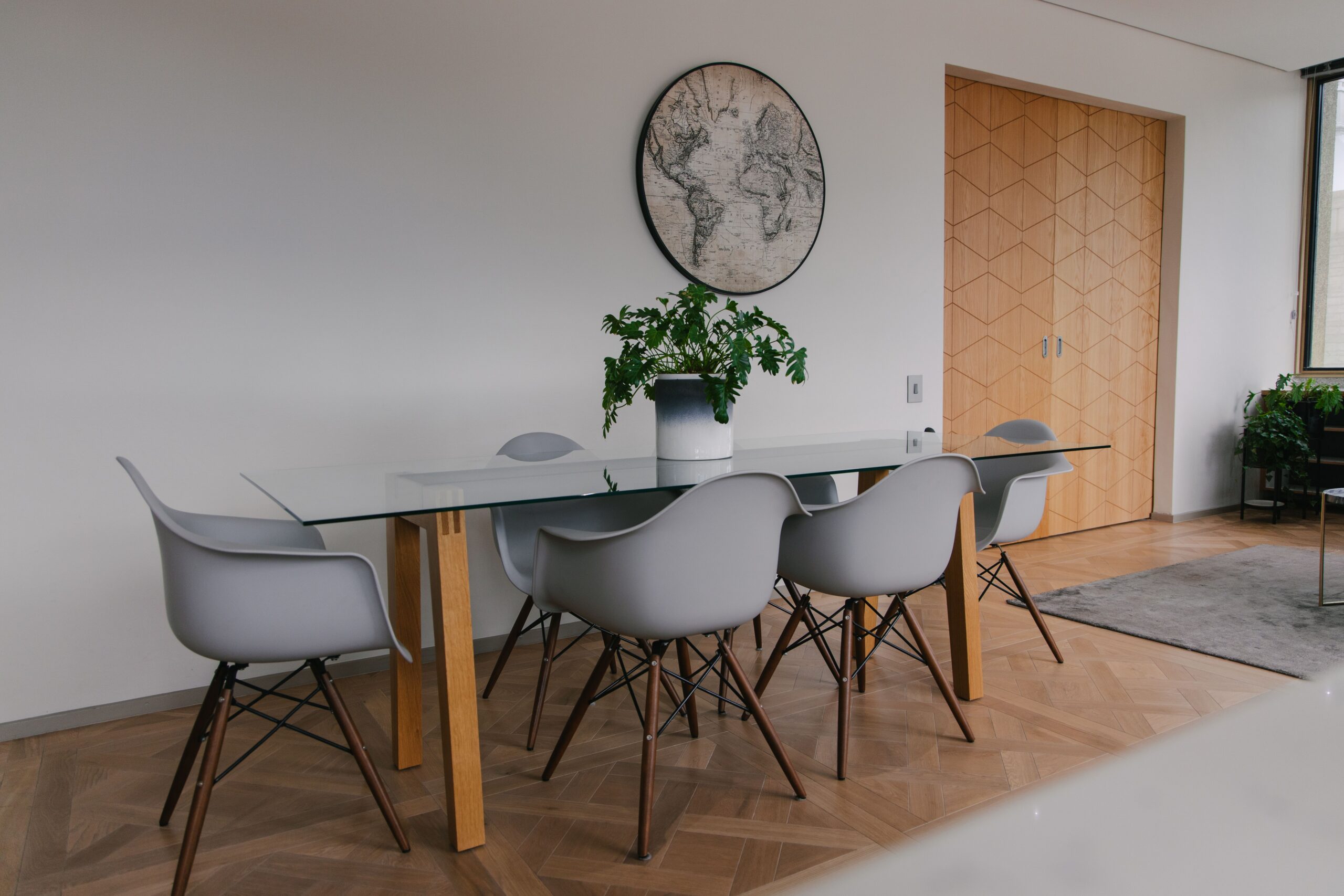
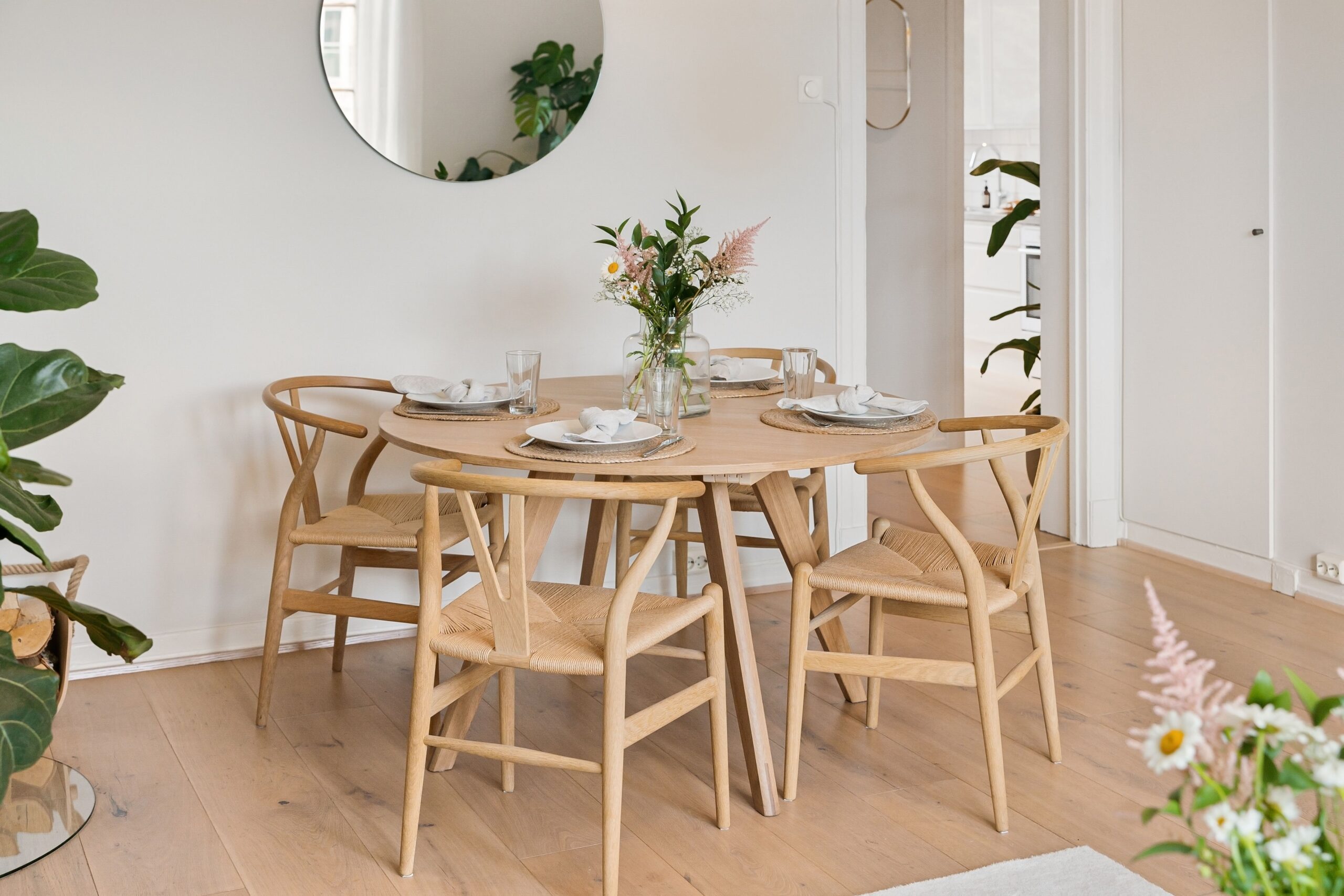
Overview Comparison Guide of Base Materials
|
Material
|
Durability
|
Maintenance Level
|
Affordability
|
|---|---|---|---|
Upholserty
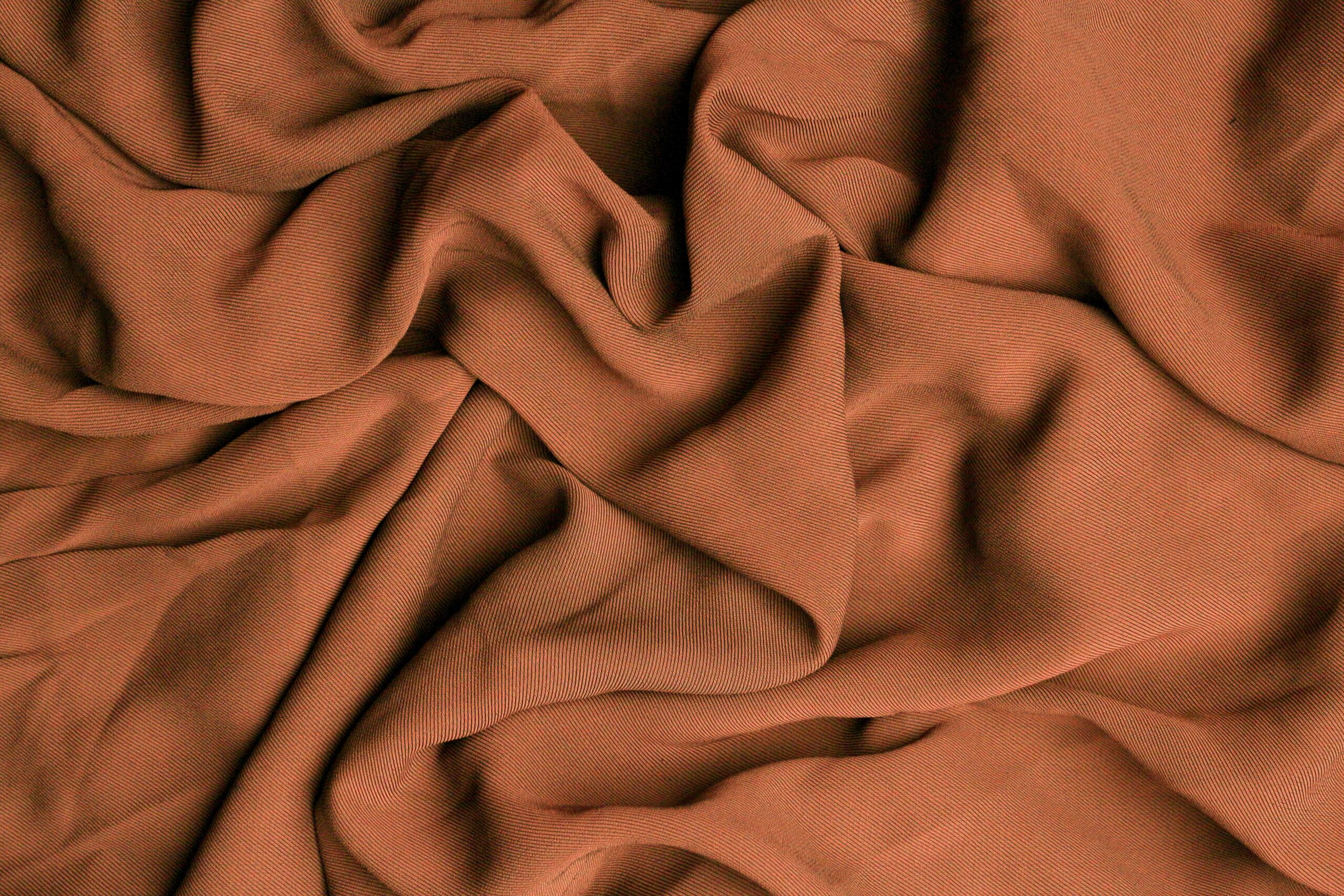


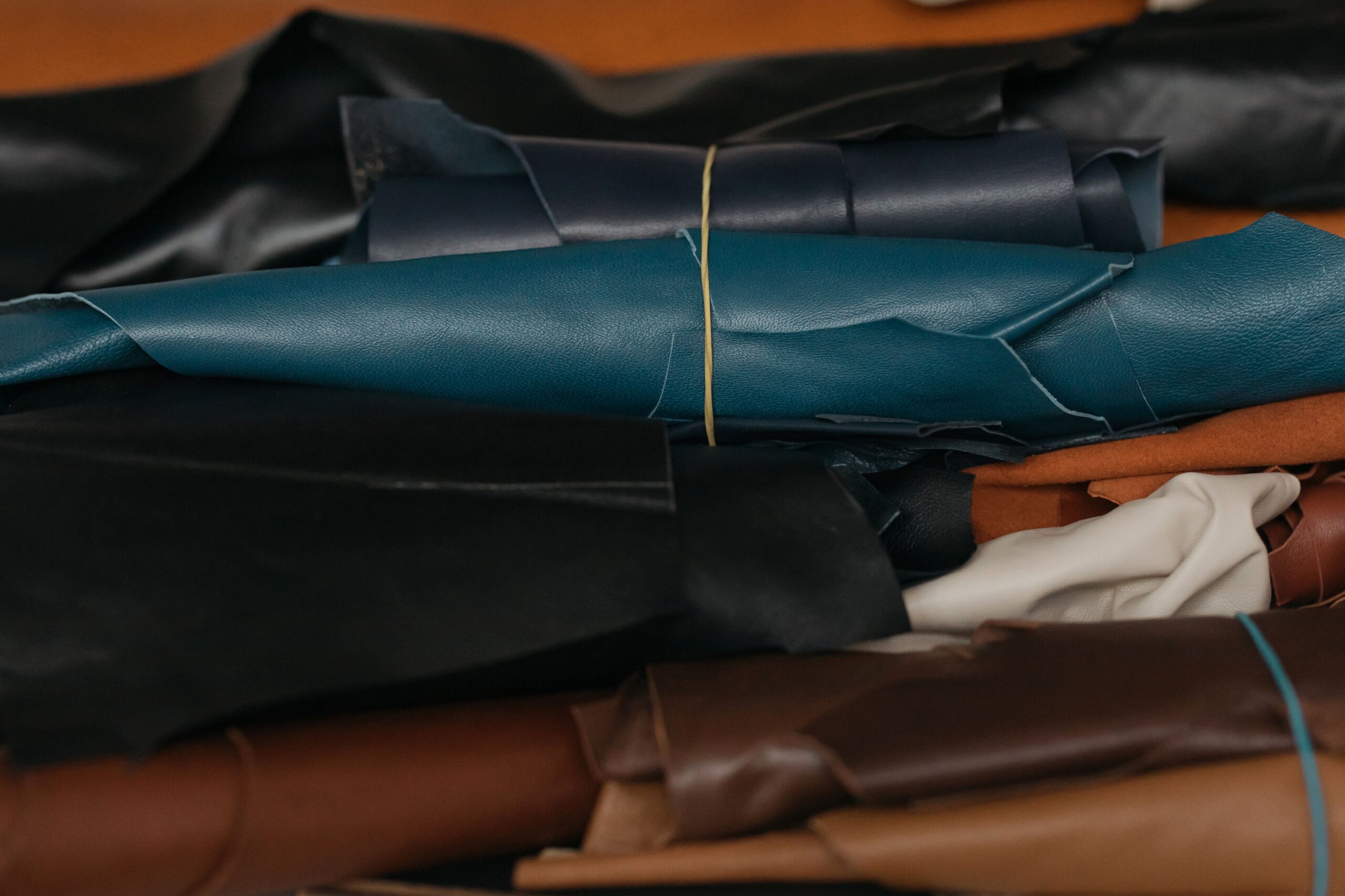

Overview Comparison Guide of Upholstery Materials
|
Material
|
Durability
|
Maintenance Level
|
Affordability
|
|---|---|---|---|
While some materials offer limited finishes and colors, you still have a plethora of options to choose from. The trick is narrowing them down and I have two ways of doing that! We can filter by your specific design style, or by the color scheme you want to bring into your space. Don’t worry, I’ll walk you through each step.
Before we continue, Decide how you’d like to style your space:
- Keep all chairs identical in style and color OR
- Mix two different styles (usually applied to the head chairs at the ends of the table)
Pro Tip: Contrast works really well when trying to find the best combination of chairs for your dining table. Try mixing light and dark woods or pairing glossy finishes with matte. Alternatively, keeping a lack of contrast, helps keep a calm and relaxing feel to the space. Ultimately, you decide what works best for you.
By Your Design Style
Hover mouse here to see content.
First, establish whether or not you’ve chosen a design style for your kitchen / dining room. If you have a clear style set in mind, perfect! All you have to do now is take a look at the “Design Styles” tab to see what dining chair characteristics can be found within your aesthetic. If your chosen style is not represented there, Pinterest is a great resource to see what others have incorporated into their space with your specific style.
You may find that your vision may be a mix of styles and that is okay. Most spaces are. Look for the commonalities they share and utilize that as your jumping off point. Again, use Pinterest to find what others are doing.
If you aren’t sure how to categorize your style, let’s try a different way of narrowing down your options.
By Your Color Scheme
Hover mouse here to see content.
Chances are, if you're trying to figure out what finish or color your chairs should be, perhaps you don't have a set color scheme in your dining room already. If this is you, you have two options.
- Take a look at what colors naturally exist in your space. (ex. the color of your flooring, the walls, any furniture you may already have) Note those colors down. If they already work well together, use those colors as a guide. chairs in one of those colors or finishes may work nicely in your space.
- Start from scratch. What colors are you naturally drawn to? Jot them down and choose three that you think look good together.
Both options should incorporate the 60/30/10 rule. Your color scheme should consist of 3 different colors. One of them will be used in 60% of your space, one in 30% and one in 10%. The three colors you choose should be used in a variety of hues.
When in doubt, stick with natural wood finishes. They blend seamlessly into almost any style.
Here are some color pallet inspos: