How to choose the perfect Curtains for your Space
A Practical Guide
Curtains have the power to transform a room and they can be placed in every single room of your home. Unfortunately, if hung poorly, they can really drag down the look of your space so by the end of this article, you will know exactly what curtains to purchase and how to properly hang them up.
There are four key elements we must consider to get this right.

FUNCTION
Function is incredibly important when it comes to curtains, but before we look into what color we want, we have to ask ourselves a couple of questions.
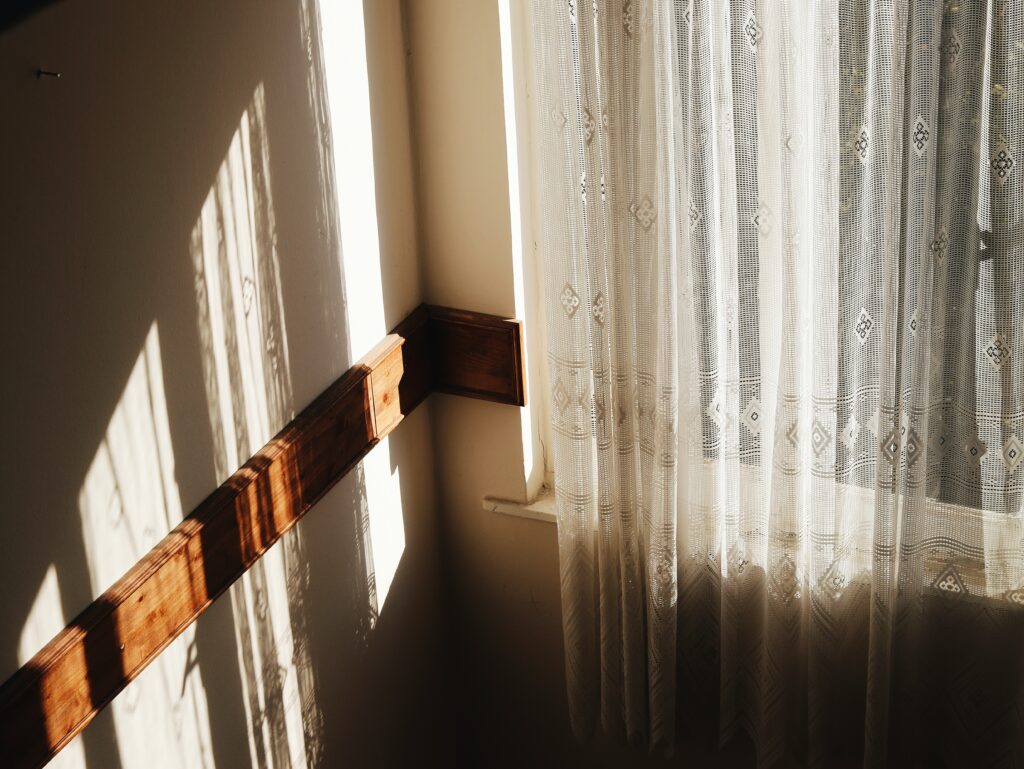
The type of rug you decide to purchase will be dependent on how you answer these questions.
In what room will I be placing the curtains?
(Bedroom, Living Room, Kitchen, Bathroom)
How much privacy would I like to have in this room?
(Sheer, Light Filtering, Room Darkening, Blackout)
Is this window being blocked off partially or fully by furniture? If so, am I able to move it elsewhere or do I have to work around it?
(If you have furniture blocking the window, decide whether you want to be able to access the curtains to draw them open and shut. Roman shades may also be a good option for you.)
You should now have a couple of “must-haves” for your curtains.
SPACE
Space dictates how we move forward. Analyze your space and how much or how little you have to work with.
Tricky Window Shapes
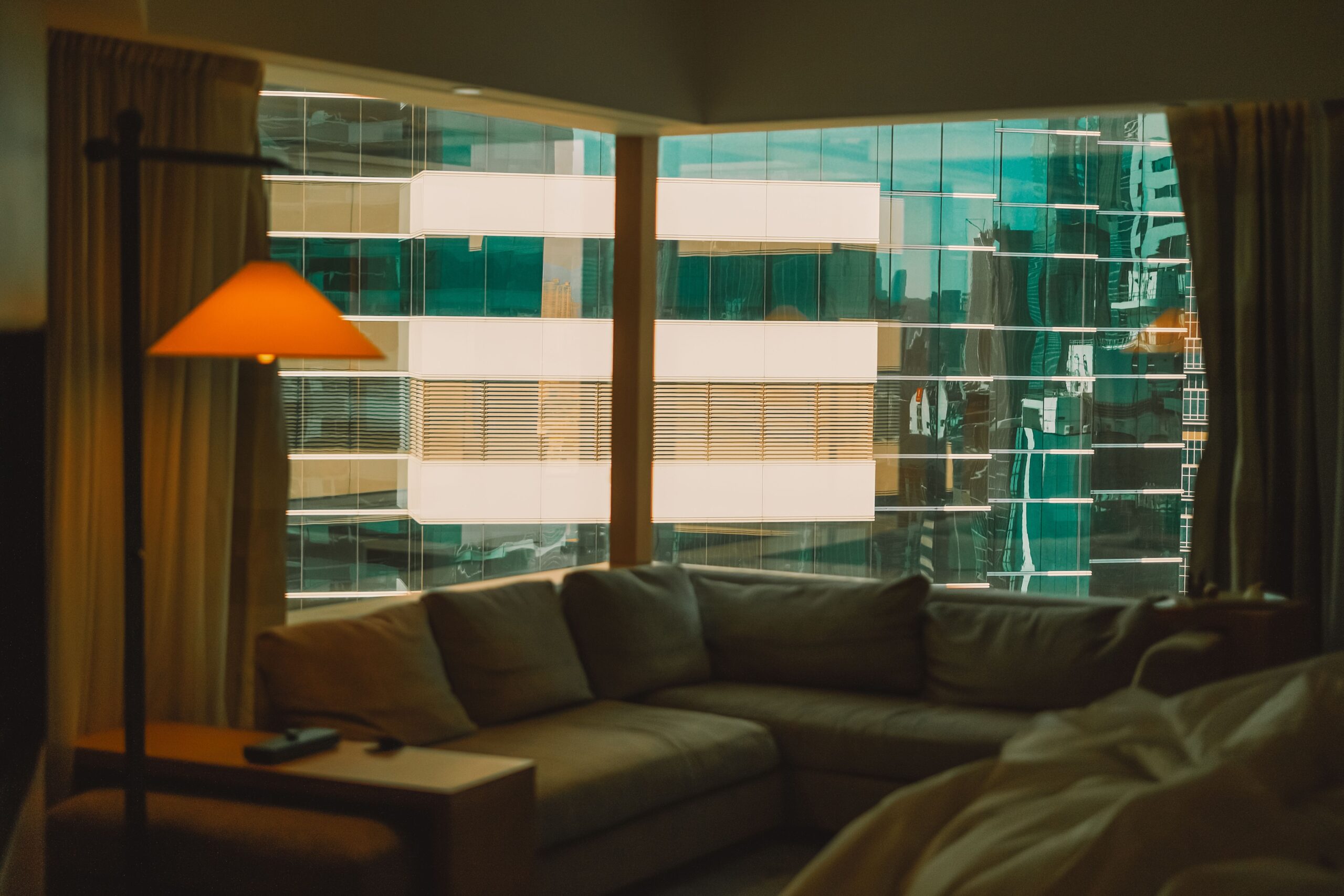
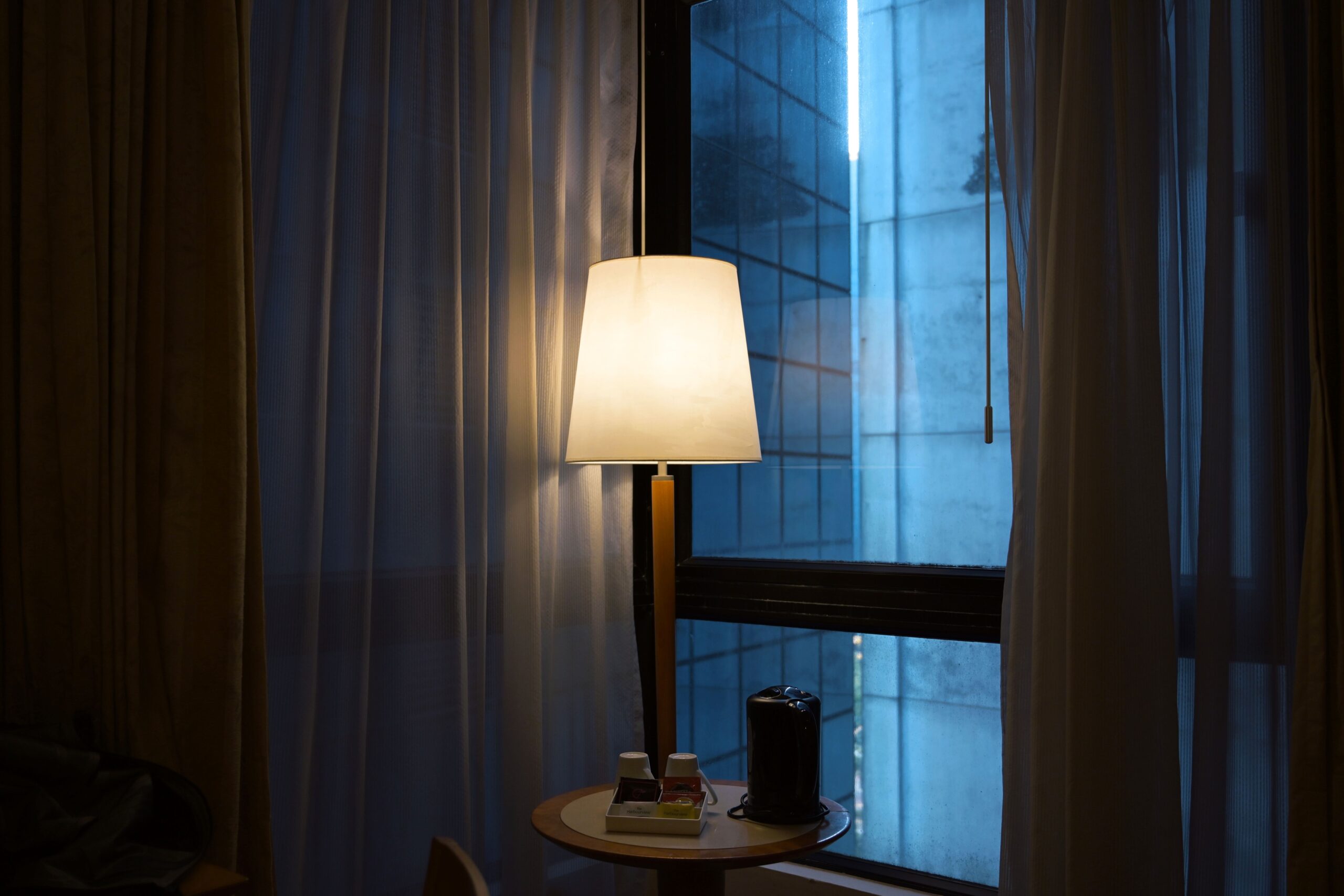
Corner Windows:
Determine whether you’d like a singular Curved Rod or Two Separate Rods.
This will depend on how you want the fabric to move.
- A curved rod allows curtains to slide seamlessly across the entire bend.
- Separate rods create a distinct break.
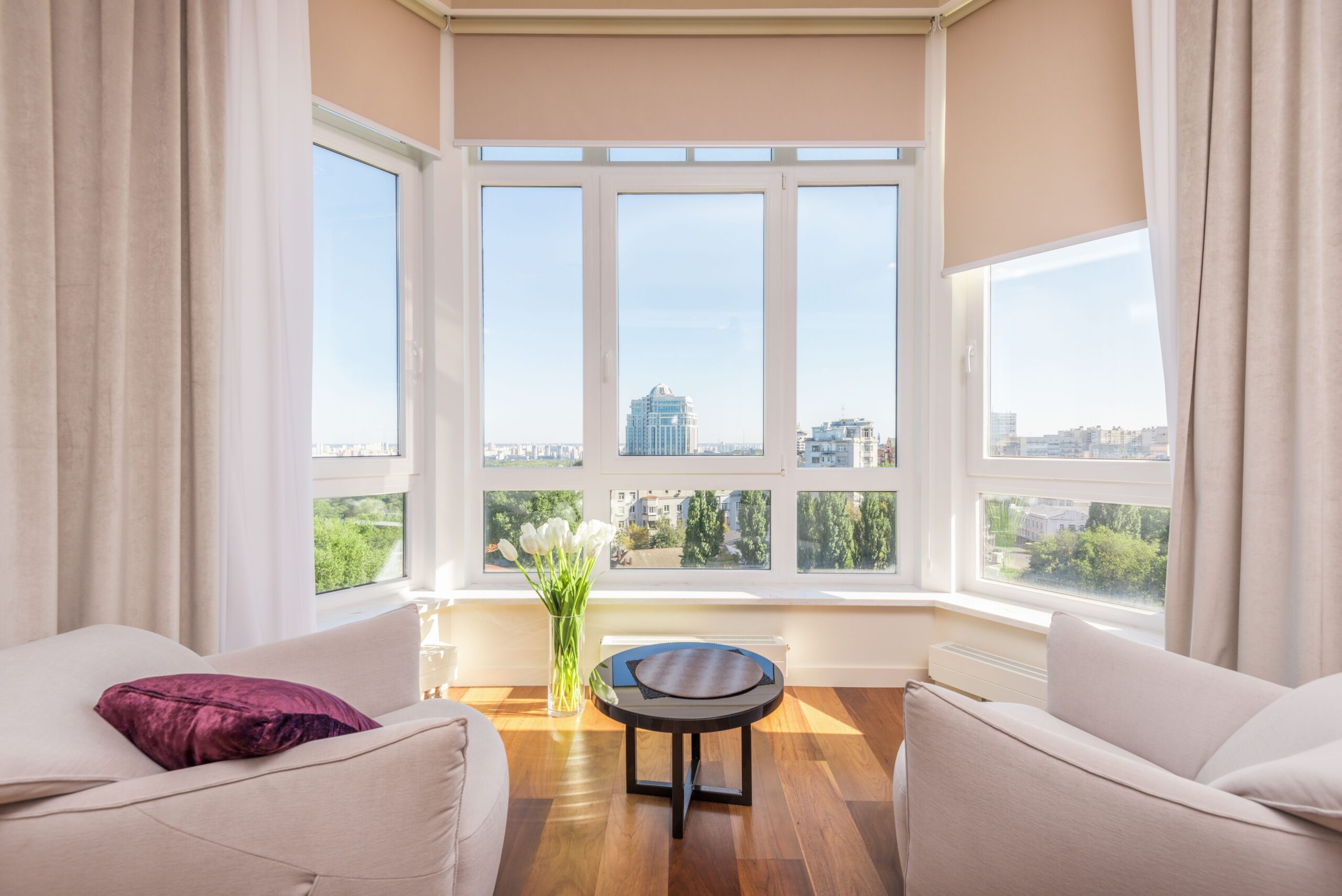
Bay Windows:
You have two layout options.
- You can use specialized hardware to have the curtains follow the exact angled path of the windows.
- You can mount a straight rod further out across the entire alcove to frame the space.
Furniture Obstacles
Bed in Front of the Window:
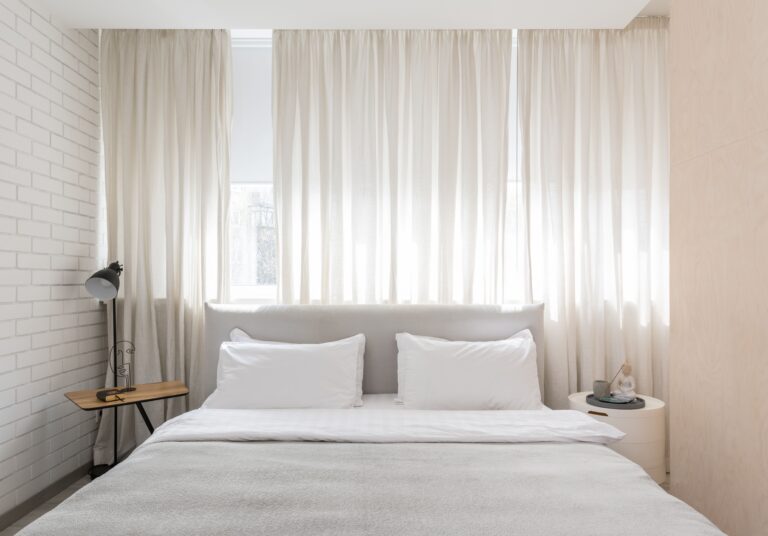
If you are working with a small bedroom and the bed must sit in front of the window, consider running curtains across the entire back wall. This creates a cohesive, high end backdrop.
Furniture Partially Blocking Windows:
If a dresser, chair, or console is in the way, pull the furniture slightly forward. Giving the fabric a few inches of breathing room allows you to draw the curtains open and closed without a struggle.
Remember, you also have the option of using roman shades instead of curtains. If you think that will work best for your needs, don’t hesitate to try it out.
If none of the above apply to you:
Look at the wall space around your window frames. Especially the sides.
Extending your curtain rods past the actual window frame always looks better. Functionally, it allows you to fully draw the curtains open to let in maximum light.
Don’t have the extra wall space? That is completely fine. Let’s work with what you have!
Choose Your Rod
Once you know your layout, choose the rod type that fits your architecture:
Curved Rods: Perfect for continuous corner or bay window tracking.
Ceiling Mounts: Ideal for adding height or when wall space is limited.
Wall Mounts: The standard approach for traditional framing.
You should now a rough idea on how you want to hang your curtains and if you have space on either side of your window to properly hang the curtains. And what rod to get.
DIMENSIONS
Dimensions are going to be our best friend in this process. It is very important we don’t skip this step as this is going to determine how many panels we need and how long we need our curtains to be. Here is our guideline:
If wall mounted: We want our curtain rod to be mounted ½ to ⅔ the way to the ceiling from the window AND extended 6-10 inches outward from window
If ceiling mounted (not necessary information for the purchase of the curtains but necessary for installation) the rod or track must be placed 2-3 inches from the wall
We want the curtain to either:
FLOAT
KISS
PUDDLE
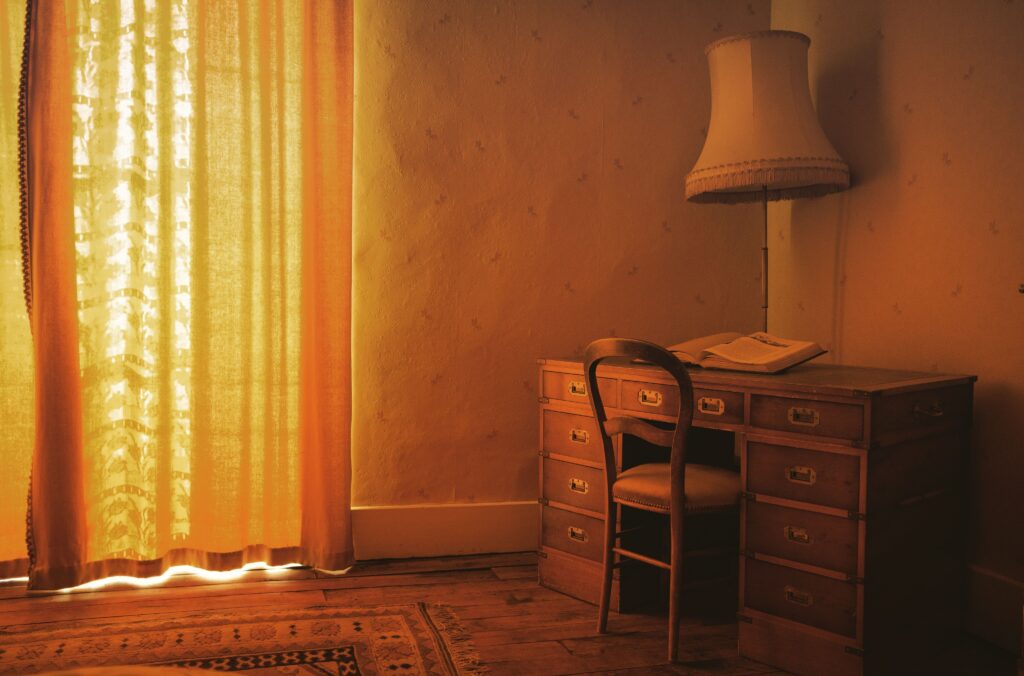
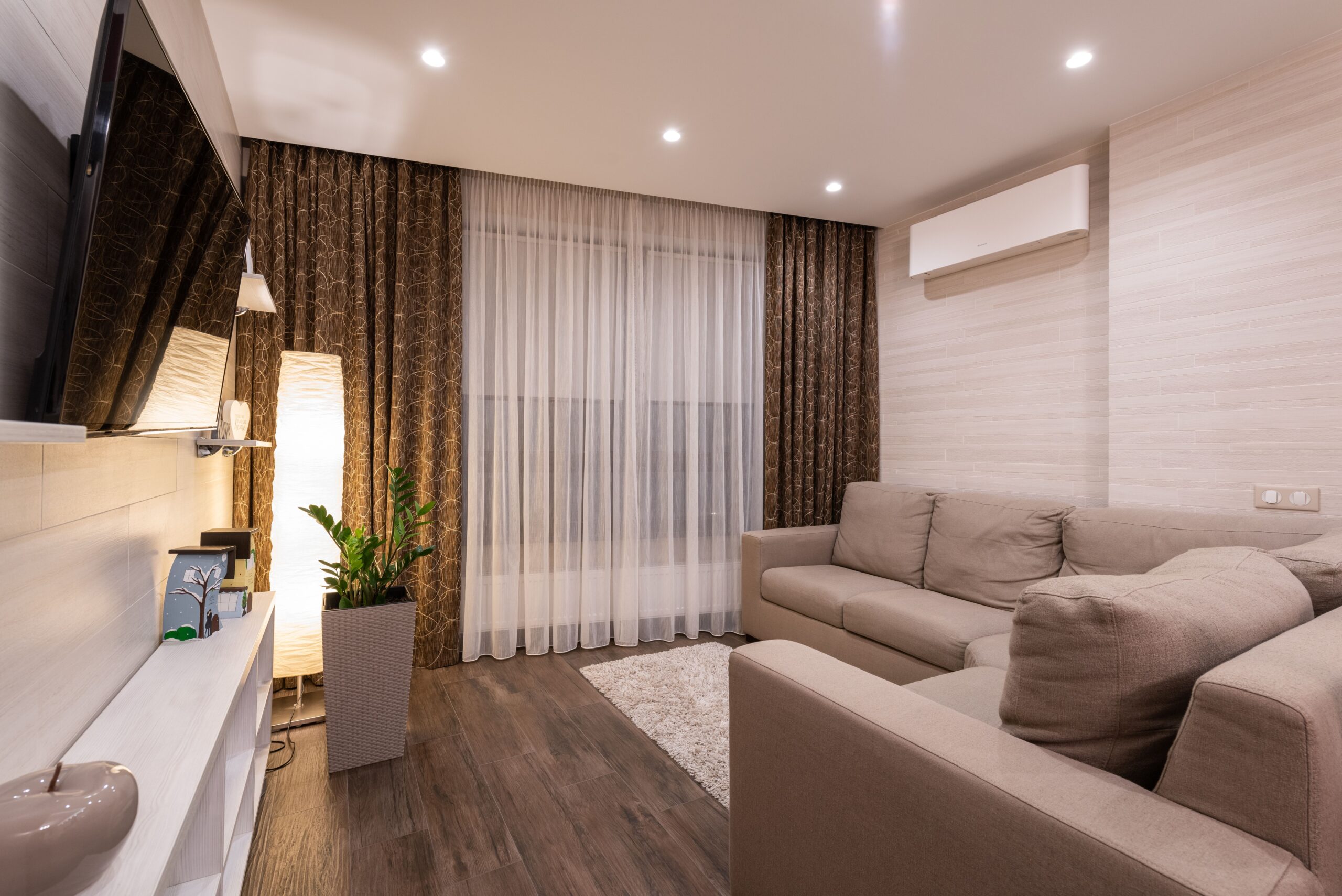
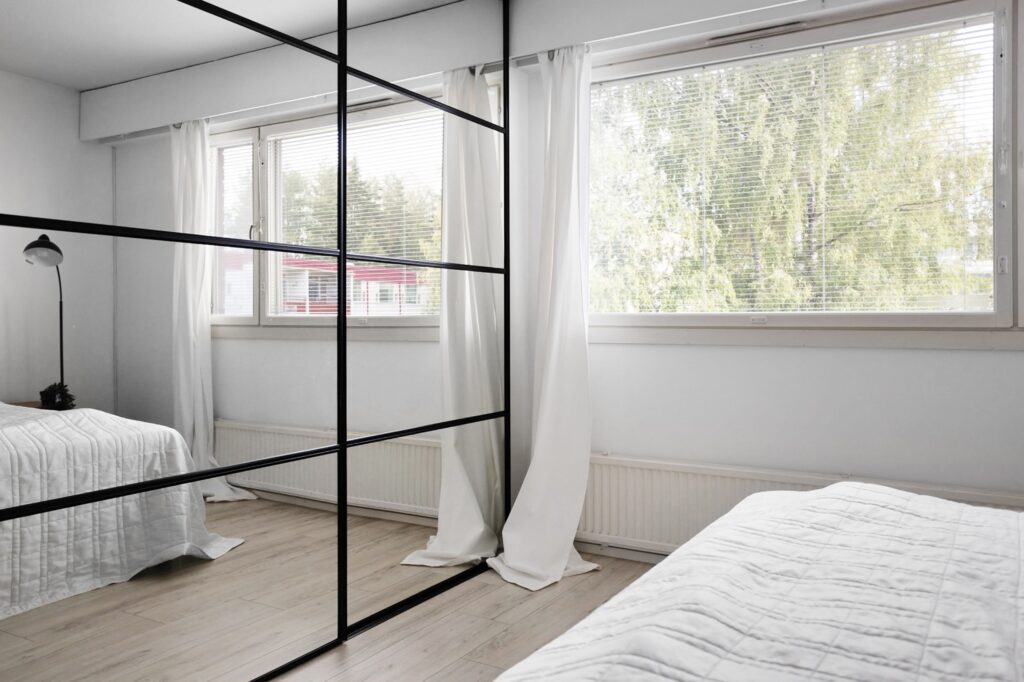
Just off the floor (less than an inch distance from floor)
Gracing the floor
Puddles on the floor (2-4 inches excess)
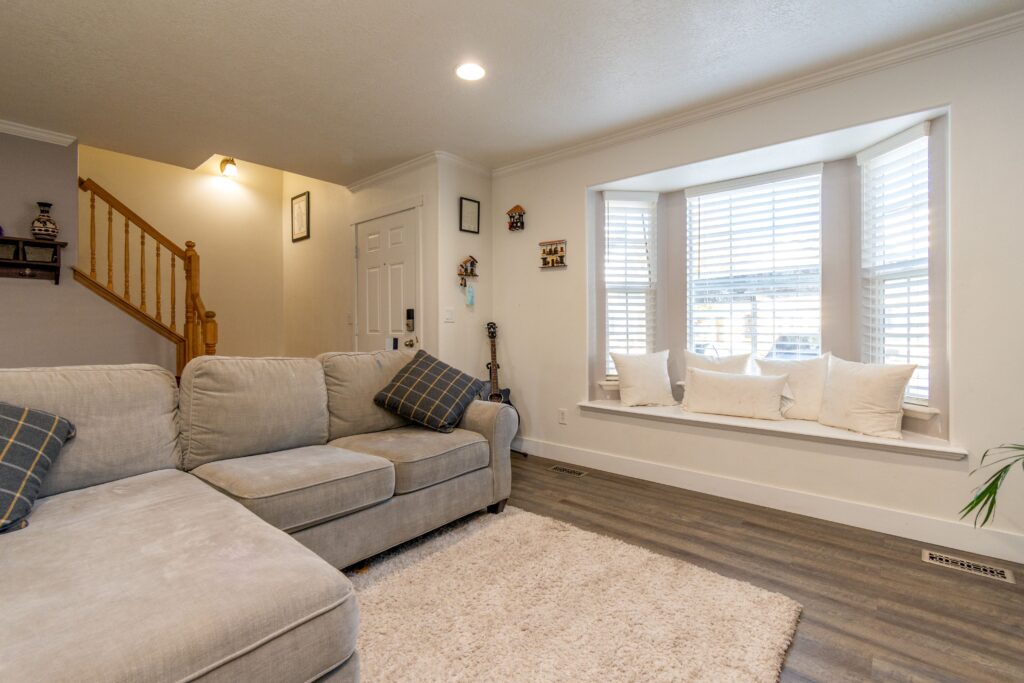
Bay Window with Nook Seat
If you have a bay window with a nook seat, I recommend mounting a straight curtain rod on the main room wall just outside the alcove. This allows the fabric to fall beautifully to the floor.
However, if you prefer to mount the curtains inside the bay recess, make sure to adjust your length measurements to your desired length. Instead of “kissing” the floor, floating above the floor, or puddling on to the floor, it would be onto your nook.
Measure the Height
You can now measure out your curtain’s ideal height.
Step 1: Determine what is ½ to ⅔ the way to the ceiling from the window
Step 2: From there, measure to the ground. (If you want the puddle look, just add 2-4 inches to this.)
Measure the Length
You also want to measure the ideal length of your curtains.
Step 1: With your measuring tape, determine the length of your window(s).
Step 2: Add 12-20 inches to that number for 6-10 inches of curtain on either side.
(Note* Panel lengths vary from seller to seller. I would recommend getting a couple more panels than you think to get a nice ripple effect.)
Pro tip: Too long of a curtain can be hemmed but you can’t do anything with too short of a curtain.
You should now know what your ideal measurements are for your curtains.
STYLE
Style is where your vision starts coming to life. Use the guide below to help you decide your style.
Design styles are here to guide you but they are not hard rules. Most people have a mix of styles in their homes and when done right, it can look beautiful. Don’t be afraid to step out of your interior design style.
Sleek, Functional, Simple, Clean
Common Curtain Characteristics:
- Solid Neutral Colored Panels (Whites, grays, blacks)
- Sleek Header Style (Grommets or a hidden back tab)
- Curtains Hang Straight Without Excessive Pooling on the Floor.
Common Fabrics
- Lightweight Linen Blends
- Cotton
- Smooth Synthetics
Textured, Organic, Relaxed, Global Influences
Common Curtain Characteristics:
- Flowy
- Semi Sheer Panels
- Tassels,
- Macramé Trim
- Fringe
- Warm Neutrals
- Terracotta
- Soft Olive
Common Fabrics
- Raw Linen
- Cotton
Cozy, Rustic, Practical
Common Curtain Characteristics:
- Rod Pocket or Ring Top Curtains
- Subtle Traditional Patterns (Stripes, plaid, small gingham)
Common Fabrics
- Cotton,
- Burlap Blends
- White Linen
Formal, Symmetrical, Timeless
Common Curtain Characteristics:
- Fully Structured Drapery Panels
- Pinch Pleats
- Inverted Pleats
- Gentle Puddling (An inch or two)
- deep tones
- Jacquard Prints
Common Fabrics
- Velvet
- Silk
- Faux Silk
Retro, Clean Lines, Organic Curves, Functional
Common Curtain Characteristics:
- Bold Geometric Patterns
- Abstract Mid-century Prints
- Colors Like Mustard Yellow, Orange, Olive, or Teal
Common Fabrics
- Cotton Blends
- Barkcloth
Bright, Minimalist, Airy
Common Curtain Characteristics:
- Ultra Simple Hidden Tab
- Ring Top Curtains
- Bright Whites
- Creams
- Grays
Common Fabrics
- Linen
- Sheer Cotton
Raw, Structural, Utilitarian
Common Curtain Characteristics:
- Straight Hanging Panels
- Dark Iron or Black Metal Rods
- Charcoal, Concrete Gray, or Navy Panels
Common Fabrics
- Distressed Linen
- Faux Leather Textures
Current, Ever-changing, Trendy
Common Curtain Characteristics:
- Floor to Ceiling
- Ripple Fold
- Grommet
- Monochromatic Tones
Common Fabrics
- High Quality Fabrics
Breathable fabric made from flax fibers.
- Airy Feel
- Natural Insulator
- Hypoallergenic
- Eco-friendly
Cons:
- It Wrinkles Easily
- Can Shrink if Washed Incorrectly at Home
A versatile natural fabric available in countless weaves, colors, and prints.
- Hypoallergenic
- Breathable
- Lightweight
- Eco-friendly
Cons:
- Prone to Fading
- Can Shrink if Washed Incorrectly at Home
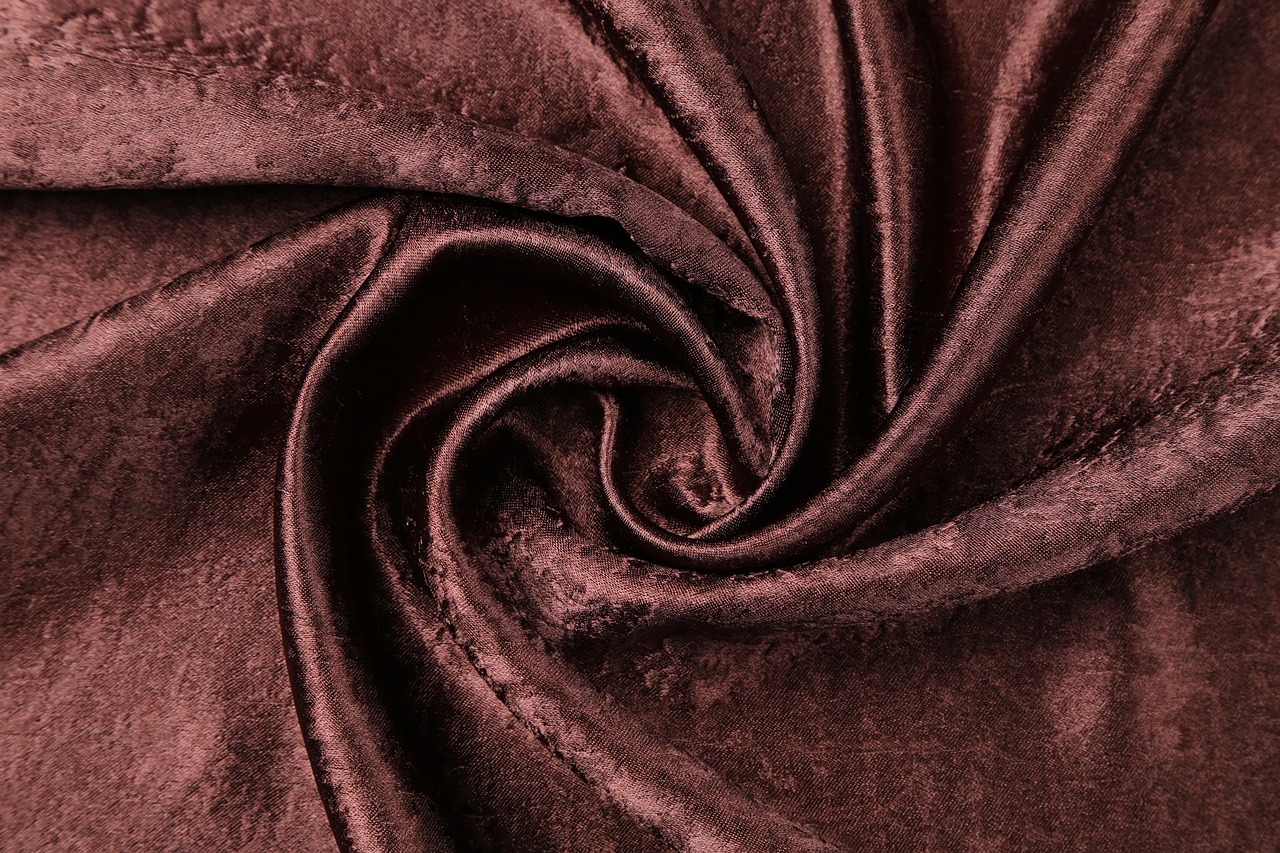
A high end fabric that offers a brilliant sheen and a lightweight fluid drape.
- Anti-wrinkling
- Strong Material
Cons:
- Silk is Extremely Delicate and Easily Damaged by Moisture and UV Rays.
- Without a Protective Lining, Direct Sunlight can Rot and Shred the Fabric Over Time.
- Dry Clean Only
- High Price Point
Heavy and luxurious window treatments made from densely woven fabric.
- Blocks Light Incredibly Well
- Sound Dampening
- Insulation
- Drapes Beautifully
Cons:
- Dust, Pet Hair, and Lint Magnet
- Very Heavy
These fabrics are the most common and made from petrochemicals.
- Low Maintenance
- Durable
- Affordable
- Resistant to Wrinkling, Stretching, and Fading
Cons:
- Holds Onto Static Electricity
- Trap odors
- Not Eco-friendly
A heavy duty tightly woven cotton fabric.
- Durable
- Excellent at Blocking Light
Cons:
- Can Be Stiff
- Can Look Bulky
- Susceptible to Shrinkage
- Heavy
Patterns and colors may be limited with some materials but there are a plethora of options to choose from. Just check out some of these designs:
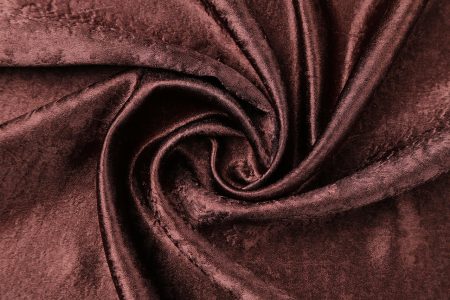
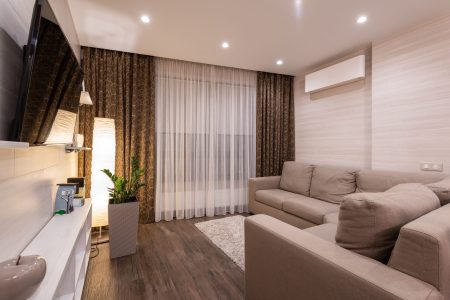
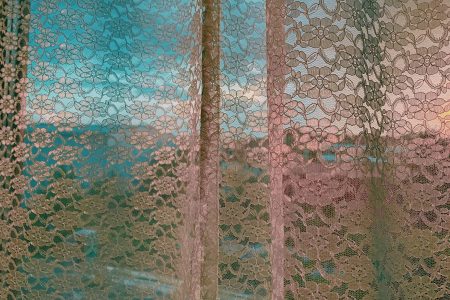
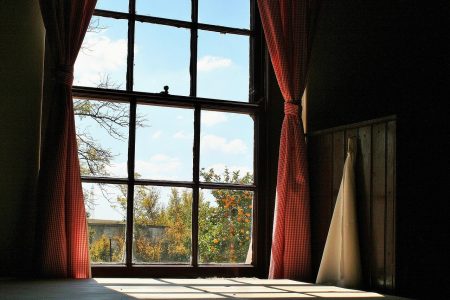
This style features fabric that is tightly gathered and stitched together a few inches below the top edge.
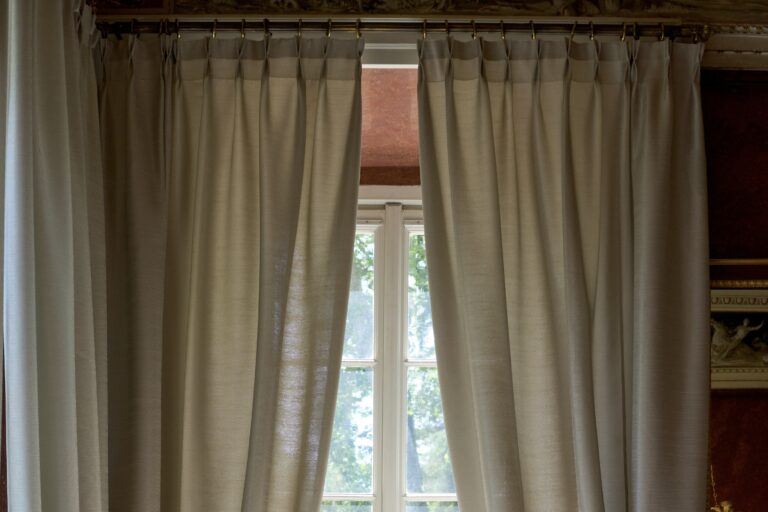
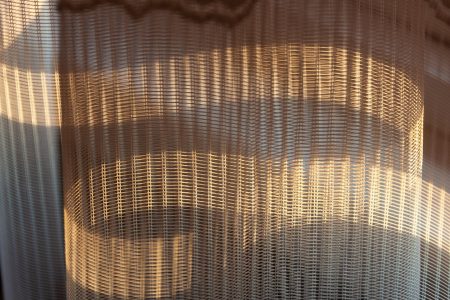
This style uses a specialized track system to guide the fabric into perfectly uniform, continuous S-curve waves.
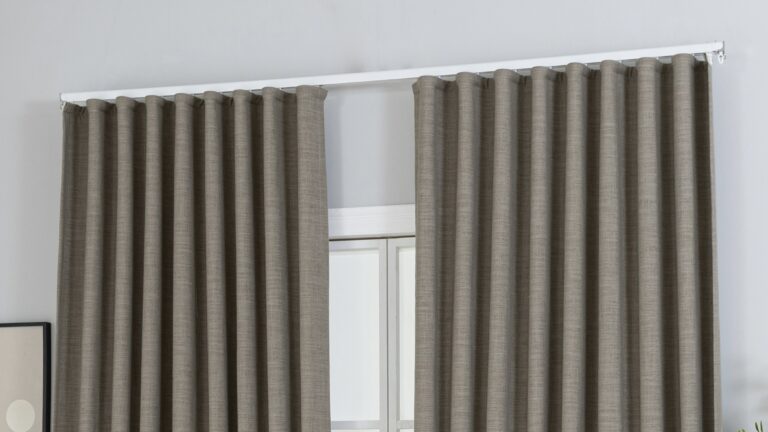
This style features metal-ringed eyelets punched directly into the top of the fabric, allowing for a curtain rod to slide right through to create deep folds that slide open and closed easily.
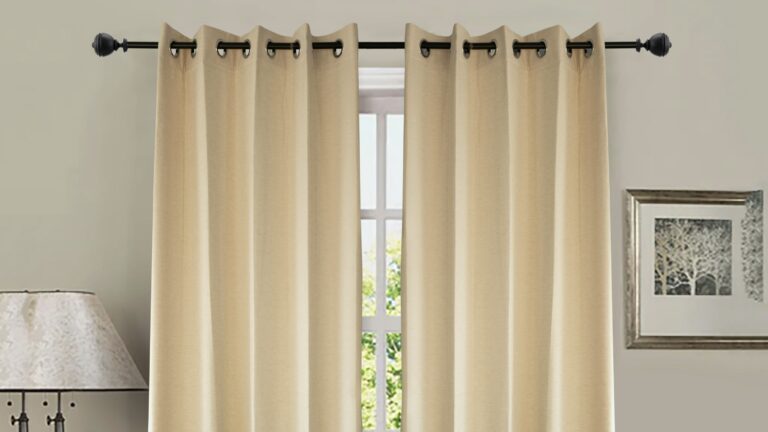
This style features fabric folded outward and stitched to create a series of wide, flat, rectangular panels across the top.
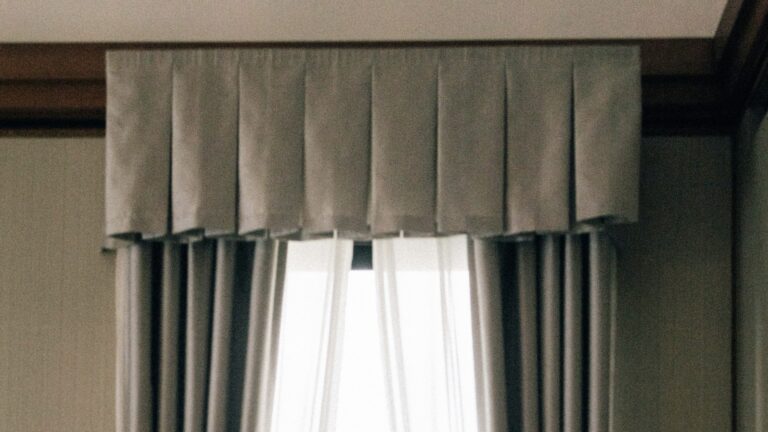
This style features exposed loops of fabric sewn onto the very top edge allowing for a curtain rod to threat directly through them.
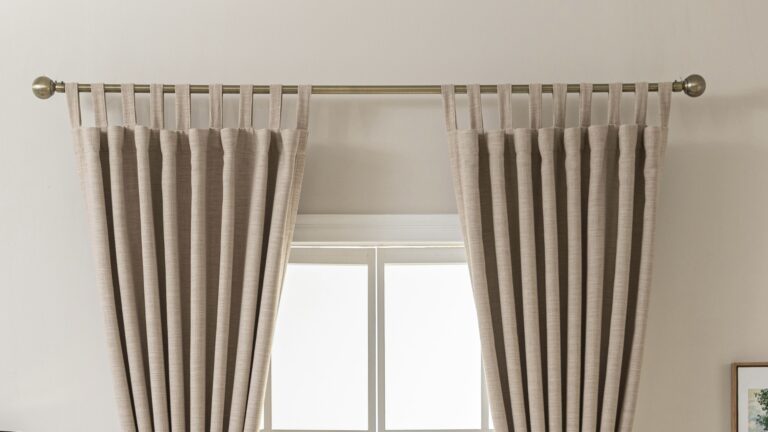
This style features a series of tightly packed, thin, and round folds running continuously across the top edge that resemble a neat row of pencils.
This style features loops hidden on the reverse side of the panel so the curtain rod can slide through unseen.

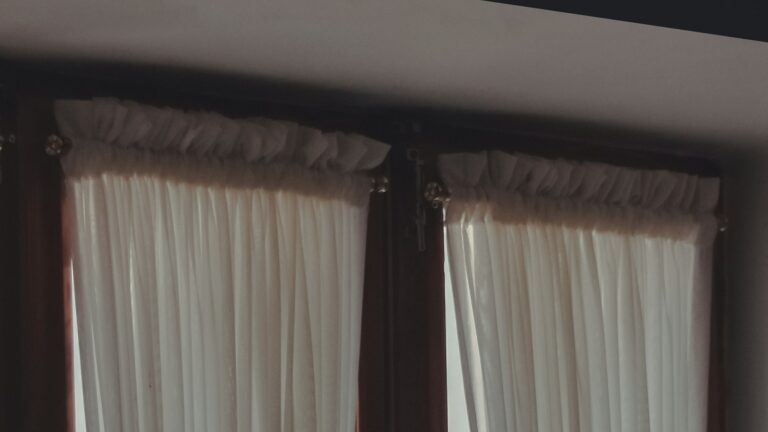
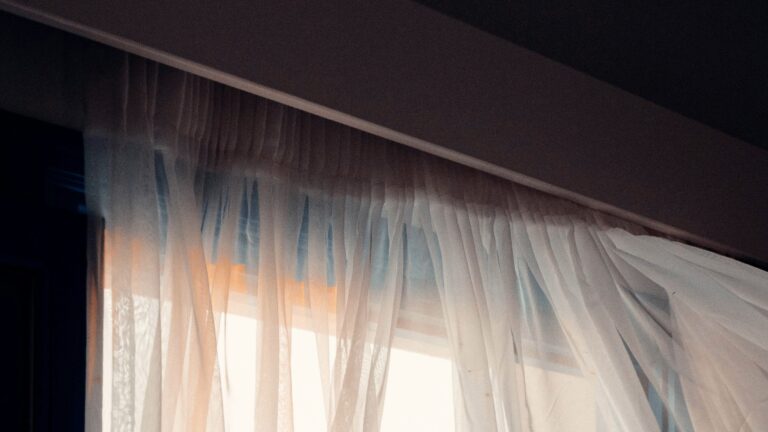
This style features a continuous stitched runner along the very top edge that slips directly over the curtain rod, gathering the fabric into a tight, closely bunched look.